
About This Book
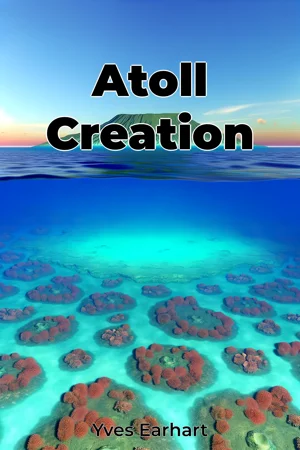
Have you ever wondered how a ring of idyllic islands, seemingly adrift in the vast ocean, comes to be? "Atoll Creation" delves into the fascinating genesis of these unique ecosystems, exploring the intricate interplay of geological forces, marine biology, and climate processes that shape atolls. This book uncovers the step-by-step formation of these captivating landforms, beginning with a volcanic eruption and culminating in a thriving coral island. The central topics explored within these pages are the geomorphological development of atolls, the ecological succession of coral reef ecosystems, and the impact of sea-level change on atoll structure and habitability. Understanding these complex processes is crucial not only for appreciating the biodiversity within these fragile environments, but also for predicting their future in the face of rising sea levels and global climate change. To truly grasp the formation of an atoll, one must first consider the foundations. The book begins with a survey of volcanism in the ocean, describing the types of volcanoes that are likely to form atoll foundations. We delve into Darwin’s theory of subsidence, laying out the historical framework for understanding atoll formation. The book then pivots into the specific biological aspects of coral growth. It explains the symbiotic relationship between corals and algae vital for reef construction. "Atoll Creation" argues that atolls represent sensitive barometers of global environmental change, their existence a testament to the delicate balance between constructional biological forces and erosional geological processes. The book is structured to methodically build this argument. We begin by introducing the geological context, followed by an exploration of coral reef ecology, and then examine the interplay of sea-level fluctuations and atoll development. The culmination of the argument lies in understanding the vulnerability of these systems and the implications for conservation and adaptation strategies. The evidence presented in this book draws upon decades of geological surveys, marine biological research, and climatological data. Original data from core samples taken from atolls around the world are analyzed to reveal the history of reef growth and sea-level change. We also incorporate cutting-edge modeling techniques to predict future atoll response to various climate scenarios. The study of atoll creation inherently connects to several other areas of study. First, oceanography is crucial because ocean currents and chemical composition are fundamental in the distribution of coral larvae and the health of coral ecosystems. Second, climatology is an important element, since sea temperature, storm frequency, and sea-level change are all directly relevant to atoll survival. Finally, the book has profound implications for the field of environmental conservation, as understanding atoll vulnerability is essential for designing effective conservation strategies. This book provides a holistic and integrated perspective, combining geological analyses with ecological understanding and climate change models to provide a comprehensive overview of atoll systems. This synthesis sets it apart from other works that often focus on merely one aspect. The tone of "Atoll Creation" is informative and accessible, avoiding technical jargon whenever possible while still maintaining scientific rigor. Complex processes are explained clearly and concisely, making the information accessible to a broad audience. The target audience includes students and researchers in earth sciences, marine biology, and environmental science, as well as anyone with a general interest in natural history and island ecosystems. The book offers value to readers seeking a deeper understanding of the natural world and the challenges facing these unique environments. As a work of non-fiction within the nature and earth sciences genres, "Atoll Creation" relies on factual accuracy, well-supported arguments, and clear presentation of data. It adheres to the conventions of scientific writing while striving to engage the reader with compelling narratives and vivid descriptions. While the book provides a thorough overview of atoll formation, it primarily focuses on the geological and ecological processes involved. It deliberately avoids delving into the social and cultural aspects of human communities living on atolls, acknowledging that such considerations warrant a separate in-depth study. The information within "Atoll Creation" has several real-world applications. It can inform coastal management strategies, assist in assessing the vulnerability of island nations to climate change, and guide conservation efforts to protect these unique ecosystems. While there is consensus on Darwin’s theory of subsidence as the initial phase of atoll formation, some debate exists regarding the precise role of sea-level fluctuations in subsequent reef development. The book addresses these debates by presenting multiple perspectives and analyzing the supporting evidence for each.
Have you ever wondered how a ring of idyllic islands, seemingly adrift in the vast ocean, comes to be? "Atoll Creation" delves into the fascinating genesis of these unique ecosystems, exploring the intricate interplay of geological forces, marine biology, and climate processes that shape atolls. This book uncovers the step-by-step formation of these captivating landforms, beginning with a volcanic eruption and culminating in a thriving coral island. The central topics explored within these pages are the geomorphological development of atolls, the ecological succession of coral reef ecosystems, and the impact of sea-level change on atoll structure and habitability. Understanding these complex processes is crucial not only for appreciating the biodiversity within these fragile environments, but also for predicting their future in the face of rising sea levels and global climate change. To truly grasp the formation of an atoll, one must first consider the foundations. The book begins with a survey of volcanism in the ocean, describing the types of volcanoes that are likely to form atoll foundations. We delve into Darwin’s theory of subsidence, laying out the historical framework for understanding atoll formation. The book then pivots into the specific biological aspects of coral growth. It explains the symbiotic relationship between corals and algae vital for reef construction. "Atoll Creation" argues that atolls represent sensitive barometers of global environmental change, their existence a testament to the delicate balance between constructional biological forces and erosional geological processes. The book is structured to methodically build this argument. We begin by introducing the geological context, followed by an exploration of coral reef ecology, and then examine the interplay of sea-level fluctuations and atoll development. The culmination of the argument lies in understanding the vulnerability of these systems and the implications for conservation and adaptation strategies. The evidence presented in this book draws upon decades of geological surveys, marine biological research, and climatological data. Original data from core samples taken from atolls around the world are analyzed to reveal the history of reef growth and sea-level change. We also incorporate cutting-edge modeling techniques to predict future atoll response to various climate scenarios. The study of atoll creation inherently connects to several other areas of study. First, oceanography is crucial because ocean currents and chemical composition are fundamental in the distribution of coral larvae and the health of coral ecosystems. Second, climatology is an important element, since sea temperature, storm frequency, and sea-level change are all directly relevant to atoll survival. Finally, the book has profound implications for the field of environmental conservation, as understanding atoll vulnerability is essential for designing effective conservation strategies. This book provides a holistic and integrated perspective, combining geological analyses with ecological understanding and climate change models to provide a comprehensive overview of atoll systems. This synthesis sets it apart from other works that often focus on merely one aspect. The tone of "Atoll Creation" is informative and accessible, avoiding technical jargon whenever possible while still maintaining scientific rigor. Complex processes are explained clearly and concisely, making the information accessible to a broad audience. The target audience includes students and researchers in earth sciences, marine biology, and environmental science, as well as anyone with a general interest in natural history and island ecosystems. The book offers value to readers seeking a deeper understanding of the natural world and the challenges facing these unique environments. As a work of non-fiction within the nature and earth sciences genres, "Atoll Creation" relies on factual accuracy, well-supported arguments, and clear presentation of data. It adheres to the conventions of scientific writing while striving to engage the reader with compelling narratives and vivid descriptions. While the book provides a thorough overview of atoll formation, it primarily focuses on the geological and ecological processes involved. It deliberately avoids delving into the social and cultural aspects of human communities living on atolls, acknowledging that such considerations warrant a separate in-depth study. The information within "Atoll Creation" has several real-world applications. It can inform coastal management strategies, assist in assessing the vulnerability of island nations to climate change, and guide conservation efforts to protect these unique ecosystems. While there is consensus on Darwin’s theory of subsidence as the initial phase of atoll formation, some debate exists regarding the precise role of sea-level fluctuations in subsequent reef development. The book addresses these debates by presenting multiple perspectives and analyzing the supporting evidence for each.
"Atoll Creation" explores the fascinating origins of atolls, those idyllic rings of islands in the ocean. It reveals how these unique ecosystems arise through the interplay of volcanism, coral reef development, and changing sea levels. The book emphasizes the geomorphological development of atolls, ecological succession, and the impact of environmental factors, offering a comprehensive view of these captivating landforms. Intriguingly, atolls serve as sensitive indicators of global environmental change, reflecting the delicate balance between biological construction and geological erosion. The book begins by examining the geological foundations of atolls, including the role of volcanism and Darwin’s theory of subsidence. It then delves into the biological aspects, explaining the symbiotic relationship between corals and algae that is vital for reef building. By combining geological, ecological, and climatological perspectives, "Atoll Creation" provides a holistic understanding of these vulnerable systems. This integrated approach sets it apart from other works, offering valuable insights for students, researchers, and anyone interested in natural history and island ecosystems.
Book Details
ISBN
9788233983437
Publisher
Publifye AS
Your Licenses
You don't own any licenses for this book
Purchase a license below to unlock this book and download the EPUB.
Purchase License
Select a tier to unlock this book
Need bulk licensing?
Contact us for enterprise agreements.