
About This Book
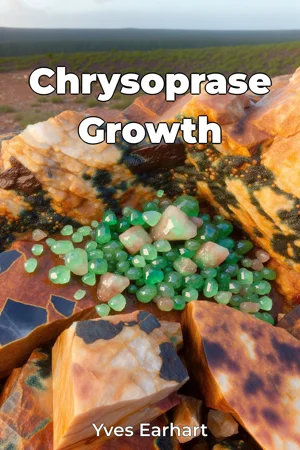
Have you ever wondered how a gemstone obtains its vibrant color, a hue so striking it has captivated artisans and collectors for centuries? This book, "Chrysoprase Growth," delves into the fascinating world of chrysoprase, a captivating green variety of chalcedony, exploring its formation, historical significance, and modern applications. We will address the formation of chrysoprase. We will examine the geological processes that lead to the creation of this gemstone, focusing on the critical role of nickel-rich serpentinite rocks and the weathering processes that liberate nickel, enabling it to be incorporated into the chalcedony structure, resulting in its distinctive green color. Understanding these processes is crucial for geologists, gemologists, and anyone interested in the earth sciences. In addition, we will explore its importance in art, and the applications chrysoprase has had throughout history. The book provides a comprehensive background on the geological settings where chrysoprase is found, covering regions known for significant deposits, such as Australia, Poland, and the United States. It assumes a basic understanding of mineralogy but provides clear explanations of complex geological concepts to ensure accessibility for a broad audience. The central argument posits that chrysoprase is more than just an aesthetically pleasing gemstone; it is a valuable indicator of specific geological conditions and a testament to the intricate interplay between mineral composition and environmental factors. Understanding its formation mechanisms provides insights into broader geochemical processes and the formation of other secondary minerals. "Chrysoprase Growth" is structured to offer a complete understanding of the gemstone. It begins with an introduction to the mineral chalcedony and its various forms, followed by a detailed explanation of the geochemical processes involved in chrysoprase formation, including the sources of nickel and its incorporation into the chalcedony structure. Subsequent sections explore the historical uses of chrysoprase in jewelry and ornamental objects, tracing its popularity from ancient civilizations to modern designers. The book culminates with a discussion of the ethical considerations in chrysoprase mining and the sustainability of sourcing this gemstone. The book draws upon a wide range of research, including geological surveys, mineralogical analyses, and historical records. It presents data from scientific studies on the chemical composition and crystal structure of chrysoprase, as well as insights from archaeological findings related to its use in ancient artifacts. The study of chrysoprase inherently connects Earth sciences to art history. The formation of the gemstone is a geological process, its use throughout history is an artistic one, and the geographic locations where it can be found connect to geography and cultural history. What sets this book apart is its holistic approach, combining geological analysis with historical and artistic perspectives. While many resources focus solely on the gemological aspects of chrysoprase, this work delves deeper into the scientific and historical background, providing a comprehensive understanding of its origin and significance. The tone is informative and accessible, aiming to bridge the gap between scientific rigor and general interest. Complex concepts are explained in a clear and engaging manner, making the book suitable for both academic researchers and enthusiasts. The target audience includes geology students, gemologists, jewelry designers, art historians, and anyone with an interest in gemstones and mineralogy. It offers valuable insights into the formation, history, and applications of chrysoprase, making it a useful resource for both professionals and hobbyists. As a work of non-fiction, "Chrysoprase Growth" adheres to the standards of academic rigor, presenting factual information supported by evidence and analysis. It avoids speculation and focuses on established scientific principles and historical records. The scope is limited to the formation, history, and applications of chrysoprase, excluding broader discussions of other green gemstones or related geological formations. This focused approach allows for an in-depth exploration of the subject matter. The information presented in "Chrysoprase Growth" can be applied in various practical ways. Geologists can use the insights into chrysoprase formation to better understand geochemical processes and mineral exploration. Jewelry designers and artisans can gain a deeper appreciation for the gemstone's origin and incorporate this knowledge into their work. Collectors can use the historical information to identify and value antique chrysoprase jewelry. While the basic understanding of nickel's role in chrysoprase's color is generally agreed upon, debates exist regarding the precise mechanisms of nickel transport and incorporation into silica structures at low temperatures. This book presents the prevailing scientific views while acknowledging these ongoing discussions.
Have you ever wondered how a gemstone obtains its vibrant color, a hue so striking it has captivated artisans and collectors for centuries? This book, "Chrysoprase Growth," delves into the fascinating world of chrysoprase, a captivating green variety of chalcedony, exploring its formation, historical significance, and modern applications. We will address the formation of chrysoprase. We will examine the geological processes that lead to the creation of this gemstone, focusing on the critical role of nickel-rich serpentinite rocks and the weathering processes that liberate nickel, enabling it to be incorporated into the chalcedony structure, resulting in its distinctive green color. Understanding these processes is crucial for geologists, gemologists, and anyone interested in the earth sciences. In addition, we will explore its importance in art, and the applications chrysoprase has had throughout history. The book provides a comprehensive background on the geological settings where chrysoprase is found, covering regions known for significant deposits, such as Australia, Poland, and the United States. It assumes a basic understanding of mineralogy but provides clear explanations of complex geological concepts to ensure accessibility for a broad audience. The central argument posits that chrysoprase is more than just an aesthetically pleasing gemstone; it is a valuable indicator of specific geological conditions and a testament to the intricate interplay between mineral composition and environmental factors. Understanding its formation mechanisms provides insights into broader geochemical processes and the formation of other secondary minerals. "Chrysoprase Growth" is structured to offer a complete understanding of the gemstone. It begins with an introduction to the mineral chalcedony and its various forms, followed by a detailed explanation of the geochemical processes involved in chrysoprase formation, including the sources of nickel and its incorporation into the chalcedony structure. Subsequent sections explore the historical uses of chrysoprase in jewelry and ornamental objects, tracing its popularity from ancient civilizations to modern designers. The book culminates with a discussion of the ethical considerations in chrysoprase mining and the sustainability of sourcing this gemstone. The book draws upon a wide range of research, including geological surveys, mineralogical analyses, and historical records. It presents data from scientific studies on the chemical composition and crystal structure of chrysoprase, as well as insights from archaeological findings related to its use in ancient artifacts. The study of chrysoprase inherently connects Earth sciences to art history. The formation of the gemstone is a geological process, its use throughout history is an artistic one, and the geographic locations where it can be found connect to geography and cultural history. What sets this book apart is its holistic approach, combining geological analysis with historical and artistic perspectives. While many resources focus solely on the gemological aspects of chrysoprase, this work delves deeper into the scientific and historical background, providing a comprehensive understanding of its origin and significance. The tone is informative and accessible, aiming to bridge the gap between scientific rigor and general interest. Complex concepts are explained in a clear and engaging manner, making the book suitable for both academic researchers and enthusiasts. The target audience includes geology students, gemologists, jewelry designers, art historians, and anyone with an interest in gemstones and mineralogy. It offers valuable insights into the formation, history, and applications of chrysoprase, making it a useful resource for both professionals and hobbyists. As a work of non-fiction, "Chrysoprase Growth" adheres to the standards of academic rigor, presenting factual information supported by evidence and analysis. It avoids speculation and focuses on established scientific principles and historical records. The scope is limited to the formation, history, and applications of chrysoprase, excluding broader discussions of other green gemstones or related geological formations. This focused approach allows for an in-depth exploration of the subject matter. The information presented in "Chrysoprase Growth" can be applied in various practical ways. Geologists can use the insights into chrysoprase formation to better understand geochemical processes and mineral exploration. Jewelry designers and artisans can gain a deeper appreciation for the gemstone's origin and incorporate this knowledge into their work. Collectors can use the historical information to identify and value antique chrysoprase jewelry. While the basic understanding of nickel's role in chrysoprase's color is generally agreed upon, debates exist regarding the precise mechanisms of nickel transport and incorporation into silica structures at low temperatures. This book presents the prevailing scientific views while acknowledging these ongoing discussions.
"Chrysoprase Growth" explores the captivating world of chrysoprase, a green gemstone variety of chalcedony, bridging Earth sciences with art history. This book uniquely combines geological analysis, mineralogy, and historical context to deliver a comprehensive understanding of the gemstone's formation and significance. One intriguing fact is the essential role of nickel-rich serpentinite rocks in providing the vibrant green hue, with weathering processes liberating nickel for incorporation into the chalcedony structure. The book begins by introducing chalcedony and then progresses to the geochemical processes that create chrysoprase, including the sources of nickel. Readers will discover the historical uses of chrysoprase in jewelry and ornamental objects across different civilizations. It highlights how chrysoprase serves as an indicator of specific geological conditions, revealing the interaction of mineral composition and environmental factors. The book concludes with a discussion of ethical considerations in chrysoprase mining, making it an essential resource for geology enthusiasts, gemologists, and art historians alike.
Book Details
ISBN
9788233983406
Publisher
Publifye AS
Your Licenses
You don't own any licenses for this book
Purchase a license below to unlock this book and download the EPUB.
Purchase License
Select a tier to unlock this book
Need bulk licensing?
Contact us for enterprise agreements.