
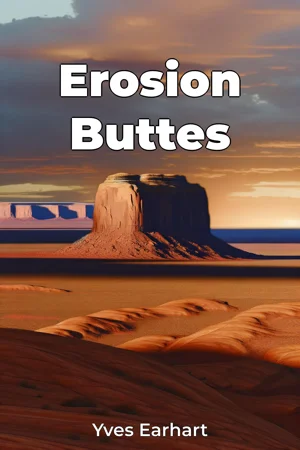
About This Book
Have you ever wondered how seemingly impossible rock formations rise dramatically from the desert floor, defying gravity and the relentless forces of nature? This book, "Erosion Buttes," delves into the fascinating world of these isolated rock formations, exploring the geological processes that sculpt them and the environments in which they thrive. We will examine the intricate dance between erosion and resistance that creates these iconic landforms, found prominently in deserts and on plateaus across the globe. The core of this book focuses on three pivotal areas: the mechanics of erosion, the geological composition of buttes, and the environmental contexts that foster their development. Understanding erosion is crucial; we will dissect the roles of water, wind, and ice in wearing away softer materials, leaving behind durable formations. The geological composition of buttes—the types of rock, their layering, and their inherent resistance to weathering—dictates their shape and longevity. Finally, we will explore the unique desert and plateau environments, characterized by arid climates and specific topographical features, that provide the stage for butte formation. These topics are vital because understanding them allows us to decipher the history of landscapes and anticipate future geological changes. To fully appreciate the formation of buttes, some background in basic geology and geography is helpful but not necessarily required. We will cover the principles of weathering, erosion, and sedimentation and also the common rock types found in these environments, such as sandstone, shale, and limestone. No prior expertise is expected; the book is designed to be accessible to any reader with an interest in earth sciences. Our central argument is that buttes are not merely static landscape features but dynamic archives of environmental history. Their shapes, sizes, and distributions reflect past climatic conditions, tectonic activity, and patterns of erosion. By studying buttes, we gain insight into long-term geological processes and the evolution of landscapes. This understanding is crucial for predicting how these landscapes may change in the future, especially in the face of climate change and human activities. The book's structure will proceed as follows: Initially, we will introduce the concept of buttes, distinguishing them from similar formations like mesas and monuments. We will then dedicate separate chapters to each of the three key areas—erosion, geological composition, and environmental context—exploring these topics in detail with case studies from various regions, including the American Southwest, Australia, and parts of Africa. Finally, we will synthesize these elements to present a comprehensive picture of butte formation and its implications for understanding landscape evolution. We will then explore the application of this knowledge, such as utilizing lidar data to study remote buttes. The claims made throughout this book will be substantiated by a wealth of scientific evidence, drawing from geological surveys, remote sensing data, and academic research. We will present visual evidence such as photographs and diagrams to illustrate key concepts and processes. We will also cite relevant scientific literature to support our interpretations and conclusions. The book also analyzes case studies with geological maps. "Erosion Buttes" connects to several other fields including climatology (the study of past climates), environmental science (the impact of erosion on land management), and archaeology (the role of buttes as landmarks and cultural sites). These connections enhance the book's argument by illustrating the broad significance of buttes beyond the realm of pure geology. This work offers a synthesized perspective, bringing together diverse strands of geological and environmental research to provide a holistic understanding of butte formation. It moves beyond descriptive accounts to explore the underlying processes and their implications for understanding landscape evolution in arid and semi-arid regions. The book adopts a fact-based, non-fiction approach, using clear language and avoiding overly technical jargon. The tone is informative and engaging, designed to appeal to a broad audience, focusing on instruction and the presentation of evidence. The intended readership includes students of geography and geology, outdoor enthusiasts, and anyone with an interest in landscapes, the environment, and earth science. The book is valuable to them because it provides a comprehensive and accessible overview of a fascinating geological phenomenon. As a work of non-fiction, "Erosion Buttes" adheres to the principles of accuracy, objectivity, and clear communication. It presents information in a balanced and unbiased manner, supporting claims with evidence and acknowledging alternative perspectives. The scope of the book focuses primarily on the geological and environmental factors that influence butte formation. It does not delve into the social or political aspects of land use in butte regions, such as issues of resource extraction or indigenous land rights. Understanding the principles of erosion and landscape formation, as presented in this book, has practical applications for land management, conservation, and resource planning. By understanding how natural processes shape the landscape, we can make more informed decisions about how to manage and protect these environments. The study of erosion and landscape evolution is not without its debates. There is ongoing discussion about the relative roles of different erosional processes and the interpretation of geological history from landform features. Where relevant, we will address these controversies and present different perspectives on the issues.
Have you ever wondered how seemingly impossible rock formations rise dramatically from the desert floor, defying gravity and the relentless forces of nature? This book, "Erosion Buttes," delves into the fascinating world of these isolated rock formations, exploring the geological processes that sculpt them and the environments in which they thrive. We will examine the intricate dance between erosion and resistance that creates these iconic landforms, found prominently in deserts and on plateaus across the globe. The core of this book focuses on three pivotal areas: the mechanics of erosion, the geological composition of buttes, and the environmental contexts that foster their development. Understanding erosion is crucial; we will dissect the roles of water, wind, and ice in wearing away softer materials, leaving behind durable formations. The geological composition of buttes—the types of rock, their layering, and their inherent resistance to weathering—dictates their shape and longevity. Finally, we will explore the unique desert and plateau environments, characterized by arid climates and specific topographical features, that provide the stage for butte formation. These topics are vital because understanding them allows us to decipher the history of landscapes and anticipate future geological changes. To fully appreciate the formation of buttes, some background in basic geology and geography is helpful but not necessarily required. We will cover the principles of weathering, erosion, and sedimentation and also the common rock types found in these environments, such as sandstone, shale, and limestone. No prior expertise is expected; the book is designed to be accessible to any reader with an interest in earth sciences. Our central argument is that buttes are not merely static landscape features but dynamic archives of environmental history. Their shapes, sizes, and distributions reflect past climatic conditions, tectonic activity, and patterns of erosion. By studying buttes, we gain insight into long-term geological processes and the evolution of landscapes. This understanding is crucial for predicting how these landscapes may change in the future, especially in the face of climate change and human activities. The book's structure will proceed as follows: Initially, we will introduce the concept of buttes, distinguishing them from similar formations like mesas and monuments. We will then dedicate separate chapters to each of the three key areas—erosion, geological composition, and environmental context—exploring these topics in detail with case studies from various regions, including the American Southwest, Australia, and parts of Africa. Finally, we will synthesize these elements to present a comprehensive picture of butte formation and its implications for understanding landscape evolution. We will then explore the application of this knowledge, such as utilizing lidar data to study remote buttes. The claims made throughout this book will be substantiated by a wealth of scientific evidence, drawing from geological surveys, remote sensing data, and academic research. We will present visual evidence such as photographs and diagrams to illustrate key concepts and processes. We will also cite relevant scientific literature to support our interpretations and conclusions. The book also analyzes case studies with geological maps. "Erosion Buttes" connects to several other fields including climatology (the study of past climates), environmental science (the impact of erosion on land management), and archaeology (the role of buttes as landmarks and cultural sites). These connections enhance the book's argument by illustrating the broad significance of buttes beyond the realm of pure geology. This work offers a synthesized perspective, bringing together diverse strands of geological and environmental research to provide a holistic understanding of butte formation. It moves beyond descriptive accounts to explore the underlying processes and their implications for understanding landscape evolution in arid and semi-arid regions. The book adopts a fact-based, non-fiction approach, using clear language and avoiding overly technical jargon. The tone is informative and engaging, designed to appeal to a broad audience, focusing on instruction and the presentation of evidence. The intended readership includes students of geography and geology, outdoor enthusiasts, and anyone with an interest in landscapes, the environment, and earth science. The book is valuable to them because it provides a comprehensive and accessible overview of a fascinating geological phenomenon. As a work of non-fiction, "Erosion Buttes" adheres to the principles of accuracy, objectivity, and clear communication. It presents information in a balanced and unbiased manner, supporting claims with evidence and acknowledging alternative perspectives. The scope of the book focuses primarily on the geological and environmental factors that influence butte formation. It does not delve into the social or political aspects of land use in butte regions, such as issues of resource extraction or indigenous land rights. Understanding the principles of erosion and landscape formation, as presented in this book, has practical applications for land management, conservation, and resource planning. By understanding how natural processes shape the landscape, we can make more informed decisions about how to manage and protect these environments. The study of erosion and landscape evolution is not without its debates. There is ongoing discussion about the relative roles of different erosional processes and the interpretation of geological history from landform features. Where relevant, we will address these controversies and present different perspectives on the issues.
"Erosion Buttes" explores the captivating formation of buttes, those striking, isolated rock formations that dominate desert landscapes. The book delves into the geological and environmental factors responsible for shaping these iconic landforms. It highlights the interplay between erosion and the resistance of different rock types, such as sandstone and shale, in creating buttes. One intriguing aspect is how buttes serve as dynamic archives, reflecting past climatic conditions and tectonic activities. The book examines the mechanics of erosion by water, wind, and ice; analyzes the geological composition of buttes; and explores the environmental contexts of arid climates and plateaus. It will also distinguish buttes from similar formations like mesas and monuments. Through case studies and visual aids, the book offers a comprehensive understanding of landscape evolution. It also emphasizes how studying buttes provides insight into long-term geological processes, valuable for anticipating future changes. The chapters progress from introducing buttes, to analyzing the three key areas, and finally synthesizing these elements to understand landscape evolution.
Book Details
ISBN
9788233983390
Publisher
Publifye AS
Your Licenses
You don't own any licenses for this book
Purchase a license below to unlock this book and download the EPUB.
Purchase License
Select a tier to unlock this book
Need bulk licensing?
Contact us for enterprise agreements.