
About This Book
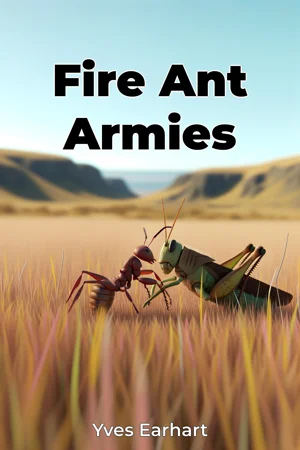
Have you ever wondered how an insect barely larger than a grain of rice can bring down creatures many times its size? "Fire Ant Armies" delves into the intricate world of these often-maligned creatures, revealing the complex strategies and cooperative behaviors that make them one of the most formidable forces in the natural world. This book unveils the secrets behind their collective intelligence, their potent venom, and their remarkable ability to dominate ecosystems through sheer force of numbers. We will explore two primary topics: the sophisticated communication and coordination within fire ant colonies and the chemical properties and delivery mechanisms of their venom. Understanding these topics is crucial because it sheds light on the evolutionary advantages of social insect behavior and offers potential insights into fields ranging from bio-inspired engineering to pest management. To fully appreciate the scope of fire ant dominance, we will explore the historical context of their introduction to new environments and the ecological consequences that followed. Prior knowledge of basic entomology or evolutionary biology is helpful but not required, as we will provide clear explanations of relevant concepts. The central argument of "Fire Ant Armies" is that the fire ant's success is not due to individual prowess but rather to the emergent properties arising from their highly organized society and their effective use of chemical warfare. This argument challenges the notion that size and individual strength are the sole determinants of success in the natural world. The book is structured in a way that first introduces the fundamentals of fire ant biology and social structure. Subsequent chapters will then focus on the specific mechanisms they employ to hunt, defend, and expand their colonies. 1. The first chapters will examine the fire ant colony's structure, exploring the roles of different castes, the queen's influence, and the methods of communication that bind the colony together. 2. Next, we will examine the chemical composition of fire ant venom, analyzing its effects on various organisms and discussing how it is deployed during attacks. 3. Finally, we will explore the ecological impact of fire ants on native species and ecosystems, discussing the challenges and potential solutions for managing their populations. The evidence presented throughout the book will be drawn from a wide range of scientific research, including field studies, laboratory experiments, and genomic analyses. This includes data on fire ant foraging behavior, venom toxicity, and colony population dynamics. We will also incorporate high-resolution images and diagrams to illustrate key concepts and findings. "Fire Ant Armies" connects to several other fields of study, including: 1. Ecology, by examining the impact of invasive species on biodiversity and ecosystem function. 2. Chemistry, through the analysis of venom composition and its effects on biological systems. 3. Computer science, by drawing parallels between fire ant colony behavior and distributed computing networks. This book approaches the subject of fire ants from an integrated perspective, combining insights from multiple scientific disciplines to provide a comprehensive understanding of these complex creatures. The writing style is factual and accessible, catering to a broad audience of scientists, students, and anyone with an interest in the natural world. The target audience includes undergraduate and graduate students in biology, entomology, and ecology, as well as informed general readers interested in nature, biology, and invasive species. This book will be valuable to them because it offers a detailed yet accessible overview of the science behind fire ant behavior and its ecological consequences. As a work of non-fiction, "Fire Ant Armies" adheres to genre conventions by providing accurate information, citing sources, and presenting evidence-based arguments. The scope of the book is limited to the biology, behavior, and ecological impact of fire ants. While we touch on the topic of pest management, we do not delve into the details of specific control methods. This focus allows us to provide an in-depth exploration of the scientific aspects of fire ant biology and behavior. The information in "Fire Ant Armies" has practical applications, for example, in developing more effective and environmentally friendly pest control strategies. Finally, "Fire Ant Armies" addresses the ongoing debates surrounding the best approaches to managing fire ant populations and mitigating their impact on native ecosystems.
Have you ever wondered how an insect barely larger than a grain of rice can bring down creatures many times its size? "Fire Ant Armies" delves into the intricate world of these often-maligned creatures, revealing the complex strategies and cooperative behaviors that make them one of the most formidable forces in the natural world. This book unveils the secrets behind their collective intelligence, their potent venom, and their remarkable ability to dominate ecosystems through sheer force of numbers. We will explore two primary topics: the sophisticated communication and coordination within fire ant colonies and the chemical properties and delivery mechanisms of their venom. Understanding these topics is crucial because it sheds light on the evolutionary advantages of social insect behavior and offers potential insights into fields ranging from bio-inspired engineering to pest management. To fully appreciate the scope of fire ant dominance, we will explore the historical context of their introduction to new environments and the ecological consequences that followed. Prior knowledge of basic entomology or evolutionary biology is helpful but not required, as we will provide clear explanations of relevant concepts. The central argument of "Fire Ant Armies" is that the fire ant's success is not due to individual prowess but rather to the emergent properties arising from their highly organized society and their effective use of chemical warfare. This argument challenges the notion that size and individual strength are the sole determinants of success in the natural world. The book is structured in a way that first introduces the fundamentals of fire ant biology and social structure. Subsequent chapters will then focus on the specific mechanisms they employ to hunt, defend, and expand their colonies. 1. The first chapters will examine the fire ant colony's structure, exploring the roles of different castes, the queen's influence, and the methods of communication that bind the colony together. 2. Next, we will examine the chemical composition of fire ant venom, analyzing its effects on various organisms and discussing how it is deployed during attacks. 3. Finally, we will explore the ecological impact of fire ants on native species and ecosystems, discussing the challenges and potential solutions for managing their populations. The evidence presented throughout the book will be drawn from a wide range of scientific research, including field studies, laboratory experiments, and genomic analyses. This includes data on fire ant foraging behavior, venom toxicity, and colony population dynamics. We will also incorporate high-resolution images and diagrams to illustrate key concepts and findings. "Fire Ant Armies" connects to several other fields of study, including: 1. Ecology, by examining the impact of invasive species on biodiversity and ecosystem function. 2. Chemistry, through the analysis of venom composition and its effects on biological systems. 3. Computer science, by drawing parallels between fire ant colony behavior and distributed computing networks. This book approaches the subject of fire ants from an integrated perspective, combining insights from multiple scientific disciplines to provide a comprehensive understanding of these complex creatures. The writing style is factual and accessible, catering to a broad audience of scientists, students, and anyone with an interest in the natural world. The target audience includes undergraduate and graduate students in biology, entomology, and ecology, as well as informed general readers interested in nature, biology, and invasive species. This book will be valuable to them because it offers a detailed yet accessible overview of the science behind fire ant behavior and its ecological consequences. As a work of non-fiction, "Fire Ant Armies" adheres to genre conventions by providing accurate information, citing sources, and presenting evidence-based arguments. The scope of the book is limited to the biology, behavior, and ecological impact of fire ants. While we touch on the topic of pest management, we do not delve into the details of specific control methods. This focus allows us to provide an in-depth exploration of the scientific aspects of fire ant biology and behavior. The information in "Fire Ant Armies" has practical applications, for example, in developing more effective and environmentally friendly pest control strategies. Finally, "Fire Ant Armies" addresses the ongoing debates surrounding the best approaches to managing fire ant populations and mitigating their impact on native ecosystems.
"Fire Ant Armies" explores the captivating world of fire ants, unveiling their intricate social structures, potent venom, and ecological dominance. These tiny creatures exhibit remarkable collective intelligence, enabling them to take down much larger opponents. For instance, their coordinated attacks and sophisticated communication networks demonstrate the power of social insect behavior, a key focus of the book. The book examines fire ants' biology, social dynamics, and ecological impact. It argues that their success stems from their highly organized societies and effective chemical warfare, challenging the notion that individual strength is paramount. The book also explores the chemical composition of fire ant venom and its effects on various organisms and ecosystems. "Fire Ant Armies" begins by introducing the fundamentals of fire ant biology and social structure, then progresses to their hunting, defense, and colony expansion mechanisms. It concludes by exploring their ecological impact and potential management strategies, offering a comprehensive understanding of these complex creatures.
Book Details
ISBN
9788233983376
Publisher
Publifye AS
Your Licenses
You don't own any licenses for this book
Purchase a license below to unlock this book and download the EPUB.
Purchase License
Select a tier to unlock this book
Need bulk licensing?
Contact us for enterprise agreements.