
About This Book
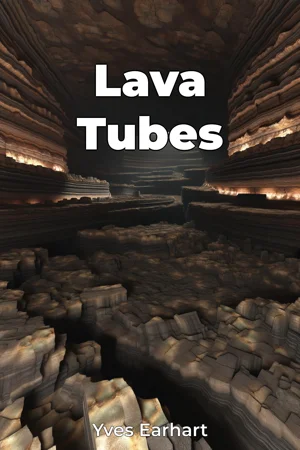
Have you ever wondered how vast, subterranean tunnels are forged by the very Earth itself? This book, *Lava Tubes*, delves into the fascinating world of these geological formations, exploring their creation, characteristics, and significance across various scientific disciplines. We aim to provide a comprehensive understanding of lava tubes, from their fiery origins in volcanic eruptions to their potential as habitats and resources. This book addresses two primary topics: the formation and evolution of lava tubes and their biological and geological importance. Understanding how these tubes form provides insights into volcanic processes and the behavior of molten rock. Their importance lies in their role as unique ecosystems, potential shelters on other planets, and conduits for groundwater flow. These topics are crucial because they bridge volcanology, biology, and even planetary science, revealing interconnected systems spanning across the Earth and potentially beyond. Contextually, our exploration ties into the broader study of volcanism and its impact on shaping planetary surfaces. Readers will benefit from a basic understanding of geological processes, such as rock formation and the movement of magma, to fully appreciate the intricacies of lava tube development. We will provide sufficient background information and clear explanations to make the subject accessible to a broad audience. The central argument of this book is that lava tubes are more than just geological curiosities; they are dynamic environments that offer valuable insights into Earth's geological history, present-day ecosystems, and potential for future exploration beyond our planet. We will demonstrate why understanding these formations is critical for multiple fields, including hazard assessment, resource management, and astrobiology. The book's structure will unfold as follows: First, we will introduce the fundamental concepts of volcanism and lava flow dynamics, setting the stage for understanding lava tube formation. Second, we will delve into the specific processes by which lava tubes develop, including discussions of thermal erosion, roof stability, and the influence of lava viscosity. Third, we will explore the diverse environments found within lava tubes, examining their unique biological communities, groundwater systems, and mineral deposits. Fourth, we will consider the applied aspects, such as using lava tubes as natural conduits and their potential for future exploration. Finally, we synthesize these ideas to emphasize the relevance of lava tubes to the study of Earth and other planets. To support our arguments, we will present a wealth of evidence drawn from field studies, laboratory experiments, and remote sensing data. We will use photographic surveys, geological maps, and geochemical analyses to illustrate the characteristics of lava tubes across diverse volcanic regions. Furthermore, we will compare the features of terrestrial lava tubes with those observed on other planets, such as Mars and the Moon, using satellite imagery and mission data. This book connects to other fields in several ways. First, astrobiology is relevant because lava tubes can offer a plausible habitat for life on other planets, shielded from radiation and extreme temperatures. Second, hydrology benefits from understanding how lava tubes act as conduits for groundwater flow, affecting water resources in volcanic regions. Third, planetary science is linked as the study offers insights into the formation and evolution of planetary surfaces, providing a framework for understanding the geology of other worlds. Our approach offers a synthesis of geological, biological, and planetary perspectives, providing a holistic view of lava tubes that goes beyond traditional geological descriptions. For instance, we integrate the latest research on microbial life in lava tubes with geological models of their formation, revealing how these environments can support unique ecosystems. The writing style maintains a professional and factual tone, while also remaining accessible and engaging for a broad audience. The book is intended for students, researchers, and anyone with an interest in geology, volcanology, astrobiology, or environmental science. We believe this book will be valuable to readers seeking a comprehensive and interdisciplinary understanding of lava tubes. The scope of this book covers lava tubes found on Earth and their potential analogs on other planetary bodies. While we focus on basaltic lava tubes due to their prevalence, we will also discuss other types of lava tubes that are less common. The knowledge presented can be applied in several ways. For example, understanding the hydrology of lava tubes is crucial for managing water resources in volcanic areas. Similarly, the study of microbial life in lava tubes can inform strategies for searching for life on other planets. While the basic formation mechanisms of lava tubes are well-established, certain debates persist regarding the relative importance of different factors, such as the role of viscosity, the influence of structural features, and the impact of environmental conditions. These debates will be addressed, presenting different viewpoints and evaluating the supporting evidence to give a balanced and comprehensive account.
Have you ever wondered how vast, subterranean tunnels are forged by the very Earth itself? This book, *Lava Tubes*, delves into the fascinating world of these geological formations, exploring their creation, characteristics, and significance across various scientific disciplines. We aim to provide a comprehensive understanding of lava tubes, from their fiery origins in volcanic eruptions to their potential as habitats and resources. This book addresses two primary topics: the formation and evolution of lava tubes and their biological and geological importance. Understanding how these tubes form provides insights into volcanic processes and the behavior of molten rock. Their importance lies in their role as unique ecosystems, potential shelters on other planets, and conduits for groundwater flow. These topics are crucial because they bridge volcanology, biology, and even planetary science, revealing interconnected systems spanning across the Earth and potentially beyond. Contextually, our exploration ties into the broader study of volcanism and its impact on shaping planetary surfaces. Readers will benefit from a basic understanding of geological processes, such as rock formation and the movement of magma, to fully appreciate the intricacies of lava tube development. We will provide sufficient background information and clear explanations to make the subject accessible to a broad audience. The central argument of this book is that lava tubes are more than just geological curiosities; they are dynamic environments that offer valuable insights into Earth's geological history, present-day ecosystems, and potential for future exploration beyond our planet. We will demonstrate why understanding these formations is critical for multiple fields, including hazard assessment, resource management, and astrobiology. The book's structure will unfold as follows: First, we will introduce the fundamental concepts of volcanism and lava flow dynamics, setting the stage for understanding lava tube formation. Second, we will delve into the specific processes by which lava tubes develop, including discussions of thermal erosion, roof stability, and the influence of lava viscosity. Third, we will explore the diverse environments found within lava tubes, examining their unique biological communities, groundwater systems, and mineral deposits. Fourth, we will consider the applied aspects, such as using lava tubes as natural conduits and their potential for future exploration. Finally, we synthesize these ideas to emphasize the relevance of lava tubes to the study of Earth and other planets. To support our arguments, we will present a wealth of evidence drawn from field studies, laboratory experiments, and remote sensing data. We will use photographic surveys, geological maps, and geochemical analyses to illustrate the characteristics of lava tubes across diverse volcanic regions. Furthermore, we will compare the features of terrestrial lava tubes with those observed on other planets, such as Mars and the Moon, using satellite imagery and mission data. This book connects to other fields in several ways. First, astrobiology is relevant because lava tubes can offer a plausible habitat for life on other planets, shielded from radiation and extreme temperatures. Second, hydrology benefits from understanding how lava tubes act as conduits for groundwater flow, affecting water resources in volcanic regions. Third, planetary science is linked as the study offers insights into the formation and evolution of planetary surfaces, providing a framework for understanding the geology of other worlds. Our approach offers a synthesis of geological, biological, and planetary perspectives, providing a holistic view of lava tubes that goes beyond traditional geological descriptions. For instance, we integrate the latest research on microbial life in lava tubes with geological models of their formation, revealing how these environments can support unique ecosystems. The writing style maintains a professional and factual tone, while also remaining accessible and engaging for a broad audience. The book is intended for students, researchers, and anyone with an interest in geology, volcanology, astrobiology, or environmental science. We believe this book will be valuable to readers seeking a comprehensive and interdisciplinary understanding of lava tubes. The scope of this book covers lava tubes found on Earth and their potential analogs on other planetary bodies. While we focus on basaltic lava tubes due to their prevalence, we will also discuss other types of lava tubes that are less common. The knowledge presented can be applied in several ways. For example, understanding the hydrology of lava tubes is crucial for managing water resources in volcanic areas. Similarly, the study of microbial life in lava tubes can inform strategies for searching for life on other planets. While the basic formation mechanisms of lava tubes are well-established, certain debates persist regarding the relative importance of different factors, such as the role of viscosity, the influence of structural features, and the impact of environmental conditions. These debates will be addressed, presenting different viewpoints and evaluating the supporting evidence to give a balanced and comprehensive account.
"Lava Tubes" explores the creation, characteristics, and scientific significance of these subterranean tunnels formed by volcanic eruptions. These geological formations offer insights into volcanic processes and the behavior of molten rock, while also presenting unique ecosystems and potential shelters on other planets. Understanding lava tubes bridges multiple disciplines, including volcanology, biology, planetary science, hazard assessment, and resource management. The book argues that lava tubes are dynamic environments crucial for understanding Earth's geological history and the potential for exploration beyond our planet. One intriguing fact is their role as conduits for groundwater flow, affecting water resources in volcanic regions. Another is their potential as habitats for life on other planets, shielded from radiation and extreme temperatures. The book begins by introducing volcanism and lava flow dynamics, then delves into lava tube formation, explores diverse environments within, considers applied aspects, and synthesizes ideas relevant to Earth and other planets. The book synthesizes geological, biological, and planetary perspectives to provide a holistic view of lava tubes, integrating the latest research on microbial life with geological models. With photographic surveys, geological maps, and geochemical analyses, "Lava Tubes" is a valuable resource for students, researchers, and anyone interested in geology, volcanology, astrobiology, or environmental science.
Book Details
ISBN
9788233983369
Publisher
Publifye AS
Your Licenses
You don't own any licenses for this book
Purchase a license below to unlock this book and download the EPUB.
Purchase License
Select a tier to unlock this book
Need bulk licensing?
Contact us for enterprise agreements.