
About This Book
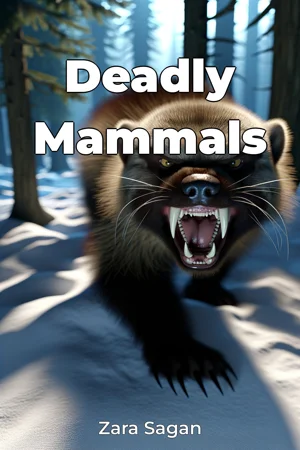
Did you know that the seemingly docile hippopotamus is responsible for more human fatalities in Africa than any other large animal? This book, *Deadly Mammals*, delves into the surprising and often overlooked lethal capabilities of various mammalian species, exploring how these creatures dominate their environments through a complex interplay of strength, aggression, and specialized biological traits. We aim to reveal the hidden dangers lurking within the animal kingdom beyond the commonly feared predators. This exploration is significant because it challenges our preconceived notions about animal behavior and ecology. Understanding the true nature of these “deadly” mammals is crucial for conservation efforts, public safety, and a more informed understanding of the natural world. Furthermore, analyzing their strategies for survival provides insights into evolutionary biology and the constant arms race between predator and prey. *Deadly Mammals* argues that lethality in mammals is not solely determined by predatory status but is a multifaceted adaptation shaped by competition, resource scarcity, and environmental pressures. We will showcase how various mammals, often perceived as benign, possess surprising arsenals of offensive and defensive capabilities that make them formidable forces in their respective ecosystems. The book is structured to systematically uncover these hidden dangers. First, we introduce the concept of "lethality" beyond simple predation, examining the various means by which mammals can inflict fatal harm. This includes not only physical strength and weaponry like teeth and claws but also the use of toxins, disease vectors, and even social behaviors that lead to death. Next, we devote individual chapters to specific "deadly" mammals, such as the wolverine, known for its tenacity and ferocity even against larger predators; the hippopotamus, whose territorial aggression makes it a significant threat around waterways; and other less obvious candidates possessing unique lethal traits. Each chapter will analyze the mammal's physical attributes, behavioral patterns, and ecological role in relation to its lethal capabilities. We will delve into their hunting techniques, defensive strategies, and the impact they have on their environment. The book culminates by examining the broader ecological and evolutionary implications of mammalian lethality. We explore how these traits have shaped ecosystems, influenced the evolution of other species, and continue to impact human-animal interactions. We also discuss the challenges of conservation in areas where these "deadly" mammals reside, seeking methods to minimize conflict and ensure the survival of both humans and wildlife. The evidence presented will be drawn from a wide range of sources, including scientific literature, field studies, and expert interviews. We will analyze data on animal attacks, mortality rates, and behavioral observations to support our arguments. In addition, we will incorporate anatomical and physiological research to illustrate the biological mechanisms underlying the mammals’ lethal capabilities. This analysis connects to other fields such as zoology, ecology, and conservation biology. Furthermore, it touches upon human psychology and risk assessment, particularly in regions where human-wildlife conflict is prevalent. *Deadly Mammals* sets itself apart by taking a broader approach to the concept of lethality in mammals. It goes beyond the typical focus on large predators and explores the lesser-known, even seemingly benign, species that possess surprising destructive potential. The writing style is accessible and engaging, aimed at a general audience interested in nature, biology, and animal behavior. The target audience includes nature enthusiasts, wildlife aficionados, students of biology, and anyone seeking to understand the hidden dangers of the animal kingdom. The book will be valuable to those interested in learning more about the complex interactions between humans and wildlife. As a non-fiction work in the 'Nature, Biology, Science Life Sciences' genres, *Deadly Mammals* is committed to presenting accurate, evidence-based information in a clear and engaging manner. We are focused on a specific selection of mammals, acknowledging that there are many more species with lethal characteristics than can be covered comprehensively in a single volume. While we will be presenting the deadly aspects of these mammals, we hope that readers will come away with a deeper appreciation for the natural world, and a more informed understanding of the role that mammals play in maintaining the balance of ecosystems.
Did you know that the seemingly docile hippopotamus is responsible for more human fatalities in Africa than any other large animal? This book, *Deadly Mammals*, delves into the surprising and often overlooked lethal capabilities of various mammalian species, exploring how these creatures dominate their environments through a complex interplay of strength, aggression, and specialized biological traits. We aim to reveal the hidden dangers lurking within the animal kingdom beyond the commonly feared predators. This exploration is significant because it challenges our preconceived notions about animal behavior and ecology. Understanding the true nature of these “deadly” mammals is crucial for conservation efforts, public safety, and a more informed understanding of the natural world. Furthermore, analyzing their strategies for survival provides insights into evolutionary biology and the constant arms race between predator and prey. *Deadly Mammals* argues that lethality in mammals is not solely determined by predatory status but is a multifaceted adaptation shaped by competition, resource scarcity, and environmental pressures. We will showcase how various mammals, often perceived as benign, possess surprising arsenals of offensive and defensive capabilities that make them formidable forces in their respective ecosystems. The book is structured to systematically uncover these hidden dangers. First, we introduce the concept of "lethality" beyond simple predation, examining the various means by which mammals can inflict fatal harm. This includes not only physical strength and weaponry like teeth and claws but also the use of toxins, disease vectors, and even social behaviors that lead to death. Next, we devote individual chapters to specific "deadly" mammals, such as the wolverine, known for its tenacity and ferocity even against larger predators; the hippopotamus, whose territorial aggression makes it a significant threat around waterways; and other less obvious candidates possessing unique lethal traits. Each chapter will analyze the mammal's physical attributes, behavioral patterns, and ecological role in relation to its lethal capabilities. We will delve into their hunting techniques, defensive strategies, and the impact they have on their environment. The book culminates by examining the broader ecological and evolutionary implications of mammalian lethality. We explore how these traits have shaped ecosystems, influenced the evolution of other species, and continue to impact human-animal interactions. We also discuss the challenges of conservation in areas where these "deadly" mammals reside, seeking methods to minimize conflict and ensure the survival of both humans and wildlife. The evidence presented will be drawn from a wide range of sources, including scientific literature, field studies, and expert interviews. We will analyze data on animal attacks, mortality rates, and behavioral observations to support our arguments. In addition, we will incorporate anatomical and physiological research to illustrate the biological mechanisms underlying the mammals’ lethal capabilities. This analysis connects to other fields such as zoology, ecology, and conservation biology. Furthermore, it touches upon human psychology and risk assessment, particularly in regions where human-wildlife conflict is prevalent. *Deadly Mammals* sets itself apart by taking a broader approach to the concept of lethality in mammals. It goes beyond the typical focus on large predators and explores the lesser-known, even seemingly benign, species that possess surprising destructive potential. The writing style is accessible and engaging, aimed at a general audience interested in nature, biology, and animal behavior. The target audience includes nature enthusiasts, wildlife aficionados, students of biology, and anyone seeking to understand the hidden dangers of the animal kingdom. The book will be valuable to those interested in learning more about the complex interactions between humans and wildlife. As a non-fiction work in the 'Nature, Biology, Science Life Sciences' genres, *Deadly Mammals* is committed to presenting accurate, evidence-based information in a clear and engaging manner. We are focused on a specific selection of mammals, acknowledging that there are many more species with lethal characteristics than can be covered comprehensively in a single volume. While we will be presenting the deadly aspects of these mammals, we hope that readers will come away with a deeper appreciation for the natural world, and a more informed understanding of the role that mammals play in maintaining the balance of ecosystems.
*Deadly Mammals* explores the hidden lethal capabilities of mammals, challenging common perceptions about animal behavior and ecology. The book reveals that lethality isn't limited to well-known predators; even seemingly docile creatures like hippos are responsible for significant human fatalities. It delves into how these animals dominate their environments through a complex interplay of aggression, specialized biological traits, and ecological pressures. Understanding these dynamics is crucial for conservation, public safety, and gaining a deeper insight into the natural world. The book systematically uncovers these hidden dangers, starting with a broad definition of lethality that extends beyond predation. It dedicates chapters to specific mammals, such as the wolverine and hippopotamus, analyzing their physical attributes, behaviors, and ecological roles in relation to their lethality. Each chapter examines hunting techniques, defensive strategies, and environmental impact. The analysis draws from scientific literature, field studies, and expert interviews, providing a comprehensive look at the science and biology behind these deadly mammals. The book culminates by examining the broader ecological and evolutionary implications of mammalian lethality and its impact on human-animal interactions. It emphasizes the importance of minimizing conflict through conservation efforts, ensuring the survival of both humans and wildlife. By focusing on a specific selection of mammals, *Deadly Mammals* provides an accessible and engaging exploration of a complex subject, appealing to nature enthusiasts, wildlife aficionados, and anyone interested in the hidden dangers of the animal kingdom.
Book Details
ISBN
9788233983352
Publisher
Publifye AS
Your Licenses
You don't own any licenses for this book
Purchase a license below to unlock this book and download the EPUB.
Purchase License
Select a tier to unlock this book
Need bulk licensing?
Contact us for enterprise agreements.