
About This Book
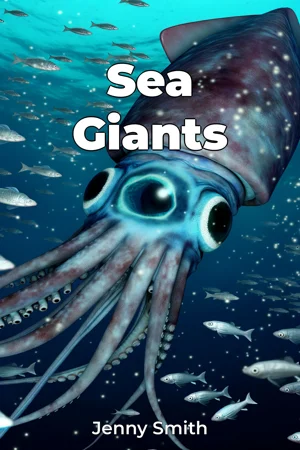
What drives a creature to plunge into crushing depths, engage in epic battles, or lie in wait with unmatched patience? "Sea Giants" delves into the predatory behaviors of the ocean’s largest inhabitants, offering a comprehensive look at the hunting strategies employed by sperm whales, great white sharks, and colossal squid. These creatures represent the pinnacle of marine evolution, and understanding their hunting techniques provides critical insights into ocean ecosystems, predator-prey dynamics, and the overall health of marine environments. This exploration is crucial as human activities increasingly impact these fragile ecosystems. This book explores three primary areas: first, the physiological and anatomical adaptations that enable these giants to hunt effectively; second, the complex social structures and communication methods that influence hunting strategies; and third, the ecological impact of these apex predators on their respective environments. Understanding these aspects is vital because it reveals the delicate balance within marine food webs and how disruptions can trigger cascading effects throughout the ecosystem. We build upon decades of research in marine biology, ethology, and oceanography to provide a current understanding of these animals. The reader should have a basic grounding in biological principles – familiarity with concepts like natural selection, food webs, and animal behavior will enhance comprehension. Our central argument is that the hunting behaviors of sea giants are not merely instinctual, but rather complex, adaptive strategies shaped by evolutionary pressures and environmental factors. These behaviors reflect sophisticated cognitive abilities, intricate social dynamics, and a profound understanding of their oceanic environments. Appreciating this complexity is essential for developing effective conservation strategies. The book begins by introducing each species, highlighting their unique physical characteristics and ecological roles. Following this introduction, dedicated chapters explore the specific hunting techniques of sperm whales, focusing on their deep-sea echolocation and cooperative hunting; the ambush predation and sensory capabilities of great white sharks; and the elusive hunting tactics of colossal squid, pieced together from limited observations and analysis of their prey. Further chapters examine the communication methods used during hunts, such as the sperm whale's coded clicks or the great white's body language. We then synthesize these findings to demonstrate the broader ecological impacts, including the regulation of prey populations and the influence on nutrient cycling. The conclusion underscores the importance of continued research and conservation efforts to protect these vital species and their habitats. This book relies on diverse sources: peer-reviewed scientific publications, behavioral observation datasets, satellite tracking data, and insights from leading marine biologists and oceanographers. We incorporate original analyses of existing data and present new interpretations of observed hunting events, using comparative ethology to highlight shared strategies and unique adaptations across species. The study of sea giant hunting behaviors inherently connects to several fields. Marine conservation benefits directly from understanding these animals' roles in maintaining ecosystem health. Sensory biology elucidates the advanced sensory systems these predators use to locate prey in vast, often dark environments. Climate science is relevant too, given the impact of ocean acidification and warming on prey distribution and abundance. The interplay between these disciplines enriches our comprehension of the challenges these animals face. "Sea Giants" stands out by integrating cutting-edge research with detailed behavioral analyses, painting a picture of these predators as intelligent, adaptable hunters acting upon a complex stage. It is written in an accessible style, avoiding technical jargon where possible and explaining complex concepts clearly, to appeal to a broad audience. This book targets anyone with an interest in marine life, animal behavior, or ocean conservation, including students, researchers, and general readers. It provides a solid foundation for anyone hoping to delve deeper into the lives of these magnificent creatures. It aims to fulfill expectations of a thorough, fact-based overview characteristic of the 'Nature, Biology, Science Life Sciences' genres. The book focuses specifically on sperm whales, great white sharks, and colossal squid, acknowledging that other large marine predators exist but are beyond the scope of this particular analysis. It emphasizes observed hunting behaviors and the related ecological impacts, with less focus on their broader life histories. The insights provided have real-world practical applications. Understanding the hunting strategies can aid in developing effective marine protected areas, minimizing human-wildlife conflict (such as shark bite mitigation strategies), informing sustainable fishing practices, and gauging the impact of anthropogenic noise on deep-sea predators. Ongoing debates surround the exact role of colossal squid in the deep-sea ecosystem and the impact of specific fishing practices on sperm whale populations. The book addresses these controversies by presenting different viewpoints and emphasizing areas where further research is needed.
What drives a creature to plunge into crushing depths, engage in epic battles, or lie in wait with unmatched patience? "Sea Giants" delves into the predatory behaviors of the ocean’s largest inhabitants, offering a comprehensive look at the hunting strategies employed by sperm whales, great white sharks, and colossal squid. These creatures represent the pinnacle of marine evolution, and understanding their hunting techniques provides critical insights into ocean ecosystems, predator-prey dynamics, and the overall health of marine environments. This exploration is crucial as human activities increasingly impact these fragile ecosystems. This book explores three primary areas: first, the physiological and anatomical adaptations that enable these giants to hunt effectively; second, the complex social structures and communication methods that influence hunting strategies; and third, the ecological impact of these apex predators on their respective environments. Understanding these aspects is vital because it reveals the delicate balance within marine food webs and how disruptions can trigger cascading effects throughout the ecosystem. We build upon decades of research in marine biology, ethology, and oceanography to provide a current understanding of these animals. The reader should have a basic grounding in biological principles – familiarity with concepts like natural selection, food webs, and animal behavior will enhance comprehension. Our central argument is that the hunting behaviors of sea giants are not merely instinctual, but rather complex, adaptive strategies shaped by evolutionary pressures and environmental factors. These behaviors reflect sophisticated cognitive abilities, intricate social dynamics, and a profound understanding of their oceanic environments. Appreciating this complexity is essential for developing effective conservation strategies. The book begins by introducing each species, highlighting their unique physical characteristics and ecological roles. Following this introduction, dedicated chapters explore the specific hunting techniques of sperm whales, focusing on their deep-sea echolocation and cooperative hunting; the ambush predation and sensory capabilities of great white sharks; and the elusive hunting tactics of colossal squid, pieced together from limited observations and analysis of their prey. Further chapters examine the communication methods used during hunts, such as the sperm whale's coded clicks or the great white's body language. We then synthesize these findings to demonstrate the broader ecological impacts, including the regulation of prey populations and the influence on nutrient cycling. The conclusion underscores the importance of continued research and conservation efforts to protect these vital species and their habitats. This book relies on diverse sources: peer-reviewed scientific publications, behavioral observation datasets, satellite tracking data, and insights from leading marine biologists and oceanographers. We incorporate original analyses of existing data and present new interpretations of observed hunting events, using comparative ethology to highlight shared strategies and unique adaptations across species. The study of sea giant hunting behaviors inherently connects to several fields. Marine conservation benefits directly from understanding these animals' roles in maintaining ecosystem health. Sensory biology elucidates the advanced sensory systems these predators use to locate prey in vast, often dark environments. Climate science is relevant too, given the impact of ocean acidification and warming on prey distribution and abundance. The interplay between these disciplines enriches our comprehension of the challenges these animals face. "Sea Giants" stands out by integrating cutting-edge research with detailed behavioral analyses, painting a picture of these predators as intelligent, adaptable hunters acting upon a complex stage. It is written in an accessible style, avoiding technical jargon where possible and explaining complex concepts clearly, to appeal to a broad audience. This book targets anyone with an interest in marine life, animal behavior, or ocean conservation, including students, researchers, and general readers. It provides a solid foundation for anyone hoping to delve deeper into the lives of these magnificent creatures. It aims to fulfill expectations of a thorough, fact-based overview characteristic of the 'Nature, Biology, Science Life Sciences' genres. The book focuses specifically on sperm whales, great white sharks, and colossal squid, acknowledging that other large marine predators exist but are beyond the scope of this particular analysis. It emphasizes observed hunting behaviors and the related ecological impacts, with less focus on their broader life histories. The insights provided have real-world practical applications. Understanding the hunting strategies can aid in developing effective marine protected areas, minimizing human-wildlife conflict (such as shark bite mitigation strategies), informing sustainable fishing practices, and gauging the impact of anthropogenic noise on deep-sea predators. Ongoing debates surround the exact role of colossal squid in the deep-sea ecosystem and the impact of specific fishing practices on sperm whale populations. The book addresses these controversies by presenting different viewpoints and emphasizing areas where further research is needed.
"Sea Giants" explores the fascinating hunting strategies of the ocean's apex predators: sperm whales, great white sharks, and colossal squid. It delves into their unique adaptations, social structures, and communication methods, revealing how these factors influence their predatory success. The book highlights that these hunting behaviors are not simply instinctual, but complex strategies shaped by evolution and environment, showcasing sophisticated cognitive abilities. The book examines how sperm whales use echolocation for deep-sea hunting, great white sharks employ ambush predation, and colossal squid utilize elusive tactics. It progresses by introducing each species, then dedicates chapters to their specific hunting techniques, communication during hunts, and broader ecological impacts, such as regulating prey populations and influencing nutrient cycling. This approach provides a thorough understanding of the delicate balance within marine ecosystems and how disruptions can have cascading effects. By integrating research with detailed behavioral analyses, "Sea Giants" emphasizes the importance of continued research and conservation efforts to protect these species and their habitats. It provides a current understanding of these animals, drawing from marine biology, ethology, and oceanography to offer a comprehensive overview suitable for anyone interested in marine life, animal behavior, or ocean conservation.
Book Details
ISBN
9788233983291
Publisher
Publifye AS
Your Licenses
You don't own any licenses for this book
Purchase a license below to unlock this book and download the EPUB.
Purchase License
Select a tier to unlock this book
Need bulk licensing?
Contact us for enterprise agreements.