
About This Book
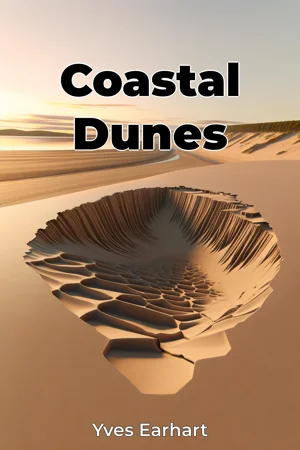
Have you ever wondered how seemingly barren stretches of sand transform into dynamic coastal landscapes? "Coastal Dunes" delves into the fascinating world of dune formation, exploring the intricate processes that shape our shorelines and provide vital natural defenses. This book examines the geological forces, ecological interactions, and human influences that govern the existence and evolution of these sandy landforms. We will explore the primary mechanisms of dune creation, focusing on aeolian transport—the movement of sand by wind. The book elucidates how wind speed, sediment availability, and vegetation cover interact to initiate and sustain dune growth. Understanding these dynamics is critical because coastal dunes serve as natural barriers against storm surges and erosion, protecting inland communities and ecosystems. We will show how different types of dunes form under varying environmental conditions, each offering unique ecological niches. Dune systems are not static, but exist in constant flux, responding to both natural processes and human activities. To give context, the book will explore the history of coastal management practices, focusing on the impact of human development and climate change on dune stability. We will present current research showing accelerated erosion rates in many coastal areas due to rising sea levels and increased storm frequency. The central argument of "Coastal Dunes" is that these coastal formations are complex adaptive systems needing integrated management strategies, acknowledging the interplay between geological processes, ecological dynamics, and human actions. This argument is vital, because effective coastal zone management needs a holistic understanding of dune systems to formulate sustainable protection and restoration plans. The book unfolds with an introduction to the basic principles of sediment transport and dune morphology. The initial chapters define dune types (e.g., foredunes, parabolic dunes, transverse dunes) and explain their characteristic features. A subsequent section details case studies from various coastal regions worldwide, illustrating diverse dune formation processes and ecological adaptations. We will review the impact of human activities, such as urbanization, agriculture, and recreation, on dune stability and biodiversity. We then build to propose integrated coastal management strategies that balance human needs with the imperative of preserving these valuable natural resources. The culmination is a discussion of future challenges and research directions, particularly in the context of climate change and its impacts on coastal environments. "Coastal Dunes" draws upon a wide range of evidence, including field observations, remote sensing data, and sedimentological analyses. The book incorporates data from long-term monitoring programs, providing insights into dune dynamics over decadal timescales. We also present the results of experimental studies that simulate aeolian transport and vegetation growth under controlled conditions. This book connects to other disciplines such as ecology, climate science, and civil engineering. Ecological principles are vital for understanding the role of vegetation in stabilizing dunes and providing habitat for coastal species. Climate science helps to contextualize the impacts of sea-level rise and storm surges on dune erosion. Civil engineering provides tools and techniques for designing and implementing coastal protection measures. These interdisciplinary connections reinforce the argument for integrated coastal management strategies. This book approaches the study of coastal dunes from a systems perspective, treating dunes not as isolated geological features but as integral components of larger coastal ecosystems. This approach emphasizes the importance of understanding feedbacks and interactions between different components of the system. The book offers a fact-based analysis and presents information in a clear and accessible style suitable for students, researchers, coastal managers, and anyone interested in learning more about these dynamic landforms. "Coastal Dunes" provides a comprehensive overview of the subject, synthesizing existing knowledge and presenting new insights based on cutting-edge research. The scope of "Coastal Dunes" encompasses a wide range of coastal environments, from temperate to tropical regions, but it intentionally limits its focus to sandy dune systems, excluding other types of coastal landforms such as cliffs and salt marshes. The information presented in "Coastal Dunes" can be applied in several ways. Coastal managers can use the book to inform the design of sustainable coastal protection strategies. Researchers can use it as a resource for identifying promising areas for future research. Educators can use it as a textbook for courses in coastal geomorphology and environmental science. "Coastal Dunes" addresses debates surrounding coastal management practices, particularly the trade-offs between development and conservation. The book also acknowledges the controversies surrounding the use of hard engineering structures (e.g., seawalls) versus soft engineering approaches (e.g., dune restoration) for coastal protection, advocating for a balanced approach that takes into account both ecological and economic considerations.
Have you ever wondered how seemingly barren stretches of sand transform into dynamic coastal landscapes? "Coastal Dunes" delves into the fascinating world of dune formation, exploring the intricate processes that shape our shorelines and provide vital natural defenses. This book examines the geological forces, ecological interactions, and human influences that govern the existence and evolution of these sandy landforms. We will explore the primary mechanisms of dune creation, focusing on aeolian transport—the movement of sand by wind. The book elucidates how wind speed, sediment availability, and vegetation cover interact to initiate and sustain dune growth. Understanding these dynamics is critical because coastal dunes serve as natural barriers against storm surges and erosion, protecting inland communities and ecosystems. We will show how different types of dunes form under varying environmental conditions, each offering unique ecological niches. Dune systems are not static, but exist in constant flux, responding to both natural processes and human activities. To give context, the book will explore the history of coastal management practices, focusing on the impact of human development and climate change on dune stability. We will present current research showing accelerated erosion rates in many coastal areas due to rising sea levels and increased storm frequency. The central argument of "Coastal Dunes" is that these coastal formations are complex adaptive systems needing integrated management strategies, acknowledging the interplay between geological processes, ecological dynamics, and human actions. This argument is vital, because effective coastal zone management needs a holistic understanding of dune systems to formulate sustainable protection and restoration plans. The book unfolds with an introduction to the basic principles of sediment transport and dune morphology. The initial chapters define dune types (e.g., foredunes, parabolic dunes, transverse dunes) and explain their characteristic features. A subsequent section details case studies from various coastal regions worldwide, illustrating diverse dune formation processes and ecological adaptations. We will review the impact of human activities, such as urbanization, agriculture, and recreation, on dune stability and biodiversity. We then build to propose integrated coastal management strategies that balance human needs with the imperative of preserving these valuable natural resources. The culmination is a discussion of future challenges and research directions, particularly in the context of climate change and its impacts on coastal environments. "Coastal Dunes" draws upon a wide range of evidence, including field observations, remote sensing data, and sedimentological analyses. The book incorporates data from long-term monitoring programs, providing insights into dune dynamics over decadal timescales. We also present the results of experimental studies that simulate aeolian transport and vegetation growth under controlled conditions. This book connects to other disciplines such as ecology, climate science, and civil engineering. Ecological principles are vital for understanding the role of vegetation in stabilizing dunes and providing habitat for coastal species. Climate science helps to contextualize the impacts of sea-level rise and storm surges on dune erosion. Civil engineering provides tools and techniques for designing and implementing coastal protection measures. These interdisciplinary connections reinforce the argument for integrated coastal management strategies. This book approaches the study of coastal dunes from a systems perspective, treating dunes not as isolated geological features but as integral components of larger coastal ecosystems. This approach emphasizes the importance of understanding feedbacks and interactions between different components of the system. The book offers a fact-based analysis and presents information in a clear and accessible style suitable for students, researchers, coastal managers, and anyone interested in learning more about these dynamic landforms. "Coastal Dunes" provides a comprehensive overview of the subject, synthesizing existing knowledge and presenting new insights based on cutting-edge research. The scope of "Coastal Dunes" encompasses a wide range of coastal environments, from temperate to tropical regions, but it intentionally limits its focus to sandy dune systems, excluding other types of coastal landforms such as cliffs and salt marshes. The information presented in "Coastal Dunes" can be applied in several ways. Coastal managers can use the book to inform the design of sustainable coastal protection strategies. Researchers can use it as a resource for identifying promising areas for future research. Educators can use it as a textbook for courses in coastal geomorphology and environmental science. "Coastal Dunes" addresses debates surrounding coastal management practices, particularly the trade-offs between development and conservation. The book also acknowledges the controversies surrounding the use of hard engineering structures (e.g., seawalls) versus soft engineering approaches (e.g., dune restoration) for coastal protection, advocating for a balanced approach that takes into account both ecological and economic considerations.
"Coastal Dunes" explores the dynamic nature of these sandy landscapes, emphasizing their crucial role as natural barriers against coastal erosion and storm surges. These dune systems, shaped by aeolian transport and sediment availability, are not static; they constantly evolve in response to natural forces and human impacts. Intriguingly, the book highlights how different dune types form under various environmental conditions, each creating distinct ecological niches. The book argues for integrated coastal management strategies, recognizing the complex interplay between geological processes, ecological dynamics, and human activities. Examining case studies from around the world, it reveals the impact of urbanization, agriculture, and climate change on dune stability and biodiversity. By drawing on field observations, remote sensing data, and experimental studies, the book offers a comprehensive overview suitable for students, researchers, and coastal managers. It progresses from basic principles of dune morphology to proposing sustainable protection and restoration plans, culminating in a discussion of future challenges amidst climate change.
Book Details
ISBN
9788233983277
Publisher
Publifye AS
Your Licenses
You don't own any licenses for this book
Purchase a license below to unlock this book and download the EPUB.
Purchase License
Select a tier to unlock this book
Need bulk licensing?
Contact us for enterprise agreements.