
About This Book
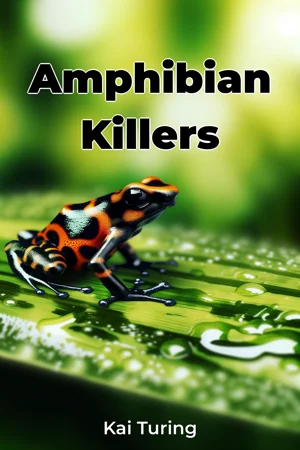
Did you know that some of the most potent natural toxins on Earth are found in the skin of seemingly harmless amphibians? "Amphibian Killers" delves into the diverse and often deadly strategies that these creatures employ to survive in a world teeming with predators and competitors. This book explores the fascinating intersection of biology, ecology, and toxicology, focusing on how amphibians like bullfrogs and poison dart frogs have evolved sophisticated methods of both hunting and self-defense. The book centers on three key topics: amphibian hunting techniques, amphibian defense mechanisms (primarily toxins), and the evolutionary pressures that have shaped these adaptations. The importance of understanding these topics lies in appreciating the delicate balance of ecosystems and the complex relationships between species. Amphibians, as both predators and prey, play a crucial role in maintaining biodiversity and ecological health. Their unique adaptations offer valuable insights into evolutionary biology and potential applications in fields such as medicine. "Amphibian Killers" situates these topics within a broader context by examining amphibian evolution, their role in various ecosystems, and the threats they currently face due to habitat loss and climate change. Readers do not need any advanced scientific knowledge, but a basic understanding of biology will enhance their appreciation of the material. The central argument of "Amphibian Killers" is that the selective pressures of predation and competition have driven the evolution of remarkable offensive and defensive strategies in amphibians, often involving speed, camouflage, and potent toxins. This argument is significant because it highlights the power of natural selection in shaping biodiversity and underscores the importance of conserving these vulnerable species. The book is structured to provide a comprehensive overview of the subject. It begins with an introduction to the world of amphibians, their classification, and their ecological roles. It then explores the hunting strategies of various amphibian species, focusing on ambush predators like bullfrogs and active hunters like some salamanders. The subsequent chapters are dedicated to amphibian defense mechanisms, with a particular emphasis on the chemistry and pharmacology of amphibian toxins. A detailed examination of poison dart frogs and their dietary sequestration of toxins from insects is included. The book culminates with a discussion of the conservation challenges facing amphibians and the potential for applying knowledge of amphibian toxins to the development of new drugs. The book's arguments are supported by a wide range of scientific evidence, including field observations, experimental studies, and biochemical analyses. Data from scientific journals, research institutions, and natural history collections will be incorporated. "Amphibian Killers" also connects to other fields such as pharmacology (through the study of amphibian toxins), ecology (through the examination of predator-prey relationships), and conservation biology (through the assessment of threats to amphibian populations.) These connections enhance the book's argument by providing multiple perspectives on the importance of amphibian biology. The book takes a unique approach by integrating ecological and evolutionary perspectives with detailed chemical analyses of amphibian toxins. This interdisciplinary approach provides a more complete understanding of the subject. The tone of the book is informative and accessible, making it suitable for a broad audience while maintaining scientific accuracy. The target audience includes students, naturalists, conservationists, and anyone interested in learning more about the fascinating world of amphibians. The book is valuable to them because it provides a comprehensive and up-to-date overview of amphibian biology, with a particular focus on their offensive and defensive strategies. As a work of non-fiction science writing, "Amphibian Killers" adheres to the conventions of accuracy, objectivity, and evidence-based argumentation. The scope of "Amphibian Killers" is limited to the hunting and defense mechanisms of amphibians. While other aspects of amphibian biology are mentioned, they are not the primary focus. The information in "Amphibian Killers" can be applied practically to conservation efforts, drug discovery, and ecological research. A greater understanding of amphibian toxins may lead to the development of new medicines or pesticides. While much is known and documented regarding amphibian toxicity, there is ongoing debate about the precise mechanisms and evolutionary origins of certain toxins, particularly those found in poison dart frogs. The book addresses these debates.
Did you know that some of the most potent natural toxins on Earth are found in the skin of seemingly harmless amphibians? "Amphibian Killers" delves into the diverse and often deadly strategies that these creatures employ to survive in a world teeming with predators and competitors. This book explores the fascinating intersection of biology, ecology, and toxicology, focusing on how amphibians like bullfrogs and poison dart frogs have evolved sophisticated methods of both hunting and self-defense. The book centers on three key topics: amphibian hunting techniques, amphibian defense mechanisms (primarily toxins), and the evolutionary pressures that have shaped these adaptations. The importance of understanding these topics lies in appreciating the delicate balance of ecosystems and the complex relationships between species. Amphibians, as both predators and prey, play a crucial role in maintaining biodiversity and ecological health. Their unique adaptations offer valuable insights into evolutionary biology and potential applications in fields such as medicine. "Amphibian Killers" situates these topics within a broader context by examining amphibian evolution, their role in various ecosystems, and the threats they currently face due to habitat loss and climate change. Readers do not need any advanced scientific knowledge, but a basic understanding of biology will enhance their appreciation of the material. The central argument of "Amphibian Killers" is that the selective pressures of predation and competition have driven the evolution of remarkable offensive and defensive strategies in amphibians, often involving speed, camouflage, and potent toxins. This argument is significant because it highlights the power of natural selection in shaping biodiversity and underscores the importance of conserving these vulnerable species. The book is structured to provide a comprehensive overview of the subject. It begins with an introduction to the world of amphibians, their classification, and their ecological roles. It then explores the hunting strategies of various amphibian species, focusing on ambush predators like bullfrogs and active hunters like some salamanders. The subsequent chapters are dedicated to amphibian defense mechanisms, with a particular emphasis on the chemistry and pharmacology of amphibian toxins. A detailed examination of poison dart frogs and their dietary sequestration of toxins from insects is included. The book culminates with a discussion of the conservation challenges facing amphibians and the potential for applying knowledge of amphibian toxins to the development of new drugs. The book's arguments are supported by a wide range of scientific evidence, including field observations, experimental studies, and biochemical analyses. Data from scientific journals, research institutions, and natural history collections will be incorporated. "Amphibian Killers" also connects to other fields such as pharmacology (through the study of amphibian toxins), ecology (through the examination of predator-prey relationships), and conservation biology (through the assessment of threats to amphibian populations.) These connections enhance the book's argument by providing multiple perspectives on the importance of amphibian biology. The book takes a unique approach by integrating ecological and evolutionary perspectives with detailed chemical analyses of amphibian toxins. This interdisciplinary approach provides a more complete understanding of the subject. The tone of the book is informative and accessible, making it suitable for a broad audience while maintaining scientific accuracy. The target audience includes students, naturalists, conservationists, and anyone interested in learning more about the fascinating world of amphibians. The book is valuable to them because it provides a comprehensive and up-to-date overview of amphibian biology, with a particular focus on their offensive and defensive strategies. As a work of non-fiction science writing, "Amphibian Killers" adheres to the conventions of accuracy, objectivity, and evidence-based argumentation. The scope of "Amphibian Killers" is limited to the hunting and defense mechanisms of amphibians. While other aspects of amphibian biology are mentioned, they are not the primary focus. The information in "Amphibian Killers" can be applied practically to conservation efforts, drug discovery, and ecological research. A greater understanding of amphibian toxins may lead to the development of new medicines or pesticides. While much is known and documented regarding amphibian toxicity, there is ongoing debate about the precise mechanisms and evolutionary origins of certain toxins, particularly those found in poison dart frogs. The book addresses these debates.
"Amphibian Killers" explores the captivating world of amphibian survival, revealing how these creatures employ remarkable strategies for both hunting and defending themselves. The book delves into the evolutionary pressures that have shaped their unique adaptations, particularly focusing on their potent toxins and intricate hunting techniques. Readers will discover how amphibians, from ambush predators like bullfrogs to toxin-laden poison dart frogs, play pivotal roles in maintaining biodiversity and ecological balance. One intriguing aspect is how some amphibians sequester toxins from their insect prey, turning their food into a formidable defense. The book progresses from an introduction to amphibian classification and ecological roles to detailed examinations of their hunting strategies and defense mechanisms. Special emphasis is given to the chemistry and pharmacology of amphibian toxins, revealing their potential applications in medicine. It highlights the importance of understanding predator-prey relationships and offers insights into the conservation challenges these fascinating species face. By integrating ecological and evolutionary perspectives with chemical analyses, "Amphibian Killers" provides a comprehensive and accessible overview, making it a valuable resource for anyone interested in nature, biology, and the science of life.
Book Details
ISBN
9788233983253
Publisher
Publifye AS
Your Licenses
You don't own any licenses for this book
Purchase a license below to unlock this book and download the EPUB.
Purchase License
Select a tier to unlock this book
Need bulk licensing?
Contact us for enterprise agreements.