
About This Book
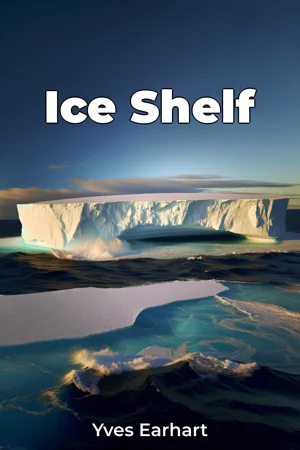
Imagine a world where colossal, floating platforms of ice, hundreds of meters thick and larger than some countries, are silently crumbling, reshaping coastlines and impacting global sea levels. This book, "Ice Shelf," delves into the fascinating and critically important world of these frozen giants, exploring their formation, dynamics, and future in a rapidly changing climate. We will examine how ice shelves, the floating extensions of glaciers and ice sheets, form along polar coastlines, acting as buttresses that slow the flow of land-based ice into the ocean. The book will explore in detail the key processes driving ice shelf evolution, including basal melting from warming ocean waters, surface meltwater ponding and fracturing, and iceberg calving. Understanding these processes is crucial because ice shelf disintegration doesn't directly raise sea level (as they are already floating), but it removes a critical barrier, accelerating the discharge of grounded ice and contributing significantly to sea-level rise. The book provides historical context, tracing the evolution of scientific understanding of ice shelves from early explorations to modern satellite observations and sophisticated numerical modelling. We will present the social and economic implications of ice shelf loss, particularly for coastal communities vulnerable to rising sea levels. The central argument is that the stability of ice shelves is essential for regional and global climate stability, and that understanding their complex interactions with the atmosphere and ocean is crucial for making informed climate projections and mitigation strategies. The book's structure follows a logical progression. First, it introduces the fundamental properties of ice, glacier dynamics, oceanography, and their interaction necessary to understand ice shelf behavior. It then investigates the formation of ice shelves through accretion of glacial ice and marine ice formation. The main body of the work is dedicated to a detailed analysis of the processes that control ice shelf mass balance, with dedicated chapters on basal melting driven by ocean currents and water temperature, surface melting and the impact of meltwater on shelf stability, and the mechanics of iceberg calving and fracture propagation. Finally, we discuss the observed changes in ice shelf extent and thickness in both Antarctica and Greenland, and the implications of these changes for global sea level rise. The evidence and research presented in "Ice Shelf" will draw upon diverse sources, including satellite remote sensing data (such as radar altimetry, ice velocity measurements, and gravity observations), in-situ oceanographic and glaciological measurements, and climate model simulations. We will feature data from international research programs like the European Space Agency's CryoSat-2 mission and the NASA's Operation IceBridge, showcasing the latest findings on ice shelf change. This book connects to several interdisciplinary fields. It draws heavily on glaciology and oceanography to explain physical processes, connects to climatology to analyze the impacts of climate change, and integrates with environmental science to assess the consequences of ice shelf loss on marine ecosystems. These connections enrich the book's argument by providing a holistic view of the Earth system. "Ice Shelf" adopts a fact-based, non-fiction narrative, offering a comprehensive overview of current scientific knowledge while remaining accessible to a broad audience. The writing style balances scientific rigor with clear explanations and compelling visuals. The book aims to engage readers with state-of-the-art research in a way that will be both informative and thought-provoking. The target audience includes students of earth science, environmental science, geography, and climate science, as well as researchers, policymakers, and anyone interested in understanding the profound changes occurring in our polar regions. This book will be valuable to them by providing a comprehensive synthesis of current knowledge on ice shelves and their role in the Earth system. The scope of the book is intentionally broad, covering ice shelves globally, with a particular focus on those in Antarctica and Greenland. However, it does not delve into the technical details of ice sheet numerical modelling. Instead, the book aims to provide a holistic understanding of the processes, observations, and implications of ice shelf change. The information in this book has real-world applications, informing climate adaptation strategies for coastal communities, guiding policy decisions on greenhouse gas emissions, and contributing to a greater understanding of our planet's changing climate. The debates surrounding the relative contributions of different ice loss mechanisms and the uncertainty in future sea-level projections are thoroughly addressed. "Ice Shelf" seeks to clarify these points, presenting a balanced perspective on the challenges and opportunities for future research.
Imagine a world where colossal, floating platforms of ice, hundreds of meters thick and larger than some countries, are silently crumbling, reshaping coastlines and impacting global sea levels. This book, "Ice Shelf," delves into the fascinating and critically important world of these frozen giants, exploring their formation, dynamics, and future in a rapidly changing climate. We will examine how ice shelves, the floating extensions of glaciers and ice sheets, form along polar coastlines, acting as buttresses that slow the flow of land-based ice into the ocean. The book will explore in detail the key processes driving ice shelf evolution, including basal melting from warming ocean waters, surface meltwater ponding and fracturing, and iceberg calving. Understanding these processes is crucial because ice shelf disintegration doesn't directly raise sea level (as they are already floating), but it removes a critical barrier, accelerating the discharge of grounded ice and contributing significantly to sea-level rise. The book provides historical context, tracing the evolution of scientific understanding of ice shelves from early explorations to modern satellite observations and sophisticated numerical modelling. We will present the social and economic implications of ice shelf loss, particularly for coastal communities vulnerable to rising sea levels. The central argument is that the stability of ice shelves is essential for regional and global climate stability, and that understanding their complex interactions with the atmosphere and ocean is crucial for making informed climate projections and mitigation strategies. The book's structure follows a logical progression. First, it introduces the fundamental properties of ice, glacier dynamics, oceanography, and their interaction necessary to understand ice shelf behavior. It then investigates the formation of ice shelves through accretion of glacial ice and marine ice formation. The main body of the work is dedicated to a detailed analysis of the processes that control ice shelf mass balance, with dedicated chapters on basal melting driven by ocean currents and water temperature, surface melting and the impact of meltwater on shelf stability, and the mechanics of iceberg calving and fracture propagation. Finally, we discuss the observed changes in ice shelf extent and thickness in both Antarctica and Greenland, and the implications of these changes for global sea level rise. The evidence and research presented in "Ice Shelf" will draw upon diverse sources, including satellite remote sensing data (such as radar altimetry, ice velocity measurements, and gravity observations), in-situ oceanographic and glaciological measurements, and climate model simulations. We will feature data from international research programs like the European Space Agency's CryoSat-2 mission and the NASA's Operation IceBridge, showcasing the latest findings on ice shelf change. This book connects to several interdisciplinary fields. It draws heavily on glaciology and oceanography to explain physical processes, connects to climatology to analyze the impacts of climate change, and integrates with environmental science to assess the consequences of ice shelf loss on marine ecosystems. These connections enrich the book's argument by providing a holistic view of the Earth system. "Ice Shelf" adopts a fact-based, non-fiction narrative, offering a comprehensive overview of current scientific knowledge while remaining accessible to a broad audience. The writing style balances scientific rigor with clear explanations and compelling visuals. The book aims to engage readers with state-of-the-art research in a way that will be both informative and thought-provoking. The target audience includes students of earth science, environmental science, geography, and climate science, as well as researchers, policymakers, and anyone interested in understanding the profound changes occurring in our polar regions. This book will be valuable to them by providing a comprehensive synthesis of current knowledge on ice shelves and their role in the Earth system. The scope of the book is intentionally broad, covering ice shelves globally, with a particular focus on those in Antarctica and Greenland. However, it does not delve into the technical details of ice sheet numerical modelling. Instead, the book aims to provide a holistic understanding of the processes, observations, and implications of ice shelf change. The information in this book has real-world applications, informing climate adaptation strategies for coastal communities, guiding policy decisions on greenhouse gas emissions, and contributing to a greater understanding of our planet's changing climate. The debates surrounding the relative contributions of different ice loss mechanisms and the uncertainty in future sea-level projections are thoroughly addressed. "Ice Shelf" seeks to clarify these points, presenting a balanced perspective on the challenges and opportunities for future research.
"Ice Shelf" explores the critical role of these vast, floating ice platforms in our planet's climate system. These extensions of glaciers, found predominantly in Antarctica and Greenland, act as crucial buttresses, slowing the flow of land-based ice into the ocean. While their disintegration doesn't directly raise sea levels, their loss accelerates the discharge of grounded ice, significantly contributing to sea level rise. The book delves into processes such as basal melting and iceberg calving, fundamental to understanding ice shelf dynamics. The book traces the evolution of our understanding of ice shelves, from early explorations to the sophisticated satellite observations of today. It emphasizes the social and economic implications of ice shelf loss, particularly for vulnerable coastal communities. Using diverse data sources, it examines changes in ice shelf extent and thickness, connecting glaciology, oceanography, and climatology. "Ice Shelf" presents a comprehensive yet accessible overview. The book progresses logically, first introducing the fundamental properties of ice and ocean interactions. It then analyzes the processes controlling ice shelf mass balance, dedicating chapters to basal melting, surface melting, and iceberg calving. Finally, it discusses observed changes in Antarctica and Greenland and their implications for global sea level rise, providing a holistic view of these Earth Science giants.
Book Details
ISBN
9788233983116
Publisher
Publifye AS
Your Licenses
You don't own any licenses for this book
Purchase a license below to unlock this book and download the EPUB.
Purchase License
Select a tier to unlock this book
Need bulk licensing?
Contact us for enterprise agreements.