
About This Book
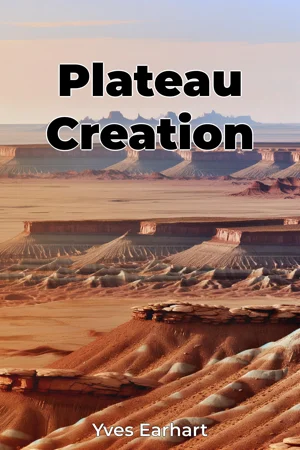
Have you ever wondered how massive, elevated flatlands sculpt the Earth’s diverse landscapes? "Plateau Creation" delves into the fascinating geological processes behind the formation of plateaus, exploring their significance in shaping ecosystems, influencing geographical boundaries, and revealing the dynamic forces that mold our planet. These elevated landscapes, distinct from mountain ranges, are vital to understanding Earth's geographical diversity and hold clues to its tectonic and climatic history. This book addresses the fundamental question of how plateaus, those expansive tablelands that punctuate our continents, come into being. We will explore three primary mechanisms: tectonic uplift, volcanic activity, and erosion. Tectonic uplift, driven by the collision of continental plates or the upwelling of mantle plumes, can elevate vast regions of land, creating the foundation for plateaus. Volcanic activity, particularly large-scale basalt flows, can build up layer upon layer, forming extensive lava plateaus. Finally, differential erosion, where softer rocks are worn away while more resistant layers remain, can carve plateaus out of previously elevated land. Understanding plateau formation provides critical insight into several connected fields. It allows us to decipher past tectonic events and predict future geological changes. The book will present evidence from geological surveys, satellite imagery, and geochemical analysis to support these claims. By examining specific examples, such as the Tibetan Plateau’s influence on Asian climate and the Deccan Plateau's volcanic origin, we illustrate the global impact of these geological formations. "Plateau Creation" argues that plateaus are not merely static landforms but dynamic features that play a crucial role in shaping ecosystems and recording Earth's history. This argument will be developed by first introducing the basic geological principles of plateau formation. We then examine case studies of different plateau types across the globe, highlighting the specific processes that shaped them and the unique ecosystems they support. The culmination of this exploration is an analysis of the impact of plateaus on regional and global climate patterns, as well as their relevance to resource management and conservation efforts. The book draws on a wide range of scientific data, incorporating geological surveys, remote sensing data, and climate models. It will reference established theories in tectonics, volcanology, and geomorphology, presenting both classic research and recent findings. This interdisciplinary approach allows us to analyze the interplay between geological forces, ecological processes, and climate dynamics. "Plateau Creation" will appeal to students and researchers in geology, geography, environmental science, and related fields. It is written in a clear and accessible style, making it suitable for anyone with an interest in Earth's landscapes and the forces that created them. While it delves into complex geological processes, the book avoids excessive jargon and provides clear explanations of technical terms. The scope of the book is limited to the geological and environmental aspects of plateau formation, with minimal focus on human history or cultural impact. The tone is factual and analytical, aiming to provide a comprehensive and unbiased overview of the current state of knowledge on plateau formation. We will address ongoing debates about the relative importance of different formation mechanisms in specific regions, presenting multiple perspectives and acknowledging areas of uncertainty. This book offers a unique perspective by connecting the geological processes of plateau formation with their ecological and climatic consequences, providing a holistic understanding of these remarkable landscapes. The information presented has real-world applications in land management, resource exploration, and climate change modeling.
Have you ever wondered how massive, elevated flatlands sculpt the Earth’s diverse landscapes? "Plateau Creation" delves into the fascinating geological processes behind the formation of plateaus, exploring their significance in shaping ecosystems, influencing geographical boundaries, and revealing the dynamic forces that mold our planet. These elevated landscapes, distinct from mountain ranges, are vital to understanding Earth's geographical diversity and hold clues to its tectonic and climatic history. This book addresses the fundamental question of how plateaus, those expansive tablelands that punctuate our continents, come into being. We will explore three primary mechanisms: tectonic uplift, volcanic activity, and erosion. Tectonic uplift, driven by the collision of continental plates or the upwelling of mantle plumes, can elevate vast regions of land, creating the foundation for plateaus. Volcanic activity, particularly large-scale basalt flows, can build up layer upon layer, forming extensive lava plateaus. Finally, differential erosion, where softer rocks are worn away while more resistant layers remain, can carve plateaus out of previously elevated land. Understanding plateau formation provides critical insight into several connected fields. It allows us to decipher past tectonic events and predict future geological changes. The book will present evidence from geological surveys, satellite imagery, and geochemical analysis to support these claims. By examining specific examples, such as the Tibetan Plateau’s influence on Asian climate and the Deccan Plateau's volcanic origin, we illustrate the global impact of these geological formations. "Plateau Creation" argues that plateaus are not merely static landforms but dynamic features that play a crucial role in shaping ecosystems and recording Earth's history. This argument will be developed by first introducing the basic geological principles of plateau formation. We then examine case studies of different plateau types across the globe, highlighting the specific processes that shaped them and the unique ecosystems they support. The culmination of this exploration is an analysis of the impact of plateaus on regional and global climate patterns, as well as their relevance to resource management and conservation efforts. The book draws on a wide range of scientific data, incorporating geological surveys, remote sensing data, and climate models. It will reference established theories in tectonics, volcanology, and geomorphology, presenting both classic research and recent findings. This interdisciplinary approach allows us to analyze the interplay between geological forces, ecological processes, and climate dynamics. "Plateau Creation" will appeal to students and researchers in geology, geography, environmental science, and related fields. It is written in a clear and accessible style, making it suitable for anyone with an interest in Earth's landscapes and the forces that created them. While it delves into complex geological processes, the book avoids excessive jargon and provides clear explanations of technical terms. The scope of the book is limited to the geological and environmental aspects of plateau formation, with minimal focus on human history or cultural impact. The tone is factual and analytical, aiming to provide a comprehensive and unbiased overview of the current state of knowledge on plateau formation. We will address ongoing debates about the relative importance of different formation mechanisms in specific regions, presenting multiple perspectives and acknowledging areas of uncertainty. This book offers a unique perspective by connecting the geological processes of plateau formation with their ecological and climatic consequences, providing a holistic understanding of these remarkable landscapes. The information presented has real-world applications in land management, resource exploration, and climate change modeling.
"Plateau Creation" explores the captivating processes behind the formation of plateaus, elevated flatlands that significantly impact Earth's ecosystems and geographic boundaries. It delves into how these formations, unlike mountains, reveal the planet's dynamic tectonic and climatic history. The book highlights tectonic uplift, volcanic activity, and erosion as key mechanisms, illustrating how colliding continental plates, basalt flows, and differential weathering sculpt these tablelands. One intriguing insight is how the Tibetan Plateau influences Asian climate, demonstrating plateaus' global impact. The book argues that plateaus are dynamic features, shaping ecosystems while recording Earth's history. It begins by introducing geological principles, examines various plateau types globally, and analyzes their effect on climate patterns. Employing geological surveys, satellite imagery, and geochemical analyses, the book avoids excessive jargon while presenting established theories and recent findings in earth sciences and geography. This approach provides a holistic view of plateau formation, connecting geological forces with ecological and climatic consequences.
Book Details
ISBN
9788233983109
Publisher
Publifye AS
Your Licenses
You don't own any licenses for this book
Purchase a license below to unlock this book and download the EPUB.
Purchase License
Select a tier to unlock this book
Need bulk licensing?
Contact us for enterprise agreements.