
About This Book
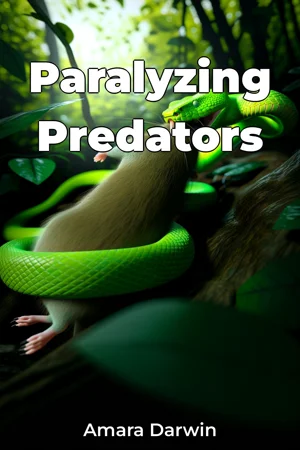
Have you ever wondered how a creature no larger than your thumb can bring down prey many times its size? *Paralyzing Predators* delves into the fascinating world of venomous animals that employ sophisticated paralytic strategies to subdue their victims. This book explores the evolutionary adaptations, biochemical mechanisms, and ecological significance of paralysis as a predatory technique, offering a comprehensive look at the creatures that have mastered this deadly art. Two central topics, the diverse array of paralytic venoms and the evolutionary pressures driving their development, form cornerstones of this exploration. Understanding these topics is crucial because they shed light on the intricate relationships between predators and prey, the complex interplay of natural selection, and the untapped potential of venom components in biomedical research. The book provides historical context by examining early scientific observations of venomous animals, tracing the evolution of our understanding of their paralyzing capabilities through centuries of exploration and research. It also lays a scientific foundation, explaining the basics of neurobiology, muscle physiology, and toxin pharmacology necessary to grasp the intricacies of paralytic venom action. The central argument is that paralytic venom represents a pinnacle of evolutionary innovation, showcasing nature's capacity to develop highly specific and effective tools for survival. This argument is vital because it highlights the importance of biodiversity conservation, emphasizing the potential loss of invaluable biological resources if these unique species and their venoms are not protected. *Paralyzing Predators* begins by introducing the fundamental concepts of venom production, delivery, and action, providing a taxonomic overview of animals that utilize paralysis as a predation strategy. The book then develops key ideas across several sections. First, it examines the molecular composition of various paralytic venoms, detailing the specific toxins involved and their mechanisms of action at the cellular and molecular levels. Second, it investigates the ecological roles of these predators, analyzing their hunting behaviors, prey preferences, and the impact of their paralytic capabilities on ecosystem dynamics. Finally, the book culminates by exploring the potential biomedical applications of paralytic venoms, such as their use in developing novel analgesics, muscle relaxants, and neurological therapies. The evidence presented in this book draws from a wide range of scientific disciplines, incorporating original research articles, field studies, and laboratory experiments. Unique data sources, such as venom proteomic analyses and electrophysiological recordings of venom action on nerve and muscle tissues, support the claims made. The study of paralytic predators intersects with several other fields, including pharmacology, evolutionary biology, and conservation biology. The connection to pharmacology lies in the potential pharmaceutical applications of venom toxins. The link to evolutionary biology arises from the insights into adaptation and natural selection that these predators provide. The tie to conservation biology stems from the need to preserve biodiversity to protect these unique resources. *Paralyzing Predators* takes a unique approach by integrating molecular biology, ecology, and evolutionary biology to provide a holistic understanding of paralytic predation. It uses a conversational yet precise writing style, making complex scientific concepts accessible to a broad audience. The target audience includes students, researchers, science enthusiasts, and anyone curious about the natural world. The book would be valuable to them because it offers a comprehensive and engaging introduction to a fascinating and often overlooked aspect of animal behavior and evolution. As a work of non-fiction, *Paralyzing Predators* adheres to the conventions of accuracy, objectivity, and evidence-based arguments. While the book aims to provide a broad overview of paralytic predators, its scope is intentionally limited to animals that primarily use venom for prey immobilization, excluding other forms of paralysis-inducing mechanisms. The information presented has real-world applications, informing the development of new drugs and providing crucial insights into the ecological roles of venomous animals. The book also touches upon ongoing debates regarding the ethics of venom extraction and the conservation of venomous species in the face of habitat loss and climate change.
Have you ever wondered how a creature no larger than your thumb can bring down prey many times its size? *Paralyzing Predators* delves into the fascinating world of venomous animals that employ sophisticated paralytic strategies to subdue their victims. This book explores the evolutionary adaptations, biochemical mechanisms, and ecological significance of paralysis as a predatory technique, offering a comprehensive look at the creatures that have mastered this deadly art. Two central topics, the diverse array of paralytic venoms and the evolutionary pressures driving their development, form cornerstones of this exploration. Understanding these topics is crucial because they shed light on the intricate relationships between predators and prey, the complex interplay of natural selection, and the untapped potential of venom components in biomedical research. The book provides historical context by examining early scientific observations of venomous animals, tracing the evolution of our understanding of their paralyzing capabilities through centuries of exploration and research. It also lays a scientific foundation, explaining the basics of neurobiology, muscle physiology, and toxin pharmacology necessary to grasp the intricacies of paralytic venom action. The central argument is that paralytic venom represents a pinnacle of evolutionary innovation, showcasing nature's capacity to develop highly specific and effective tools for survival. This argument is vital because it highlights the importance of biodiversity conservation, emphasizing the potential loss of invaluable biological resources if these unique species and their venoms are not protected. *Paralyzing Predators* begins by introducing the fundamental concepts of venom production, delivery, and action, providing a taxonomic overview of animals that utilize paralysis as a predation strategy. The book then develops key ideas across several sections. First, it examines the molecular composition of various paralytic venoms, detailing the specific toxins involved and their mechanisms of action at the cellular and molecular levels. Second, it investigates the ecological roles of these predators, analyzing their hunting behaviors, prey preferences, and the impact of their paralytic capabilities on ecosystem dynamics. Finally, the book culminates by exploring the potential biomedical applications of paralytic venoms, such as their use in developing novel analgesics, muscle relaxants, and neurological therapies. The evidence presented in this book draws from a wide range of scientific disciplines, incorporating original research articles, field studies, and laboratory experiments. Unique data sources, such as venom proteomic analyses and electrophysiological recordings of venom action on nerve and muscle tissues, support the claims made. The study of paralytic predators intersects with several other fields, including pharmacology, evolutionary biology, and conservation biology. The connection to pharmacology lies in the potential pharmaceutical applications of venom toxins. The link to evolutionary biology arises from the insights into adaptation and natural selection that these predators provide. The tie to conservation biology stems from the need to preserve biodiversity to protect these unique resources. *Paralyzing Predators* takes a unique approach by integrating molecular biology, ecology, and evolutionary biology to provide a holistic understanding of paralytic predation. It uses a conversational yet precise writing style, making complex scientific concepts accessible to a broad audience. The target audience includes students, researchers, science enthusiasts, and anyone curious about the natural world. The book would be valuable to them because it offers a comprehensive and engaging introduction to a fascinating and often overlooked aspect of animal behavior and evolution. As a work of non-fiction, *Paralyzing Predators* adheres to the conventions of accuracy, objectivity, and evidence-based arguments. While the book aims to provide a broad overview of paralytic predators, its scope is intentionally limited to animals that primarily use venom for prey immobilization, excluding other forms of paralysis-inducing mechanisms. The information presented has real-world applications, informing the development of new drugs and providing crucial insights into the ecological roles of venomous animals. The book also touches upon ongoing debates regarding the ethics of venom extraction and the conservation of venomous species in the face of habitat loss and climate change.
*Paralyzing Predators* explores the fascinating world of venomous animals that use paralysis to capture prey, delving into their evolutionary adaptations and ecological significance. These predators showcase how natural selection has shaped their hunting behaviors, with some venoms acting incredibly fast to immobilize prey, as seen in certain marine snails. The book examines the biochemical mechanisms behind these venoms, revealing how toxins disrupt nerve and muscle function with remarkable precision. This exploration provides insight into the evolutionary pressures that drive the development of these sophisticated paralytic strategies. The book starts with an introduction to venom production and delivery, moves through the molecular compositions of venoms and ecological roles of predators, and finishes by looking at potential biomedical applications. The book's unique approach integrates molecular biology, ecology, and evolutionary biology, providing a holistic understanding of paralytic predation.
Book Details
ISBN
9788233983048
Publisher
Publifye AS
Your Licenses
You don't own any licenses for this book
Purchase a license below to unlock this book and download the EPUB.
Purchase License
Select a tier to unlock this book
Need bulk licensing?
Contact us for enterprise agreements.