
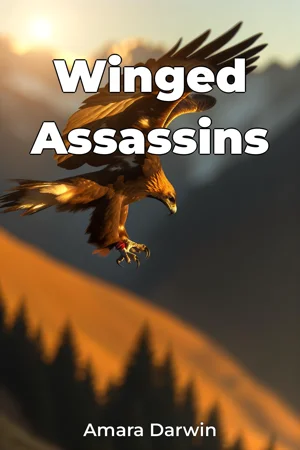
About This Book
Have you ever wondered about the evolutionary marvels that allow certain birds to dominate the skies, hunting with unparalleled precision and force? "Winged Assassins" delves into the captivating world of raptors, exploring the biology, hunting strategies, and ecological roles of these apex predators, focusing primarily on eagles and falcons. This book is vital because understanding these birds provides insights into broader ecological principles, including predator-prey dynamics, biodiversity, and the impacts of environmental change. Within these pages, we will dissect three primary areas of interest: the physical adaptations that make raptors such effective hunters, the diverse hunting strategies they employ across various environments, and finally, the ecological roles these birds play and their conservation status in an increasingly human-dominated world. Gaining insight into these topics allows us to appreciate the delicate balance of ecosystems and the importance of protecting these magnificent creatures. The study of raptors is rooted in centuries of ornithological research, coupled more recently with advanced technologies like GPS tracking and genetic analysis. Our current understanding of these birds benefits from a long history of observation and scientific inquiry. This book builds upon this foundation, synthesizing existing research and incorporating new findings to present a comprehensive picture of raptor biology and ecology. The core argument of "Winged Assassins" is that the success of eagles and falcons is determined by the intricate relationship between their physical capabilities, learned and instinctual hunting behaviors, and the health of their surrounding ecosystems. By understanding this intricate dynamic, we can better appreciate the challenges these birds face and make informed decisions about their conservation. The book unfolds in a logical progression of ideas, beginning with an introduction to the key physical characteristics of raptors, such as their sharp talons, powerful beaks, and exceptional eyesight. We then move into a detailed exploration of hunting strategies, where we dissect different techniques like soaring, diving, and ambush predation. Next, we examine the ecological roles of raptors, detailing their importance in regulating prey populations and maintaining ecosystem health. Finally, the book culminates with a discussion of the conservation challenges facing raptors today, including habitat loss, pesticide contamination, and climate change, and what efforts are being made to address them. The arguments presented in “Winged Assassins” are grounded in a wealth of scientific evidence, including anatomical studies, behavioral observations, and population data gathered through field research and laboratory analysis. We will also draw upon data from long-term monitoring projects and collaborations with leading ornithologists and conservation organizations. "Winged Assassins" also connects to several related fields, including evolutionary biology, ecology, and conservation science. The book explores the evolutionary processes that have shaped raptor morphology and behavior, the ecological interactions that define their roles in ecosystems, and the conservation strategies that are essential for their survival. Furthermore, the discussion includes aspects of environmental science, specifically relating to the impact of human activity on wildlife. A unique aspect of this book lies in its emphasis on the behavioral intelligence of raptors, challenging conventional notions of instinct-driven behavior. We will present evidence of problem-solving skills, social learning, and adaptive decision-making in these birds, offering a fresh perspective on their cognitive abilities. The tone of "Winged Assassins" is informative yet engaging, aiming to make complex scientific concepts accessible to a broad audience. The writing style blends scientific rigor with clear and compelling prose, creating a reading experience that is both educational and enjoyable. This book is aimed at bird enthusiasts, nature lovers, students of biology and ecology, and anyone interested in understanding the natural world. It will be beneficial to anyone seeking a comprehensive and up-to-date overview of raptor biology, ecology, and conservation. "Winged Assassins" provides a comprehensive, fact-based analysis of the predatory birds, meeting expectations for scientific accuracy and thoroughness. The scope of the book is limited to eagles and falcons, while acknowledging that other raptor species share similar characteristics and ecological roles. We have chosen to focus on these two groups due to the extensive research available on them and their iconic status as symbols of power and freedom. Understanding the hunting strategies of raptors can inform the design of technologies mimicking their efficiency. Similarly, the conservation strategies discussed in the book offer practical guidance for readers interested in contributing to raptor conservation efforts. While the conservation of raptors is generally supported, specific strategies, such as captive breeding and reintroduction programs, can be subjects of debate within the conservation community. This book will address these debates, presenting different perspectives and analyzing the evidence for and against various approaches.
Have you ever wondered about the evolutionary marvels that allow certain birds to dominate the skies, hunting with unparalleled precision and force? "Winged Assassins" delves into the captivating world of raptors, exploring the biology, hunting strategies, and ecological roles of these apex predators, focusing primarily on eagles and falcons. This book is vital because understanding these birds provides insights into broader ecological principles, including predator-prey dynamics, biodiversity, and the impacts of environmental change. Within these pages, we will dissect three primary areas of interest: the physical adaptations that make raptors such effective hunters, the diverse hunting strategies they employ across various environments, and finally, the ecological roles these birds play and their conservation status in an increasingly human-dominated world. Gaining insight into these topics allows us to appreciate the delicate balance of ecosystems and the importance of protecting these magnificent creatures. The study of raptors is rooted in centuries of ornithological research, coupled more recently with advanced technologies like GPS tracking and genetic analysis. Our current understanding of these birds benefits from a long history of observation and scientific inquiry. This book builds upon this foundation, synthesizing existing research and incorporating new findings to present a comprehensive picture of raptor biology and ecology. The core argument of "Winged Assassins" is that the success of eagles and falcons is determined by the intricate relationship between their physical capabilities, learned and instinctual hunting behaviors, and the health of their surrounding ecosystems. By understanding this intricate dynamic, we can better appreciate the challenges these birds face and make informed decisions about their conservation. The book unfolds in a logical progression of ideas, beginning with an introduction to the key physical characteristics of raptors, such as their sharp talons, powerful beaks, and exceptional eyesight. We then move into a detailed exploration of hunting strategies, where we dissect different techniques like soaring, diving, and ambush predation. Next, we examine the ecological roles of raptors, detailing their importance in regulating prey populations and maintaining ecosystem health. Finally, the book culminates with a discussion of the conservation challenges facing raptors today, including habitat loss, pesticide contamination, and climate change, and what efforts are being made to address them. The arguments presented in “Winged Assassins” are grounded in a wealth of scientific evidence, including anatomical studies, behavioral observations, and population data gathered through field research and laboratory analysis. We will also draw upon data from long-term monitoring projects and collaborations with leading ornithologists and conservation organizations. "Winged Assassins" also connects to several related fields, including evolutionary biology, ecology, and conservation science. The book explores the evolutionary processes that have shaped raptor morphology and behavior, the ecological interactions that define their roles in ecosystems, and the conservation strategies that are essential for their survival. Furthermore, the discussion includes aspects of environmental science, specifically relating to the impact of human activity on wildlife. A unique aspect of this book lies in its emphasis on the behavioral intelligence of raptors, challenging conventional notions of instinct-driven behavior. We will present evidence of problem-solving skills, social learning, and adaptive decision-making in these birds, offering a fresh perspective on their cognitive abilities. The tone of "Winged Assassins" is informative yet engaging, aiming to make complex scientific concepts accessible to a broad audience. The writing style blends scientific rigor with clear and compelling prose, creating a reading experience that is both educational and enjoyable. This book is aimed at bird enthusiasts, nature lovers, students of biology and ecology, and anyone interested in understanding the natural world. It will be beneficial to anyone seeking a comprehensive and up-to-date overview of raptor biology, ecology, and conservation. "Winged Assassins" provides a comprehensive, fact-based analysis of the predatory birds, meeting expectations for scientific accuracy and thoroughness. The scope of the book is limited to eagles and falcons, while acknowledging that other raptor species share similar characteristics and ecological roles. We have chosen to focus on these two groups due to the extensive research available on them and their iconic status as symbols of power and freedom. Understanding the hunting strategies of raptors can inform the design of technologies mimicking their efficiency. Similarly, the conservation strategies discussed in the book offer practical guidance for readers interested in contributing to raptor conservation efforts. While the conservation of raptors is generally supported, specific strategies, such as captive breeding and reintroduction programs, can be subjects of debate within the conservation community. This book will address these debates, presenting different perspectives and analyzing the evidence for and against various approaches.
"Winged Assassins" explores the captivating lives of raptors, majestic birds of prey like eagles and falcons, revealing their unique adaptations, hunting behaviors, and ecological importance. Delving into their world provides a lens to understand broader ecological themes such as predator-prey dynamics and the impact of environmental changes. One intriguing aspect is their exceptional eyesight, enabling them to spot prey from great distances. The book also highlights how some raptors exhibit problem-solving skills and social learning, challenging perceptions of instinct-driven behavior. The book progresses logically, starting with the physical characteristics of raptors, such as their sharp talons and powerful beaks, and moving into a detailed exploration of their diverse hunting strategies, including soaring and diving. It then examines their ecological roles in regulating prey populations and maintaining ecosystem health. Finally, it addresses the conservation challenges they face due to habitat loss and climate change. This comprehensive approach offers a valuable resource for bird enthusiasts, biology students, and anyone keen to understand the science of these magnificent creatures.
Book Details
ISBN
9788233982874
Publisher
Publifye AS
Your Licenses
You don't own any licenses for this book
Purchase a license below to unlock this book and download the EPUB.
Purchase License
Select a tier to unlock this book
Need bulk licensing?
Contact us for enterprise agreements.