
About This Book
Have you ever wondered what becomes of a lake when the rains cease, and the sun relentlessly beats down? Salt flats, those vast, shimmering expanses of white, are the answer, and this book, *Salt Flat*, delves into their captivating formation, environmental significance, and surprising human impact. We will explore the geological processes behind their creation, their crucial role in various ecosystems, and the complex relationship between these unique landscapes and human activities. This book examines three main topics. First, the geological story of salt flat formation, explaining how these mineral-rich plains emerge from the evaporation of saline lakes and inland seas. Second, we will investigate the diverse and often extremophile life forms that call these harsh environments home, exploring the unique adaptations that allow plants, animals, and microorganisms to thrive in such salty conditions. Third, we will analyze the multifaceted human interaction with salt flats, from resource extraction and industrial use to tourism and preservation efforts. Understanding salt flat formation requires knowledge of basic hydrological cycles, mineralogy, and geological timescales. We trace the pathways of water from precipitation to accumulation in closed basins where evaporation exceeds inflow, leading to increasing salinity and eventual salt precipitation. The book argues that salt flats are not simply barren wastelands but rather dynamic ecosystems and valuable archives of past climate conditions, offering insights into long-term environmental changes. *Salt Flat* is structured to guide the reader through a comprehensive exploration of these topics. The initial chapters introduce the fundamental concepts of salt flat formation, detailing the geological and hydrological processes involved. We then move on to examine the biodiversity of these environments, profiling the organisms that have adapted to their extreme conditions and outlining the ecological interactions that sustain them. The latter part of the book focuses on human impact, exploring the historical and contemporary uses of salt flats, the environmental consequences of resource extraction, and the challenges of balancing economic development with conservation efforts. Our exploration relies on a synthesis of geological surveys, hydrological data, ecological studies, and environmental impact assessments. The book incorporates satellite imagery, geochemical analyses of salt deposits, and case studies of salt flat ecosystems around the world. Data from long-term monitoring projects and paleoclimatic reconstructions are used to illustrate the dynamic nature of these landscapes and their sensitivity to climate change. *Salt Flat* bridges several disciplines. It connects geology and hydrology to explain the physical processes of salt flat formation. It draws on ecology and microbiology to reveal the biodiversity and environmental adaptations in these ecosystems. It also engages with environmental science and resource management to address the challenges of human impact and conservation. What sets this book apart is its holistic approach, integrating geological, biological, and human perspectives to provide a complete picture of salt flats as dynamic and interconnected systems. It adopts a scientific yet accessible narrative style, making complex concepts understandable for a broad audience. *Salt Flat* is primarily intended for students and researchers in earth sciences, environmental science, and ecology, as well as general readers interested in natural history and environmental issues. The book provides a valuable resource for anyone seeking to understand these unique landscapes and their role in the global environment. The book focuses on inland salt flats, excluding coastal salt marshes, allowing for a more in-depth examination of the geological and hydrological processes specific to closed basins. While recognizing the global distribution of salt flats, it emphasizes examples from diverse regions to showcase the range of environmental conditions and human impacts. The information presented in *Salt Flat* has practical applications in resource management, environmental conservation, and climate change research. Understanding the formation and dynamics of salt flats can inform sustainable resource extraction practices, guide conservation efforts to protect these unique ecosystems, and provide insights into past and future climate changes. The book addresses some controversies, such as the environmental impacts of lithium extraction from salt flats and the conflicting demands of economic development and conservation. It aims to provide a balanced perspective on these issues, acknowledging the economic importance of salt flats while emphasizing the need for responsible environmental management.
Have you ever wondered what becomes of a lake when the rains cease, and the sun relentlessly beats down? Salt flats, those vast, shimmering expanses of white, are the answer, and this book, *Salt Flat*, delves into their captivating formation, environmental significance, and surprising human impact. We will explore the geological processes behind their creation, their crucial role in various ecosystems, and the complex relationship between these unique landscapes and human activities. This book examines three main topics. First, the geological story of salt flat formation, explaining how these mineral-rich plains emerge from the evaporation of saline lakes and inland seas. Second, we will investigate the diverse and often extremophile life forms that call these harsh environments home, exploring the unique adaptations that allow plants, animals, and microorganisms to thrive in such salty conditions. Third, we will analyze the multifaceted human interaction with salt flats, from resource extraction and industrial use to tourism and preservation efforts. Understanding salt flat formation requires knowledge of basic hydrological cycles, mineralogy, and geological timescales. We trace the pathways of water from precipitation to accumulation in closed basins where evaporation exceeds inflow, leading to increasing salinity and eventual salt precipitation. The book argues that salt flats are not simply barren wastelands but rather dynamic ecosystems and valuable archives of past climate conditions, offering insights into long-term environmental changes. *Salt Flat* is structured to guide the reader through a comprehensive exploration of these topics. The initial chapters introduce the fundamental concepts of salt flat formation, detailing the geological and hydrological processes involved. We then move on to examine the biodiversity of these environments, profiling the organisms that have adapted to their extreme conditions and outlining the ecological interactions that sustain them. The latter part of the book focuses on human impact, exploring the historical and contemporary uses of salt flats, the environmental consequences of resource extraction, and the challenges of balancing economic development with conservation efforts. Our exploration relies on a synthesis of geological surveys, hydrological data, ecological studies, and environmental impact assessments. The book incorporates satellite imagery, geochemical analyses of salt deposits, and case studies of salt flat ecosystems around the world. Data from long-term monitoring projects and paleoclimatic reconstructions are used to illustrate the dynamic nature of these landscapes and their sensitivity to climate change. *Salt Flat* bridges several disciplines. It connects geology and hydrology to explain the physical processes of salt flat formation. It draws on ecology and microbiology to reveal the biodiversity and environmental adaptations in these ecosystems. It also engages with environmental science and resource management to address the challenges of human impact and conservation. What sets this book apart is its holistic approach, integrating geological, biological, and human perspectives to provide a complete picture of salt flats as dynamic and interconnected systems. It adopts a scientific yet accessible narrative style, making complex concepts understandable for a broad audience. *Salt Flat* is primarily intended for students and researchers in earth sciences, environmental science, and ecology, as well as general readers interested in natural history and environmental issues. The book provides a valuable resource for anyone seeking to understand these unique landscapes and their role in the global environment. The book focuses on inland salt flats, excluding coastal salt marshes, allowing for a more in-depth examination of the geological and hydrological processes specific to closed basins. While recognizing the global distribution of salt flats, it emphasizes examples from diverse regions to showcase the range of environmental conditions and human impacts. The information presented in *Salt Flat* has practical applications in resource management, environmental conservation, and climate change research. Understanding the formation and dynamics of salt flats can inform sustainable resource extraction practices, guide conservation efforts to protect these unique ecosystems, and provide insights into past and future climate changes. The book addresses some controversies, such as the environmental impacts of lithium extraction from salt flats and the conflicting demands of economic development and conservation. It aims to provide a balanced perspective on these issues, acknowledging the economic importance of salt flats while emphasizing the need for responsible environmental management.
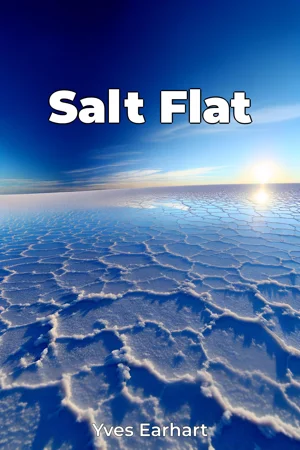
"Salt Flat" explores the fascinating world of salt flats, diving into their geological origins, unique ecosystems, and the impact of human activities. These shimmering landscapes form when water evaporates from saline lakes, leaving behind mineral-rich plains. Often perceived as barren, salt flats teem with specially adapted life forms, including extremophiles that thrive in harsh, salty conditions. The book examines how salt flats serve as valuable archives of past climate conditions, providing insights into long-term environmental changes. It also addresses the complex relationship between humans and these environments, from resource extraction to conservation efforts. "Salt Flat" progresses by first establishing the geological and hydrological processes involved in salt flat formation, then moves on to examine the biodiversity of these ecosystems, and concludes with a discussion of human impact. This book uniquely integrates geological, biological, and human perspectives, providing a complete picture of salt flats as dynamic and interconnected systems. By synthesizing geological surveys, hydrological data, and ecological studies, "Salt Flat" offers a comprehensive understanding of these environments and their role in the global environment.
Book Details
ISBN
9788233982843
Publisher
Publifye AS
Your Licenses
You don't own any licenses for this book
Purchase a license below to unlock this book and download the EPUB.
Purchase License
Select a tier to unlock this book
Need bulk licensing?
Contact us for enterprise agreements.