
About This Book
Have you ever wondered how entire landscapes are sculpted by ice, leaving behind dramatic valleys and towering peaks? "Glacier Origins" delves into the intricate processes that form these icy giants, traces their dynamic movement across the Earth's surface, and examines the profound impact they have on shaping valleys and broader landscapes. This book is important as glaciers' ongoing transformations dramatically reshape our planet, influencing water resources, ecosystems, and even global climate patterns. This book will explore three key aspects of glacial science. First, it details the formation of glaciers, beginning with the accumulation of snow and its transformation into glacial ice. Second, it meticulously examines the mechanisms driving glacial movement, from internal deformation to basal sliding. And, third, it investigates the erosional and depositional processes by which glaciers carve valleys and create unique landforms. These topics are crucial for understanding the Earth's dynamic systems and anticipating the effects of climate change on glacial environments. We will explore established scientific principles alongside modern research findings. We'll assume a basic understanding of geographical concepts, but foundational principles of physics and climate science will be clarified where necessary. The central argument of "Glacier Origins" is that glaciers are not merely static masses of ice, but rather dynamic agents of landscape evolution, sensitively responding to climatic variations and actively reshaping the Earth's surface. This perspective is important because it emphasizes the interconnectedness of climate, geology, and ecology in glacial environments. The book is structured to guide the reader through a comprehensive understanding of glaciers. It begins by introducing the fundamental concepts of glacier formation, climate, and ice physics. Subsequently, it examines glacial dynamics, including the forces that drive glacial flow and the processes of erosion and sediment transport. The core sections present detailed analyses of specific glacial landforms like U-shaped valleys, cirques, moraines, and eskers, explaining their formation through glacial action. Finally, the book culminates with a discussion of the present and future state of glaciers in a warming world, emphasizing the implications for water resources, sea-level rise, and landscape stability. "Glacier Origins" draws upon a wide array of evidence, including field observations, remote sensing data, laboratory experiments, and numerical modeling. It integrates data from geographical surveys, climatological records, and geological analyses to provide a comprehensive and data-driven account of glacial processes. The study of glaciers is intrinsically interdisciplinary, connecting to fields such as climatology, geology, and ecology. This book also explores the interactions between glaciers and ecosystems, as well as the role of glaciers in shaping mountain habitats, and the impact of glaciers on water resources for human populations. These connections enhance the understanding of glaciers as integral components of larger Earth systems. "Glacier Origins" stands out by adopting a process-based approach. Rather than simply describing glacial landforms, it explains the physical mechanisms by which glaciers create these features. The tone is professional and accessible, aiming to engage readers with a blend of scientific rigor and clear explanations. The writing style is informative, focusing on presenting complex concepts in a digestible manner. The target audience for "Glacier Origins" includes students, researchers, and anyone interested in Earth sciences, geography, and environmental science. The book will be especially valuable to those seeking a comprehensive understanding of glacial processes and their impact on landscapes. As a work of non-fiction, "Glacier Origins" adheres to the genre's conventions of accuracy, objectivity, and evidence-based reasoning. It presents information in a factual and unbiased manner, citing sources and providing clear explanations of methodologies. The book comprehensively covers the formation, movement, and landscape impact of glaciers globally, but intentionally limits its scope to exclude detailed analyses of specific regional glaciers. The information presented in "Glacier Origins" has numerous practical applications. It can inform strategies for managing water resources in glacier-fed regions, predicting the impacts of climate change on landscape stability, and assessing the risks associated with glacial hazards such as ice avalanches and glacial lake outburst floods. The book also addresses some of the ongoing debates surrounding the rate of glacial retreat and the relative contributions of natural variability and human-caused climate change.
Have you ever wondered how entire landscapes are sculpted by ice, leaving behind dramatic valleys and towering peaks? "Glacier Origins" delves into the intricate processes that form these icy giants, traces their dynamic movement across the Earth's surface, and examines the profound impact they have on shaping valleys and broader landscapes. This book is important as glaciers' ongoing transformations dramatically reshape our planet, influencing water resources, ecosystems, and even global climate patterns. This book will explore three key aspects of glacial science. First, it details the formation of glaciers, beginning with the accumulation of snow and its transformation into glacial ice. Second, it meticulously examines the mechanisms driving glacial movement, from internal deformation to basal sliding. And, third, it investigates the erosional and depositional processes by which glaciers carve valleys and create unique landforms. These topics are crucial for understanding the Earth's dynamic systems and anticipating the effects of climate change on glacial environments. We will explore established scientific principles alongside modern research findings. We'll assume a basic understanding of geographical concepts, but foundational principles of physics and climate science will be clarified where necessary. The central argument of "Glacier Origins" is that glaciers are not merely static masses of ice, but rather dynamic agents of landscape evolution, sensitively responding to climatic variations and actively reshaping the Earth's surface. This perspective is important because it emphasizes the interconnectedness of climate, geology, and ecology in glacial environments. The book is structured to guide the reader through a comprehensive understanding of glaciers. It begins by introducing the fundamental concepts of glacier formation, climate, and ice physics. Subsequently, it examines glacial dynamics, including the forces that drive glacial flow and the processes of erosion and sediment transport. The core sections present detailed analyses of specific glacial landforms like U-shaped valleys, cirques, moraines, and eskers, explaining their formation through glacial action. Finally, the book culminates with a discussion of the present and future state of glaciers in a warming world, emphasizing the implications for water resources, sea-level rise, and landscape stability. "Glacier Origins" draws upon a wide array of evidence, including field observations, remote sensing data, laboratory experiments, and numerical modeling. It integrates data from geographical surveys, climatological records, and geological analyses to provide a comprehensive and data-driven account of glacial processes. The study of glaciers is intrinsically interdisciplinary, connecting to fields such as climatology, geology, and ecology. This book also explores the interactions between glaciers and ecosystems, as well as the role of glaciers in shaping mountain habitats, and the impact of glaciers on water resources for human populations. These connections enhance the understanding of glaciers as integral components of larger Earth systems. "Glacier Origins" stands out by adopting a process-based approach. Rather than simply describing glacial landforms, it explains the physical mechanisms by which glaciers create these features. The tone is professional and accessible, aiming to engage readers with a blend of scientific rigor and clear explanations. The writing style is informative, focusing on presenting complex concepts in a digestible manner. The target audience for "Glacier Origins" includes students, researchers, and anyone interested in Earth sciences, geography, and environmental science. The book will be especially valuable to those seeking a comprehensive understanding of glacial processes and their impact on landscapes. As a work of non-fiction, "Glacier Origins" adheres to the genre's conventions of accuracy, objectivity, and evidence-based reasoning. It presents information in a factual and unbiased manner, citing sources and providing clear explanations of methodologies. The book comprehensively covers the formation, movement, and landscape impact of glaciers globally, but intentionally limits its scope to exclude detailed analyses of specific regional glaciers. The information presented in "Glacier Origins" has numerous practical applications. It can inform strategies for managing water resources in glacier-fed regions, predicting the impacts of climate change on landscape stability, and assessing the risks associated with glacial hazards such as ice avalanches and glacial lake outburst floods. The book also addresses some of the ongoing debates surrounding the rate of glacial retreat and the relative contributions of natural variability and human-caused climate change.
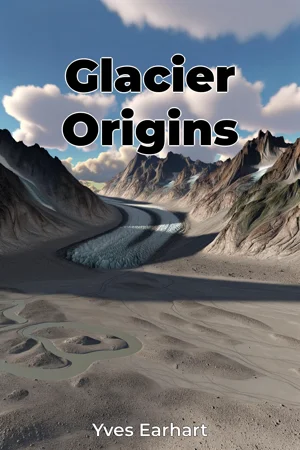
"Glacier Origins" explores how glaciers form, move, and dramatically reshape landscapes, emphasizing their role as dynamic agents of landscape evolution. The book highlights the accumulation of snow transforming into glacial ice and the forces driving glacial movement, like internal deformation. Intriguingly, glaciers don't just bulldoze; they also deposit materials, creating unique landforms. The book's approach is process-based, explaining the physical mechanisms behind glacial features rather than simply describing them. Beginning with glacier formation and ice physics, it progresses through glacial dynamics and landform analysis, culminating in a discussion of glaciers in a warming world and its impact on water resources. By tracing the journey of ice and its profound effects, the book reveals the interconnectedness of climate, geology, and ecology in glacial environments.
Book Details
ISBN
9788233982829
Publisher
Publifye AS
Your Licenses
You don't own any licenses for this book
Purchase a license below to unlock this book and download the EPUB.
Purchase License
Select a tier to unlock this book
Need bulk licensing?
Contact us for enterprise agreements.