
About This Book
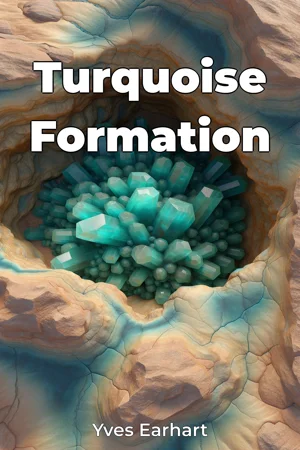
Have you ever marveled at the intense blue-green of turquoise jewelry and wondered about the stone's origins? "Turquoise Formation" delves into the fascinating geological processes that give rise to this captivating gemstone, exploring its creation within the planet's arid landscapes. This book investigates the genesis of turquoise, a valuable and culturally significant mineral. We will uncover the alchemy of arid environments where copper, aluminum, and phosphorus converge under specific conditions to form turquoise. The book explains the geological settings conducive to turquoise formation, focusing on arid and semi-arid regions. These areas, often characterized by intense weathering and groundwater activity, provide the necessary ingredients and environment for turquoise to crystallize. Understanding these conditions is crucial for geologists, gemologists, and anyone interested in the Earth's dynamic processes. The book unfolds in three major parts. Part one meticulously examines the geochemical processes involved in turquoise formation. The discussion encompasses the sources of copper, aluminum, and phosphorus, their mobilization through groundwater, and the subsequent precipitation and crystallization as turquoise. Hydrothermal alteration, supergene enrichment, and the role of host rocks are thoroughly investigated. Part two explores the geological settings where turquoise is typically found. Porphyry copper deposits, volcanic terrains, and sedimentary environments are examined in detail, highlighting their unique contributions to turquoise formation. Specific examples from around the world, including the southwestern United States, Iran, and China, are offered. Part three addresses the identification, grading, and cultural significance of turquoise. The mineralogical properties of turquoise, including its chemical composition, crystal structure, and physical characteristics, are highlighted. The book delves into the history of turquoise mining, its use in jewelry and ornamentation, and its cultural importance in various societies, particularly indigenous cultures. The evidence presented includes detailed geological surveys, geochemical analyses, and microscopic studies of turquoise samples from diverse locations. Original data from field research and laboratory experiments are incorporated. The book also draws upon existing literature in geology, mineralogy, and archaeology to provide a comprehensive understanding of turquoise formation and its cultural context. "Turquoise Formation" intersects with several other disciplines. It connects to mining engineering through its discussion of turquoise extraction methods. It ties to archaeology and anthropology by examining the historical uses of turquoise by different cultures. Environmental science also comes into play when analyzing the impact of mining activities on the landscapes where turquoise is found. This book is an objective scientific overview, drawing upon established scientific principles and proven field research. It provides a comprehensive, accessible, and scientifically sound explanation of turquoise formation, making it valuable for students, researchers, gemologists, and anyone with an interest in geology, mineralogy, or cultural studies. It offers practical information for mineral identification and evaluation, and provides a richer understanding of the Earth's geological processes and the cultural significance of gemstones. While the book provides global examples, it focuses primarily on well-established geological models for turquoise formation. It does not delve into speculative or fringe theories. The approach is to provide a robust, evidence-based account. The information within this book is useful not only for academic pursuits. It is also helpful for gem and mineral collectors in identifying and evaluating turquoise mineral specimens. Jewelers can benefit from a greater understanding of turquoise's origins and properties, adding value to their work. Areas of debate surrounding the role of specific trace elements, such as iron, in turquoise formation, or the precise timing of crystallization in different geological settings, are also addressed, acknowledging the complexities of natural processes.
Have you ever marveled at the intense blue-green of turquoise jewelry and wondered about the stone's origins? "Turquoise Formation" delves into the fascinating geological processes that give rise to this captivating gemstone, exploring its creation within the planet's arid landscapes. This book investigates the genesis of turquoise, a valuable and culturally significant mineral. We will uncover the alchemy of arid environments where copper, aluminum, and phosphorus converge under specific conditions to form turquoise. The book explains the geological settings conducive to turquoise formation, focusing on arid and semi-arid regions. These areas, often characterized by intense weathering and groundwater activity, provide the necessary ingredients and environment for turquoise to crystallize. Understanding these conditions is crucial for geologists, gemologists, and anyone interested in the Earth's dynamic processes. The book unfolds in three major parts. Part one meticulously examines the geochemical processes involved in turquoise formation. The discussion encompasses the sources of copper, aluminum, and phosphorus, their mobilization through groundwater, and the subsequent precipitation and crystallization as turquoise. Hydrothermal alteration, supergene enrichment, and the role of host rocks are thoroughly investigated. Part two explores the geological settings where turquoise is typically found. Porphyry copper deposits, volcanic terrains, and sedimentary environments are examined in detail, highlighting their unique contributions to turquoise formation. Specific examples from around the world, including the southwestern United States, Iran, and China, are offered. Part three addresses the identification, grading, and cultural significance of turquoise. The mineralogical properties of turquoise, including its chemical composition, crystal structure, and physical characteristics, are highlighted. The book delves into the history of turquoise mining, its use in jewelry and ornamentation, and its cultural importance in various societies, particularly indigenous cultures. The evidence presented includes detailed geological surveys, geochemical analyses, and microscopic studies of turquoise samples from diverse locations. Original data from field research and laboratory experiments are incorporated. The book also draws upon existing literature in geology, mineralogy, and archaeology to provide a comprehensive understanding of turquoise formation and its cultural context. "Turquoise Formation" intersects with several other disciplines. It connects to mining engineering through its discussion of turquoise extraction methods. It ties to archaeology and anthropology by examining the historical uses of turquoise by different cultures. Environmental science also comes into play when analyzing the impact of mining activities on the landscapes where turquoise is found. This book is an objective scientific overview, drawing upon established scientific principles and proven field research. It provides a comprehensive, accessible, and scientifically sound explanation of turquoise formation, making it valuable for students, researchers, gemologists, and anyone with an interest in geology, mineralogy, or cultural studies. It offers practical information for mineral identification and evaluation, and provides a richer understanding of the Earth's geological processes and the cultural significance of gemstones. While the book provides global examples, it focuses primarily on well-established geological models for turquoise formation. It does not delve into speculative or fringe theories. The approach is to provide a robust, evidence-based account. The information within this book is useful not only for academic pursuits. It is also helpful for gem and mineral collectors in identifying and evaluating turquoise mineral specimens. Jewelers can benefit from a greater understanding of turquoise's origins and properties, adding value to their work. Areas of debate surrounding the role of specific trace elements, such as iron, in turquoise formation, or the precise timing of crystallization in different geological settings, are also addressed, acknowledging the complexities of natural processes.
"Turquoise Formation" explores the geological origins of this prized gemstone, revealing the fascinating interplay of Earth sciences that create its unique blue-green hue. This book examines how specific arid environments, rich in copper deposits and influenced by distinct geological processes, are essential for turquoise to form. Readers will discover how the convergence of copper, aluminum, and phosphorus, combined with weathering and groundwater activity, leads to the crystallization of turquoise. The cultural significance of turquoise, particularly its use in jewelry and by indigenous cultures, adds another layer of intrigue. The book progresses systematically, starting with the geochemical processes and the role of host rocks. It then explores geological settings such as porphyry copper deposits and volcanic terrains, highlighting examples from the southwestern United States, Iran, and China. Finally, it delves into mineral identification, mineralogy, and the cultural importance of turquoise across different societies. This comprehensive approach provides valuable insights for gem and mineral collectors, jewelers, and anyone interested in the Earth's dynamic processes.
Book Details
ISBN
9788233982805
Publisher
Publifye AS
Your Licenses
You don't own any licenses for this book
Purchase a license below to unlock this book and download the EPUB.
Purchase License
Select a tier to unlock this book
Need bulk licensing?
Contact us for enterprise agreements.