
About This Book
Have you ever looked across a desert landscape and been struck by the sight of a flat-topped mountain standing in stark contrast to the surrounding terrain? This book, *Mesa Formation*, delves into the fascinating geological processes that sculpt these iconic landforms, known as mesas, features that define many of the world's arid and semi-arid regions. We will explore the forces of erosion, the role of differential weathering, and the geological history that combine to create these impressive monuments of stone. Understanding mesa formation is critical for several reasons. First, it provides insights into the dynamic nature of Earth's surface and the powerful effects of weathering and erosion over geological timescales. Second, the study of mesas reveals crucial information about past environments and climate conditions. Finally, knowledge of mesa formation is vital for effective land management and resource assessment in areas where these landforms are prevalent. This book therefore connects to wider themes of landscape evolution, environmental change, and the sustainable use of natural resources. This book argues that mesa formation is a complex interplay of geological structure, climate, and time. While seemingly static, mesas are in fact landforms in transition, slowly succumbing to the relentless forces of erosion. Our central argument is that by understanding the specific factors controlling their formation and degradation, we can better interpret past environmental conditions and predict future landscape changes. *Mesa Formation* is structured to provide a comprehensive understanding of the topic. We begin by introducing the basic principles of weathering and erosion, explaining how these processes operate in different environments. The specific geological conditions necessary for mesa formation, such as layered sedimentary rocks and resistant caprock, are then examined in detail. Subsequent chapters focus on the progressive stages of mesa development, from the initial uplift and fracturing of the landscape to the eventual formation of buttes and other residual landforms. We explore the role of climate, particularly rainfall and temperature fluctuations, in accelerating or decelerating the erosional processes. We also present case studies of well-known mesas around the world, illustrating the diversity of factors that can influence their formation and evolution. The book culminates with a discussion of the practical implications of understanding mesa formation, including its relevance to resource exploration, hazard assessment, and landscape conservation. The evidence presented relies on a combination of field observations, remote sensing data, and geological modeling. We draw upon published research from various disciplines, including geomorphology, sedimentology, and climatology, to support our arguments. Original data from fieldwork, including stratigraphic measurements, rock sample analysis, and drone imagery, are also presented. The book uniquely integrates these diverse data sources to provide a holistic understanding of mesa formation. This book connects to several interdisciplinary fields. First, it is closely linked to climatology, as climate plays a major role in weathering and erosion rates. Second, it relates to ecology, as the unique microclimates and soil conditions associated with mesas can support specialized plant and animal communities. Third, it connects to archaeology, as mesas often provide strategic locations for human settlement and can contain important archaeological sites. These interdisciplinary connections enhance the book's relevance and broaden its appeal. *Mesa Formation* takes an analytical approach, presenting information in a clear and concise manner, avoiding overly technical jargon wherever possible. The writing style is informative and engaging, designed to appeal to a broad audience, including students, researchers, and anyone with an interest in geology and landscape evolution. The primary target audience includes undergraduate and graduate students in earth sciences, geography, and environmental science. It is also relevant to professionals working in resource management, land planning, and environmental consulting. Anyone with an interest in deserts, mountains, and how landscapes change through time will find this book valuable. The book's scope is intentionally focused on the geological and geomorphological aspects of mesa formation, with less emphasis on the biological or cultural aspects. While we acknowledge the importance of these other dimensions, our primary goal is to provide a thorough and accessible explanation of the physical processes involved. The principles discussed in *Mesa Formation* have real-world applications. Understanding erosion rates and patterns is crucial for predicting landscape stability and assessing the risk of landslides and other geohazards. Knowledge of mesa formation can also aid in the exploration for mineral resources, as certain types of mineral deposits are often associated with specific geological formations. Furthermore, the preservation of mesas as natural landmarks and tourist attractions depends on understanding the factors that contribute to their long-term stability. Although the fundamental principles of mesa formation are well-established, there are ongoing debates about the relative importance of different erosional processes and the precise timing of landscape evolution. This book acknowledges these uncertainties and presents different perspectives, encouraging readers to critically evaluate the evidence and draw their own conclusions.
Have you ever looked across a desert landscape and been struck by the sight of a flat-topped mountain standing in stark contrast to the surrounding terrain? This book, *Mesa Formation*, delves into the fascinating geological processes that sculpt these iconic landforms, known as mesas, features that define many of the world's arid and semi-arid regions. We will explore the forces of erosion, the role of differential weathering, and the geological history that combine to create these impressive monuments of stone. Understanding mesa formation is critical for several reasons. First, it provides insights into the dynamic nature of Earth's surface and the powerful effects of weathering and erosion over geological timescales. Second, the study of mesas reveals crucial information about past environments and climate conditions. Finally, knowledge of mesa formation is vital for effective land management and resource assessment in areas where these landforms are prevalent. This book therefore connects to wider themes of landscape evolution, environmental change, and the sustainable use of natural resources. This book argues that mesa formation is a complex interplay of geological structure, climate, and time. While seemingly static, mesas are in fact landforms in transition, slowly succumbing to the relentless forces of erosion. Our central argument is that by understanding the specific factors controlling their formation and degradation, we can better interpret past environmental conditions and predict future landscape changes. *Mesa Formation* is structured to provide a comprehensive understanding of the topic. We begin by introducing the basic principles of weathering and erosion, explaining how these processes operate in different environments. The specific geological conditions necessary for mesa formation, such as layered sedimentary rocks and resistant caprock, are then examined in detail. Subsequent chapters focus on the progressive stages of mesa development, from the initial uplift and fracturing of the landscape to the eventual formation of buttes and other residual landforms. We explore the role of climate, particularly rainfall and temperature fluctuations, in accelerating or decelerating the erosional processes. We also present case studies of well-known mesas around the world, illustrating the diversity of factors that can influence their formation and evolution. The book culminates with a discussion of the practical implications of understanding mesa formation, including its relevance to resource exploration, hazard assessment, and landscape conservation. The evidence presented relies on a combination of field observations, remote sensing data, and geological modeling. We draw upon published research from various disciplines, including geomorphology, sedimentology, and climatology, to support our arguments. Original data from fieldwork, including stratigraphic measurements, rock sample analysis, and drone imagery, are also presented. The book uniquely integrates these diverse data sources to provide a holistic understanding of mesa formation. This book connects to several interdisciplinary fields. First, it is closely linked to climatology, as climate plays a major role in weathering and erosion rates. Second, it relates to ecology, as the unique microclimates and soil conditions associated with mesas can support specialized plant and animal communities. Third, it connects to archaeology, as mesas often provide strategic locations for human settlement and can contain important archaeological sites. These interdisciplinary connections enhance the book's relevance and broaden its appeal. *Mesa Formation* takes an analytical approach, presenting information in a clear and concise manner, avoiding overly technical jargon wherever possible. The writing style is informative and engaging, designed to appeal to a broad audience, including students, researchers, and anyone with an interest in geology and landscape evolution. The primary target audience includes undergraduate and graduate students in earth sciences, geography, and environmental science. It is also relevant to professionals working in resource management, land planning, and environmental consulting. Anyone with an interest in deserts, mountains, and how landscapes change through time will find this book valuable. The book's scope is intentionally focused on the geological and geomorphological aspects of mesa formation, with less emphasis on the biological or cultural aspects. While we acknowledge the importance of these other dimensions, our primary goal is to provide a thorough and accessible explanation of the physical processes involved. The principles discussed in *Mesa Formation* have real-world applications. Understanding erosion rates and patterns is crucial for predicting landscape stability and assessing the risk of landslides and other geohazards. Knowledge of mesa formation can also aid in the exploration for mineral resources, as certain types of mineral deposits are often associated with specific geological formations. Furthermore, the preservation of mesas as natural landmarks and tourist attractions depends on understanding the factors that contribute to their long-term stability. Although the fundamental principles of mesa formation are well-established, there are ongoing debates about the relative importance of different erosional processes and the precise timing of landscape evolution. This book acknowledges these uncertainties and presents different perspectives, encouraging readers to critically evaluate the evidence and draw their own conclusions.
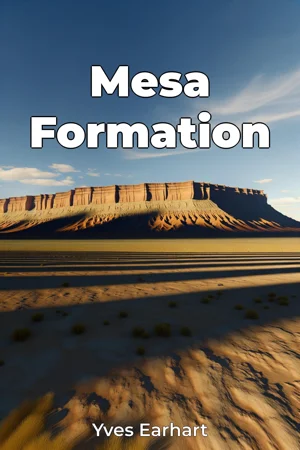
"Mesa Formation" explores the creation of mesas, those striking flat-topped mountains found in arid landscapes. It reveals how geology, climate, and time interact to sculpt these iconic landforms through erosion and weathering. The book highlights how understanding mesa formation provides crucial insights into Earth's dynamic surface, past environmental conditions, and sustainable resource management. Interestingly, mesas, seemingly static, are landforms in transition, slowly succumbing to erosional forces. The book examines the geological conditions necessary for mesa formation, like layered sedimentary rocks and resistant caprock. It progresses through the stages of mesa development, from initial uplift to the formation of buttes. Case studies of mesas worldwide illustrate the diversity of factors influencing their evolution. The book uniquely combines field observations, remote sensing data, and geological modeling to present a complete picture.
Book Details
ISBN
9788233982775
Publisher
Publifye AS
Your Licenses
You don't own any licenses for this book
Purchase a license below to unlock this book and download the EPUB.
Purchase License
Select a tier to unlock this book
Need bulk licensing?
Contact us for enterprise agreements.