
About This Book
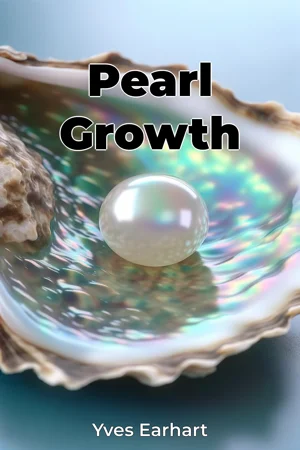
Have you ever wondered about the hidden world of pearl formation, a natural process of biomineralization that transforms a tiny irritant into a lustrous gem? This book, "Pearl Growth," delves into the intricate biological mechanisms underlying pearl development within oysters and mussels, offering a comprehensive exploration of this fascinating phenomenon. We aim to provide a detailed yet accessible understanding of the science behind these natural treasures. This book is significant because it uncovers the complexities of pearl formation, a process driven by both biological and environmental factors. Understanding these factors is crucial for sustainable pearl farming practices and appreciating the delicate balance of marine ecosystems. We explore two key areas: the biomineralization processes involved in nacre deposition and the influence of environmental conditions on pearl quality and growth rate. Throughout "Pearl Growth," we present a detailed overview of the biological processes, beginning with the oyster's or mussel's response to an irritant. The book then focuses on the orchestrated cellular activity involved in nacre secretion. We explore the composition of nacre, a composite material made of aragonite crystals and organic matrix proteins, and detail how these components are assembled layer by layer by mantle epithelial cells. The central argument of "Pearl Growth" is that the development of a pearl is a highly regulated biological process that responds dynamically to environmental cues. Furthermore, the book underscores the importance of understanding the interplay between cellular mechanisms and environmental factors for optimizing pearl culture and ensuring the sustainability of pearl production. The book unfolds in stages. First, we introduce the basic anatomy and physiology of pearl-producing mollusks. We then delve into the biomineralization process itself, describing the formation of the pearl sac and the cellular mechanisms that control nacre deposition. We detail the influence of water temperature, salinity, and nutrient availability on pearl growth and quality, drawing upon case studies from various pearl farming regions worldwide. The book culminates with a discussion of challenges and future directions in pearl research and sustainable pearl farming. The evidence presented in "Pearl Growth" is drawn from a wide range of scientific disciplines, including marine biology, materials science, and genetics. We will analyze microscopic images of nacre structure, biochemical analyses of pearl composition, and statistical analyses of growth data from pearl farms. In addition, this book features data collected from a unique longitudinal study tracking pearl growth under controlled environmental conditions. "Pearl Growth" has several interdisciplinary connections. First, it connects with materials science by examining the unique mechanical properties of nacre. This book also interacts with environmental science by investigating the impact of pollution and climate change on pearl production. It also has links to economics through studying pearl production's impact on coastal communities' livelihoods. A unique aspect of this book is its emphasis on the dynamic interaction between the mollusk's physiology and the environment. "Pearl Growth" provides an integrated perspective that considers the intricate interplay of genes, cells, and environmental factors in pearl formation. This book is written in a clear and accessible style, avoiding jargon whenever possible. We aim to provide a comprehensive yet engaging account of pearl growth that appeals to students, researchers, and anyone interested in the natural world. The target audience for "Pearl Growth" includes students and researchers in marine biology, aquaculture, and materials science. This book will also appeal to pearl farmers and jewelers seeking a deeper understanding of the science behind pearl formation. As a work of non-fiction in the genres of Nature, Biology, and Life Sciences the book adheres to rigorous standards of accuracy and objectivity. All claims are supported by scientific evidence, and sources are properly cited. "Pearl Growth" focuses primarily on the biological and environmental factors that influence pearl formation. While we touch on the cultural and economic aspects of pearl production, these topics are not the primary focus of the book. The knowledge in this book can be applied practically to improve pearl farming techniques, optimize environmental conditions for pearl growth, and develop new methods for assessing pearl quality. While the basic principles of pearl formation are well established, there is ongoing debate about the specific roles of different organic matrix proteins in nacre deposition. We will present different perspectives on these debates while emphasizing areas of scientific consensus.
Have you ever wondered about the hidden world of pearl formation, a natural process of biomineralization that transforms a tiny irritant into a lustrous gem? This book, "Pearl Growth," delves into the intricate biological mechanisms underlying pearl development within oysters and mussels, offering a comprehensive exploration of this fascinating phenomenon. We aim to provide a detailed yet accessible understanding of the science behind these natural treasures. This book is significant because it uncovers the complexities of pearl formation, a process driven by both biological and environmental factors. Understanding these factors is crucial for sustainable pearl farming practices and appreciating the delicate balance of marine ecosystems. We explore two key areas: the biomineralization processes involved in nacre deposition and the influence of environmental conditions on pearl quality and growth rate. Throughout "Pearl Growth," we present a detailed overview of the biological processes, beginning with the oyster's or mussel's response to an irritant. The book then focuses on the orchestrated cellular activity involved in nacre secretion. We explore the composition of nacre, a composite material made of aragonite crystals and organic matrix proteins, and detail how these components are assembled layer by layer by mantle epithelial cells. The central argument of "Pearl Growth" is that the development of a pearl is a highly regulated biological process that responds dynamically to environmental cues. Furthermore, the book underscores the importance of understanding the interplay between cellular mechanisms and environmental factors for optimizing pearl culture and ensuring the sustainability of pearl production. The book unfolds in stages. First, we introduce the basic anatomy and physiology of pearl-producing mollusks. We then delve into the biomineralization process itself, describing the formation of the pearl sac and the cellular mechanisms that control nacre deposition. We detail the influence of water temperature, salinity, and nutrient availability on pearl growth and quality, drawing upon case studies from various pearl farming regions worldwide. The book culminates with a discussion of challenges and future directions in pearl research and sustainable pearl farming. The evidence presented in "Pearl Growth" is drawn from a wide range of scientific disciplines, including marine biology, materials science, and genetics. We will analyze microscopic images of nacre structure, biochemical analyses of pearl composition, and statistical analyses of growth data from pearl farms. In addition, this book features data collected from a unique longitudinal study tracking pearl growth under controlled environmental conditions. "Pearl Growth" has several interdisciplinary connections. First, it connects with materials science by examining the unique mechanical properties of nacre. This book also interacts with environmental science by investigating the impact of pollution and climate change on pearl production. It also has links to economics through studying pearl production's impact on coastal communities' livelihoods. A unique aspect of this book is its emphasis on the dynamic interaction between the mollusk's physiology and the environment. "Pearl Growth" provides an integrated perspective that considers the intricate interplay of genes, cells, and environmental factors in pearl formation. This book is written in a clear and accessible style, avoiding jargon whenever possible. We aim to provide a comprehensive yet engaging account of pearl growth that appeals to students, researchers, and anyone interested in the natural world. The target audience for "Pearl Growth" includes students and researchers in marine biology, aquaculture, and materials science. This book will also appeal to pearl farmers and jewelers seeking a deeper understanding of the science behind pearl formation. As a work of non-fiction in the genres of Nature, Biology, and Life Sciences the book adheres to rigorous standards of accuracy and objectivity. All claims are supported by scientific evidence, and sources are properly cited. "Pearl Growth" focuses primarily on the biological and environmental factors that influence pearl formation. While we touch on the cultural and economic aspects of pearl production, these topics are not the primary focus of the book. The knowledge in this book can be applied practically to improve pearl farming techniques, optimize environmental conditions for pearl growth, and develop new methods for assessing pearl quality. While the basic principles of pearl formation are well established, there is ongoing debate about the specific roles of different organic matrix proteins in nacre deposition. We will present different perspectives on these debates while emphasizing areas of scientific consensus.
"Pearl Growth" explores the fascinating biological process of pearl formation in oysters and mussels, revealing how a tiny irritant transforms into a lustrous gem through biomineralization. The book highlights the complex interplay between biological mechanisms and environmental factors, crucial for understanding nacre deposition—the creation of the pearl's iridescent layers. Readers will gain insights into how mantle epithelial cells orchestrate the precise layering of aragonite crystals and organic matrix proteins, influencing pearl quality. The book progresses logically, starting with the anatomy of pearl-producing mollusks and delving into the formation of the pearl sac. It then meticulously details the impact of environmental conditions like water temperature and salinity on pearl growth, incorporating case studies from global pearl farming regions. This comprehensive approach emphasizes the dynamic interaction between a mollusk's physiology and its environment, offering a unique, integrated perspective valuable for marine biology, aquaculture, and sustainable pearl production.
Book Details
ISBN
9788233982768
Publisher
Publifye AS
Your Licenses
You don't own any licenses for this book
Purchase a license below to unlock this book and download the EPUB.
Purchase License
Select a tier to unlock this book
Need bulk licensing?
Contact us for enterprise agreements.