
About This Book
Have you ever considered venom to be more than just poison, perhaps even a sophisticated tool honed by evolution for survival? "Venomous Hunters" delves into the intricate world of animals that employ venom, from the well-known snakes and spiders to less familiar creatures like jellyfish and cone snails, exploring the biological and ecological significance of their deadly weaponry. We examine not only the mechanisms of venom delivery and action, but also the evolutionary pressures that have driven its development and diversification. These topics are particularly relevant in an age increasingly focused on understanding complex biological systems and the interconnectedness of species within ecosystems. This book provides a comprehensive overview of venomous animals, placing them within their ecological and evolutionary contexts. No prior advanced knowledge of biology or zoology is required, though a basic understanding of ecological principles will be helpful. We argue that venom is not simply a means of predation or defense, but a complex adaptation reflecting the intricate relationships between venomous animals and their prey, predators, and environment. Understanding venom offers insights into evolutionary biology, biochemistry, and even human medicine. The book is structured to guide the reader through a logical progression of topics. We begin by introducing the concept of venom, differentiating it from poison, and exploring its chemical composition and modes of action. Then, we delve into specific groups of venomous animals, examining their unique venom delivery systems and the effects of their venom on their respective targets. This includes a detailed look at snakes, spiders, scorpions, insects, and marine invertebrates, with case studies illustrating the diversity of venomous strategies across the animal kingdom. A culminating section examines the evolutionary arms race between predators and prey, and the applications of venom research to fields like drug discovery and antivenom production. The evidence presented in "Venomous Hunters" is drawn from a wide range of scientific research, including primary literature, field studies, and laboratory experiments. We analyze existing biochemical data on venom composition and functionality, drawing upon phylogenetic analyses to trace the evolutionary history of venomous lineages. The book also incorporates data gathered from ecological studies, highlighting the role of venom in shaping predator-prey dynamics and community structure. "Venomous Hunters" connects to several other scientific disciplines and areas of study. First, it has strong ties to evolutionary biology, illuminating the processes of adaptation and natural selection. Second, it connects to biochemistry and pharmacology, as venom components often serve as models or sources for novel drugs. Third, it also links to ecology, because venomous animals play crucial roles in their ecosystems. This integration reinforces the central argument that venom is a complex adaptation with significant ecological and evolutionary implications. This work offers a fresh perspective by emphasizing the ecological roles of venomous animals and the evolutionary underpinnings of their venom systems. Rather than simply cataloging different types of venom, "Venomous Hunters" explores the selective pressures that have shaped the evolution of venom across diverse lineages. Our approach is intended to be both informative and engaging, aimed at presenting complex scientific concepts in an accessible manner. The target audience for this book includes students of biology, ecology, and zoology, as well as general readers with an interest in natural history and evolutionary processes. The book offers value to readers seeking to understand the fascinating adaptations of venomous animals and the broader implications of venom research. "Venomous Hunters" adheres to the conventions of popular science writing, balancing scientific accuracy with engaging prose and compelling storytelling. The book's scope is intentionally broad, covering a diverse range of venomous animals and their venom systems. However, it is not intended to be an exhaustive catalog of all known venomous species. Instead, we focus on highlighting key examples and illustrating general principles of venom evolution and ecology. The information presented in "Venomous Hunters" has practical applications in a number of areas. For example, a deeper understanding of venom composition and mechanisms of action can aid in the development of more effective antivenoms and other treatments for venomous bites and stings. Furthermore, venom components have shown promise as potential therapeutic agents for a variety of diseases. The study of venomous animals is not without its controversies. Ongoing debates exist regarding the classification and evolutionary relationships of certain venomous groups, as well as the ethical considerations surrounding the use of venom in research and medicine. The book acknowledges these debates and presents different perspectives on these complex issues.
Have you ever considered venom to be more than just poison, perhaps even a sophisticated tool honed by evolution for survival? "Venomous Hunters" delves into the intricate world of animals that employ venom, from the well-known snakes and spiders to less familiar creatures like jellyfish and cone snails, exploring the biological and ecological significance of their deadly weaponry. We examine not only the mechanisms of venom delivery and action, but also the evolutionary pressures that have driven its development and diversification. These topics are particularly relevant in an age increasingly focused on understanding complex biological systems and the interconnectedness of species within ecosystems. This book provides a comprehensive overview of venomous animals, placing them within their ecological and evolutionary contexts. No prior advanced knowledge of biology or zoology is required, though a basic understanding of ecological principles will be helpful. We argue that venom is not simply a means of predation or defense, but a complex adaptation reflecting the intricate relationships between venomous animals and their prey, predators, and environment. Understanding venom offers insights into evolutionary biology, biochemistry, and even human medicine. The book is structured to guide the reader through a logical progression of topics. We begin by introducing the concept of venom, differentiating it from poison, and exploring its chemical composition and modes of action. Then, we delve into specific groups of venomous animals, examining their unique venom delivery systems and the effects of their venom on their respective targets. This includes a detailed look at snakes, spiders, scorpions, insects, and marine invertebrates, with case studies illustrating the diversity of venomous strategies across the animal kingdom. A culminating section examines the evolutionary arms race between predators and prey, and the applications of venom research to fields like drug discovery and antivenom production. The evidence presented in "Venomous Hunters" is drawn from a wide range of scientific research, including primary literature, field studies, and laboratory experiments. We analyze existing biochemical data on venom composition and functionality, drawing upon phylogenetic analyses to trace the evolutionary history of venomous lineages. The book also incorporates data gathered from ecological studies, highlighting the role of venom in shaping predator-prey dynamics and community structure. "Venomous Hunters" connects to several other scientific disciplines and areas of study. First, it has strong ties to evolutionary biology, illuminating the processes of adaptation and natural selection. Second, it connects to biochemistry and pharmacology, as venom components often serve as models or sources for novel drugs. Third, it also links to ecology, because venomous animals play crucial roles in their ecosystems. This integration reinforces the central argument that venom is a complex adaptation with significant ecological and evolutionary implications. This work offers a fresh perspective by emphasizing the ecological roles of venomous animals and the evolutionary underpinnings of their venom systems. Rather than simply cataloging different types of venom, "Venomous Hunters" explores the selective pressures that have shaped the evolution of venom across diverse lineages. Our approach is intended to be both informative and engaging, aimed at presenting complex scientific concepts in an accessible manner. The target audience for this book includes students of biology, ecology, and zoology, as well as general readers with an interest in natural history and evolutionary processes. The book offers value to readers seeking to understand the fascinating adaptations of venomous animals and the broader implications of venom research. "Venomous Hunters" adheres to the conventions of popular science writing, balancing scientific accuracy with engaging prose and compelling storytelling. The book's scope is intentionally broad, covering a diverse range of venomous animals and their venom systems. However, it is not intended to be an exhaustive catalog of all known venomous species. Instead, we focus on highlighting key examples and illustrating general principles of venom evolution and ecology. The information presented in "Venomous Hunters" has practical applications in a number of areas. For example, a deeper understanding of venom composition and mechanisms of action can aid in the development of more effective antivenoms and other treatments for venomous bites and stings. Furthermore, venom components have shown promise as potential therapeutic agents for a variety of diseases. The study of venomous animals is not without its controversies. Ongoing debates exist regarding the classification and evolutionary relationships of certain venomous groups, as well as the ethical considerations surrounding the use of venom in research and medicine. The book acknowledges these debates and presents different perspectives on these complex issues.
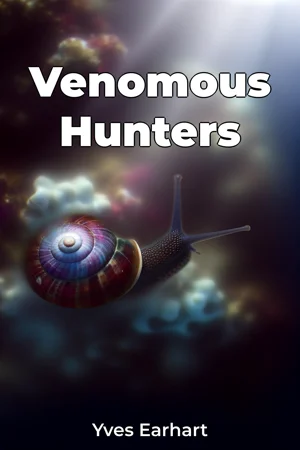
"Venomous Hunters" explores the fascinating world of venomous animals, revealing venom as a sophisticated evolutionary tool rather than just a simple poison. The book examines the ecological and biological significance of venom across diverse species, from snakes and spiders to cone snails, highlighting the evolutionary pressures that shaped its development. A key insight is how venom illustrates the complex relationships between predators, prey, and their environment. The book progresses from introducing the concept of venom and its chemical composition to detailed explorations of specific venomous animal groups like snakes, spiders, and marine invertebrates. It emphasizes the ecological roles of venomous animals and the evolutionary underpinnings of their venom systems. Furthermore, the book analyzes the evolutionary arms race between predators and prey, and the applications of venom research to fields like drug discovery and antivenom production. By integrating evolutionary biology, biochemistry, and ecology, "Venomous Hunters" offers a comprehensive understanding of venom. This approach is intended to present complex scientific concepts in an accessible manner, making it valuable for students and general readers interested in nature, biology, and life sciences.
Book Details
ISBN
9788233982737
Publisher
Publifye AS
Your Licenses
You don't own any licenses for this book
Purchase a license below to unlock this book and download the EPUB.
Purchase License
Select a tier to unlock this book
Need bulk licensing?
Contact us for enterprise agreements.