
About This Book
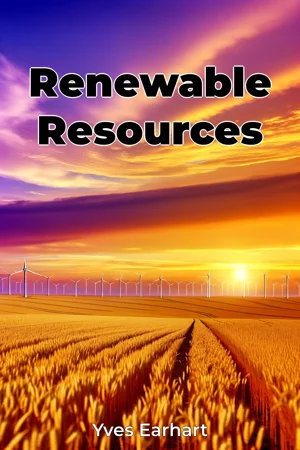
Can renewable resources truly power a sustainable future, or are they merely a hopeful aspiration? This book, *Renewable Resources*, delves into the heart of this question, providing a comprehensive investigation into the potential of renewable energy sources and the technologies that can harness them for long-term global sustainability. We explore not only the technical aspects but also the economic, social, and environmental factors that influence the widespread adoption of these vital resources. This book is crucial because the global demand for energy continues to rise, traditional fossil fuels are finite and environmentally damaging, and climate change poses an existential threat. Understanding the capabilities and limitations of renewable resources is no longer a matter of academic interest but a necessity for informed decision-making by policymakers, businesses, and individuals. We examine the role of solar energy, wind power, and geothermal energy, and also explore the potential of biomass and hydropower, providing a complete overview of renewable energy technologies. A brief historical overview is provided, tracing the development of renewable energy technologies from early innovations to modern advancements. We discuss the social and political factors that have hindered or accelerated their adoption, including government policies, economic incentives, and public perceptions. Readers are expected to have a basic understanding of scientific principles like energy conservation and thermodynamics to fully appreciate the technical discussions. The central argument of *Renewable Resources* is that a diversified approach to renewable energy, combined with strategic technological advancements and supportive policy frameworks, is essential for achieving a sustainable energy future. This argument is vital because it calls for a shift away from a reliance on single solutions and towards a more integrated and resilient energy system. *Renewable Resources* starts with an introduction to the fundamental principles of renewable energy and the need for sustainable development. It is followed by detailed chapters on individual resource types: solar, wind, hydro, geothermal, and biomass. Each chapter explores the underlying technology, its current state of development, its potential for future growth, and its associated environmental and economic impacts. The book culminates in a synthesis of these individual assessments, presenting a comprehensive roadmap for integrating renewable energy into the global energy mix. It also explores the implications of energy storage solutions for intermittent resources and the use of smart grids for efficient energy distribution. The arguments presented in the book are based on extensive research, drawing from scientific literature, industry reports, and government data. We analyze data from global energy consumption trends, technological performance metrics, and environmental impact assessments. We present case studies of successful renewable energy projects from around the world, and we present quantitative analysis to examine cost-effectiveness and scalability. This book connects to other fields such as environmental science, economics, and policy studies. Its arguments are enhanced by considering economic models of energy markets and policy analyses of renewable energy incentives. It is also relevant to fields like materials science and engineering, as advancements in materials and engineering designs are crucial for improving the efficiency and durability of renewable energy technologies. What makes this book unique is its holistic approach to renewable energy evaluation. It combines technical analysis with economic and environmental considerations, providing a balanced perspective on the challenges and opportunities associated with each resource type. The approach avoids technological optimism by acknowledging the limitations of renewable resources, such as intermittency and land-use requirements, and provides realistic strategies. *Renewable Resources* is written in a professional and accessible style, making it suitable for a broad audience, including students, researchers, policymakers, and industry professionals. The book is intended for anyone seeking a comprehensive understanding of renewable energy and its role in a sustainable future. As a non-fiction work on 'Environment' and 'Technology', it adheres to the conventions of providing accurate, evidence-based information. It offers a structured analysis with clear explanations of complex concepts. The scope covers the major renewable energy resources currently available or under development, but it intentionally excludes speculative or emerging technologies that are not yet commercially viable. Readers can apply the information in this book to make informed decisions about energy consumption, support renewable energy initiatives, and advocate for policies that promote sustainable development. It provides a framework for evaluating the potential of different renewable energy options and assessing their suitability for specific contexts. The book recognizes that there are ongoing debates about topics such as the environmental impacts of large-scale hydropower projects, the land-use implications of biomass production, and the economic competitiveness of renewable energy compared to fossil fuels. These controversies are addressed in a balanced and objective manner, presenting multiple perspectives and weighing the evidence on both sides.
Can renewable resources truly power a sustainable future, or are they merely a hopeful aspiration? This book, *Renewable Resources*, delves into the heart of this question, providing a comprehensive investigation into the potential of renewable energy sources and the technologies that can harness them for long-term global sustainability. We explore not only the technical aspects but also the economic, social, and environmental factors that influence the widespread adoption of these vital resources. This book is crucial because the global demand for energy continues to rise, traditional fossil fuels are finite and environmentally damaging, and climate change poses an existential threat. Understanding the capabilities and limitations of renewable resources is no longer a matter of academic interest but a necessity for informed decision-making by policymakers, businesses, and individuals. We examine the role of solar energy, wind power, and geothermal energy, and also explore the potential of biomass and hydropower, providing a complete overview of renewable energy technologies. A brief historical overview is provided, tracing the development of renewable energy technologies from early innovations to modern advancements. We discuss the social and political factors that have hindered or accelerated their adoption, including government policies, economic incentives, and public perceptions. Readers are expected to have a basic understanding of scientific principles like energy conservation and thermodynamics to fully appreciate the technical discussions. The central argument of *Renewable Resources* is that a diversified approach to renewable energy, combined with strategic technological advancements and supportive policy frameworks, is essential for achieving a sustainable energy future. This argument is vital because it calls for a shift away from a reliance on single solutions and towards a more integrated and resilient energy system. *Renewable Resources* starts with an introduction to the fundamental principles of renewable energy and the need for sustainable development. It is followed by detailed chapters on individual resource types: solar, wind, hydro, geothermal, and biomass. Each chapter explores the underlying technology, its current state of development, its potential for future growth, and its associated environmental and economic impacts. The book culminates in a synthesis of these individual assessments, presenting a comprehensive roadmap for integrating renewable energy into the global energy mix. It also explores the implications of energy storage solutions for intermittent resources and the use of smart grids for efficient energy distribution. The arguments presented in the book are based on extensive research, drawing from scientific literature, industry reports, and government data. We analyze data from global energy consumption trends, technological performance metrics, and environmental impact assessments. We present case studies of successful renewable energy projects from around the world, and we present quantitative analysis to examine cost-effectiveness and scalability. This book connects to other fields such as environmental science, economics, and policy studies. Its arguments are enhanced by considering economic models of energy markets and policy analyses of renewable energy incentives. It is also relevant to fields like materials science and engineering, as advancements in materials and engineering designs are crucial for improving the efficiency and durability of renewable energy technologies. What makes this book unique is its holistic approach to renewable energy evaluation. It combines technical analysis with economic and environmental considerations, providing a balanced perspective on the challenges and opportunities associated with each resource type. The approach avoids technological optimism by acknowledging the limitations of renewable resources, such as intermittency and land-use requirements, and provides realistic strategies. *Renewable Resources* is written in a professional and accessible style, making it suitable for a broad audience, including students, researchers, policymakers, and industry professionals. The book is intended for anyone seeking a comprehensive understanding of renewable energy and its role in a sustainable future. As a non-fiction work on 'Environment' and 'Technology', it adheres to the conventions of providing accurate, evidence-based information. It offers a structured analysis with clear explanations of complex concepts. The scope covers the major renewable energy resources currently available or under development, but it intentionally excludes speculative or emerging technologies that are not yet commercially viable. Readers can apply the information in this book to make informed decisions about energy consumption, support renewable energy initiatives, and advocate for policies that promote sustainable development. It provides a framework for evaluating the potential of different renewable energy options and assessing their suitability for specific contexts. The book recognizes that there are ongoing debates about topics such as the environmental impacts of large-scale hydropower projects, the land-use implications of biomass production, and the economic competitiveness of renewable energy compared to fossil fuels. These controversies are addressed in a balanced and objective manner, presenting multiple perspectives and weighing the evidence on both sides.
"Renewable Resources" offers a comprehensive exploration of renewable energy's potential to power a sustainable future. It examines various sources like solar energy, wind power, geothermal energy, biomass, and hydropower, detailing their technologies, development stages, and environmental impacts. The book highlights the crucial role of these resources in addressing climate change and diminishing fossil fuel reserves, emphasizing that understanding their capabilities and limitations is essential for informed decision-making. The book uniquely combines technical analysis with economic and environmental considerations, providing a balanced perspective on renewable resources. It acknowledges challenges like intermittency and land-use requirements while presenting realistic strategies for integration. Starting with fundamental principles and the need for sustainable development, the book progresses through detailed chapters on individual resource types, culminating in a roadmap for incorporating renewable energy into the global energy mix while exploring the implications of energy storage solutions and smart grids.
Book Details
ISBN
9788233982713
Publisher
Publifye AS
Your Licenses
You don't own any licenses for this book
Purchase a license below to unlock this book and download the EPUB.
Purchase License
Select a tier to unlock this book
Need bulk licensing?
Contact us for enterprise agreements.