
About This Book
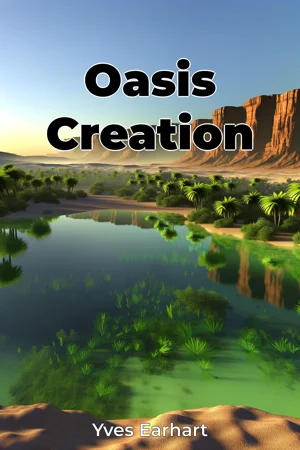
Have you ever wondered how life persists in the most desolate corners of our planet? *Oasis Creation* delves into the fascinating natural processes behind the formation of oases, those life-sustaining havens that punctuate vast, arid landscapes. This book explores the complex interplay of geological formations, hydrological cycles, and ecological adaptations that give rise to these vital water sources in deserts. Understanding oases is crucial, not only for appreciating the intricate workings of our planet, but also for informing sustainable water management strategies in increasingly arid regions. This book primarily focuses on three key topics: the geological and hydrological prerequisites for oasis formation, the ecological communities that thrive within these unique environments, and the human impact on oasis sustainability. We will examine the subsurface structures, such as aquifers and impermeable rock layers, that trap and channel water, creating the foundation for an oasis. We will also explore the intricate food webs and specialized adaptations of plants and animals that have evolved to survive in these isolated ecosystems. Finally, we will assess how human activities, from agriculture to urbanization, threaten the long-term viability of oases worldwide. *Oasis Creation* builds upon established principles of geology, hydrology, and ecology. While no specific prior knowledge is strictly required, a basic understanding of these disciplines will enhance the reader's appreciation for the material presented. The central argument of this book is that oases are not simply isolated pockets of water, but rather complex, interconnected systems whose existence depends on a delicate balance of natural and human factors. Understanding this balance is essential for preserving these valuable resources for future generations. The book is structured to provide a comprehensive understanding of oasis formation. It begins with an introduction to the fundamental concepts of desert hydrology and geology, explaining how water sources are created and maintained underground. The book then transitions to detailed case studies of specific oases around the world, illustrating the diverse geological settings and ecological communities they support. The book culminates with a discussion of the challenges facing oases today, including water scarcity, climate change, and human development, and offers potential solutions for sustainable management. To support its arguments, *Oasis Creation* draws upon a wide range of scientific evidence, including geological surveys, hydrological data, ecological studies, and climate models. It also incorporates firsthand observations and photographs from diverse oasis environments. Data from international collaborations and research projects focusing on desert ecosystems will also be featured. The study of oases inherently connects to several other fields, including climatology, agriculture, and environmental policy. The book will address how climate change is impacting oasis water supplies, how agricultural practices can either deplete or enhance oasis ecosystems, and how environmental policies can promote sustainable oasis management. *Oasis Creation* offers a unique perspective by integrating geological, ecological, and human dimensions of oases into a single, comprehensive framework. It moves beyond simple descriptions of oasis ecosystems to explore the underlying processes that govern their formation and sustainability. Written in a clear and accessible style, this book is targeted towards students, researchers, environmental professionals, and anyone interested in learning more about the natural world and the challenges of water resource management. This book would be valuable to readers as it synthesizes dispersed research findings into a cohesive narrative, offering practical insights for conservation efforts. As a work of nature and earth sciences geography, *Oasis Creation* adheres to the genre's standards of accuracy, objectivity, and evidence-based analysis. While aiming for global coverage, the book acknowledges limitations in data availability for certain remote oasis regions. The insights presented in *Oasis Creation* have direct real-world applications, informing strategies for sustainable agriculture, water resource management, and conservation planning in arid and semi-arid environments. The book also touches upon ongoing debates regarding the role of technology in addressing water scarcity and the ethical considerations of water allocation in oasis communities.
Have you ever wondered how life persists in the most desolate corners of our planet? *Oasis Creation* delves into the fascinating natural processes behind the formation of oases, those life-sustaining havens that punctuate vast, arid landscapes. This book explores the complex interplay of geological formations, hydrological cycles, and ecological adaptations that give rise to these vital water sources in deserts. Understanding oases is crucial, not only for appreciating the intricate workings of our planet, but also for informing sustainable water management strategies in increasingly arid regions. This book primarily focuses on three key topics: the geological and hydrological prerequisites for oasis formation, the ecological communities that thrive within these unique environments, and the human impact on oasis sustainability. We will examine the subsurface structures, such as aquifers and impermeable rock layers, that trap and channel water, creating the foundation for an oasis. We will also explore the intricate food webs and specialized adaptations of plants and animals that have evolved to survive in these isolated ecosystems. Finally, we will assess how human activities, from agriculture to urbanization, threaten the long-term viability of oases worldwide. *Oasis Creation* builds upon established principles of geology, hydrology, and ecology. While no specific prior knowledge is strictly required, a basic understanding of these disciplines will enhance the reader's appreciation for the material presented. The central argument of this book is that oases are not simply isolated pockets of water, but rather complex, interconnected systems whose existence depends on a delicate balance of natural and human factors. Understanding this balance is essential for preserving these valuable resources for future generations. The book is structured to provide a comprehensive understanding of oasis formation. It begins with an introduction to the fundamental concepts of desert hydrology and geology, explaining how water sources are created and maintained underground. The book then transitions to detailed case studies of specific oases around the world, illustrating the diverse geological settings and ecological communities they support. The book culminates with a discussion of the challenges facing oases today, including water scarcity, climate change, and human development, and offers potential solutions for sustainable management. To support its arguments, *Oasis Creation* draws upon a wide range of scientific evidence, including geological surveys, hydrological data, ecological studies, and climate models. It also incorporates firsthand observations and photographs from diverse oasis environments. Data from international collaborations and research projects focusing on desert ecosystems will also be featured. The study of oases inherently connects to several other fields, including climatology, agriculture, and environmental policy. The book will address how climate change is impacting oasis water supplies, how agricultural practices can either deplete or enhance oasis ecosystems, and how environmental policies can promote sustainable oasis management. *Oasis Creation* offers a unique perspective by integrating geological, ecological, and human dimensions of oases into a single, comprehensive framework. It moves beyond simple descriptions of oasis ecosystems to explore the underlying processes that govern their formation and sustainability. Written in a clear and accessible style, this book is targeted towards students, researchers, environmental professionals, and anyone interested in learning more about the natural world and the challenges of water resource management. This book would be valuable to readers as it synthesizes dispersed research findings into a cohesive narrative, offering practical insights for conservation efforts. As a work of nature and earth sciences geography, *Oasis Creation* adheres to the genre's standards of accuracy, objectivity, and evidence-based analysis. While aiming for global coverage, the book acknowledges limitations in data availability for certain remote oasis regions. The insights presented in *Oasis Creation* have direct real-world applications, informing strategies for sustainable agriculture, water resource management, and conservation planning in arid and semi-arid environments. The book also touches upon ongoing debates regarding the role of technology in addressing water scarcity and the ethical considerations of water allocation in oasis communities.
"Oasis Creation" explores the captivating story of how oases, those vital pockets of life, emerge in the harshest desert environments. It examines the geological underpinnings, such as the presence of aquifers and impermeable rock layers, and the crucial hydrological cycles that concentrate water in these arid regions. The book reveals how specialized ecosystems adapt and thrive in these isolated havens, creating unique food webs resilient to extreme conditions. Did you know that some oasis ecosystems rely on fog harvesting techniques to supplement their water supply? The book uniquely integrates geological, ecological, and human perspectives to provide a comprehensive understanding of oases. It progresses by first exploring the geological and hydrological foundations of oases, then moving to case studies of specific oases globally, and concluding with a discussion of the challenges oases face today, such as climate change and unsustainable water use. It highlights the delicate balance between natural processes and human activities and emphasizes the need for sustainable water management and conservation planning to preserve these invaluable resources.
Book Details
ISBN
9788233982577
Publisher
Publifye AS
Your Licenses
You don't own any licenses for this book
Purchase a license below to unlock this book and download the EPUB.
Purchase License
Select a tier to unlock this book
Need bulk licensing?
Contact us for enterprise agreements.