
About This Book
Have you ever wondered how something as rare and valuable as gold comes to exist in our world? This book, *Gold Formation*, explores the fascinating journey of gold from its cosmic origins to its eventual discovery and use on Earth. We delve into the heart of the matter, tracing gold's creation from cataclysmic stellar events to the intricate geological processes that concentrate it into economically viable deposits. The book centers on three major themes: the nucleosynthesis of gold in supernova explosions, the geological mechanisms by which gold is mobilized and concentrated within the Earth's crust, and the surficial processes – particularly river systems – that lead to the formation of placer deposits. Understanding these topics is crucial given gold's ongoing significance in economics, technology, and culture. We begin by establishing a foundation in stellar nucleosynthesis, explaining how gold, along with other heavy elements, is primarily forged within the extreme conditions of supernova explosions and neutron star mergers. Readers will gain an overview of the nuclear reactions involved and understand why gold is relatively rare compared to lighter elements. We then transition to the Earth sciences, exploring the processes that occur after gold-bearing materials are incorporated into the planet's crust. This involves understanding magmatic activity, hydrothermal systems, and the role of fluids in transporting and depositing gold. Finally, we examine the processes operating at the Earth's surface, specifically focusing on the role of rivers in eroding, transporting, and concentrating gold particles to form placer deposits, the source of much of the gold historically discovered. Our central argument is that the occurrence and distribution of gold on Earth are a direct result of a complex interplay between high-energy astrophysical events and intricate geological and geomorphological processes. This understanding is important because it provides a framework for exploring for new gold deposits and managing existing resources more effectively. The book progresses from an introduction to the cosmic origin of gold, through a thorough examination of the geological processes that form gold deposits, and culminating in a discussion of how these deposits are discovered, mined, and utilized. Specific chapters will cover topics like the role of specific geological structures in gold concentration, the geochemistry of gold-bearing fluids, and the geomorphological factors influencing placer deposit formation. The concluding chapters discuss the implications of our understanding about gold formation for resource exploration and environmental management. The book's evidence is drawn from published research in astrophysics, geology, geochemistry, and geomorphology. We synthesize data from scientific publications, field studies, and experimental research, providing real-world examples. *Gold Formation* connects to astrophysics through our discussion of stellar nucleosynthesis, to geochemistry through the analysis of hydrothermal fluids and mineral interactions, and to economic geology through the application of geological knowledge to gold exploration and mining. These connections highlight the interdisciplinary nature of understanding gold formation. This book offers a comprehensive and integrated perspective on gold formation, bridging the gap between cosmic origins and terrestrial deposits. The tone is informative and accessible, aimed at readers with an interest in earth sciences, economic geology, and the origins of valuable elements. The target audience includes students and professionals in geology, mining engineering, environmental science, and anyone interested in the science behind resource formation. This book will be valuable to those seeking a deeper understanding of the processes that create and concentrate gold deposits. As a work of non-fiction, this book adheres to the standards of accuracy and objectivity, presenting information supported by verifiable evidence and clear citations of sources. The scope of the book is limited to the formation of gold deposits, primarily focusing on the scientific processes involved. The aim is not to explore the history of gold mining or the economics of gold trading in detail, though these aspects are mentioned where relevant. The knowledge presented in this book can be directly applied to understand and manage natural resources. It also provides valuable insights for gold exploration. While our understanding of gold's journey has greatly advanced, debates continue within the scientific community. These include the relative contributions of different types of supernovae, the precise mechanisms of gold transport in hydrothermal fluids, and the long-term stability of gold deposits in different geological environments. The book will touch upon certain controversies and open questions.
Have you ever wondered how something as rare and valuable as gold comes to exist in our world? This book, *Gold Formation*, explores the fascinating journey of gold from its cosmic origins to its eventual discovery and use on Earth. We delve into the heart of the matter, tracing gold's creation from cataclysmic stellar events to the intricate geological processes that concentrate it into economically viable deposits. The book centers on three major themes: the nucleosynthesis of gold in supernova explosions, the geological mechanisms by which gold is mobilized and concentrated within the Earth's crust, and the surficial processes – particularly river systems – that lead to the formation of placer deposits. Understanding these topics is crucial given gold's ongoing significance in economics, technology, and culture. We begin by establishing a foundation in stellar nucleosynthesis, explaining how gold, along with other heavy elements, is primarily forged within the extreme conditions of supernova explosions and neutron star mergers. Readers will gain an overview of the nuclear reactions involved and understand why gold is relatively rare compared to lighter elements. We then transition to the Earth sciences, exploring the processes that occur after gold-bearing materials are incorporated into the planet's crust. This involves understanding magmatic activity, hydrothermal systems, and the role of fluids in transporting and depositing gold. Finally, we examine the processes operating at the Earth's surface, specifically focusing on the role of rivers in eroding, transporting, and concentrating gold particles to form placer deposits, the source of much of the gold historically discovered. Our central argument is that the occurrence and distribution of gold on Earth are a direct result of a complex interplay between high-energy astrophysical events and intricate geological and geomorphological processes. This understanding is important because it provides a framework for exploring for new gold deposits and managing existing resources more effectively. The book progresses from an introduction to the cosmic origin of gold, through a thorough examination of the geological processes that form gold deposits, and culminating in a discussion of how these deposits are discovered, mined, and utilized. Specific chapters will cover topics like the role of specific geological structures in gold concentration, the geochemistry of gold-bearing fluids, and the geomorphological factors influencing placer deposit formation. The concluding chapters discuss the implications of our understanding about gold formation for resource exploration and environmental management. The book's evidence is drawn from published research in astrophysics, geology, geochemistry, and geomorphology. We synthesize data from scientific publications, field studies, and experimental research, providing real-world examples. *Gold Formation* connects to astrophysics through our discussion of stellar nucleosynthesis, to geochemistry through the analysis of hydrothermal fluids and mineral interactions, and to economic geology through the application of geological knowledge to gold exploration and mining. These connections highlight the interdisciplinary nature of understanding gold formation. This book offers a comprehensive and integrated perspective on gold formation, bridging the gap between cosmic origins and terrestrial deposits. The tone is informative and accessible, aimed at readers with an interest in earth sciences, economic geology, and the origins of valuable elements. The target audience includes students and professionals in geology, mining engineering, environmental science, and anyone interested in the science behind resource formation. This book will be valuable to those seeking a deeper understanding of the processes that create and concentrate gold deposits. As a work of non-fiction, this book adheres to the standards of accuracy and objectivity, presenting information supported by verifiable evidence and clear citations of sources. The scope of the book is limited to the formation of gold deposits, primarily focusing on the scientific processes involved. The aim is not to explore the history of gold mining or the economics of gold trading in detail, though these aspects are mentioned where relevant. The knowledge presented in this book can be directly applied to understand and manage natural resources. It also provides valuable insights for gold exploration. While our understanding of gold's journey has greatly advanced, debates continue within the scientific community. These include the relative contributions of different types of supernovae, the precise mechanisms of gold transport in hydrothermal fluids, and the long-term stability of gold deposits in different geological environments. The book will touch upon certain controversies and open questions.
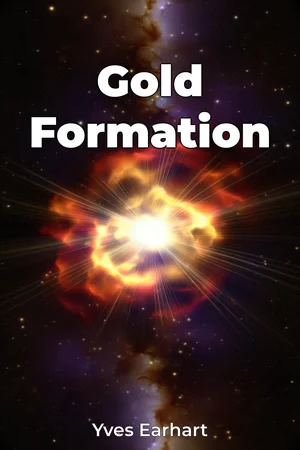
"Gold Formation" explores the captivating journey of gold, from its creation in supernova explosions to its concentration into valuable deposits on Earth. The book emphasizes the nucleosynthesis of gold within stellar events, detailing how these cataclysmic occurrences forge gold and other heavy elements. It also explores the geological mechanisms responsible for mobilizing and concentrating gold in the Earth's crust, such as magmatic activity and hydrothermal systems, akin to how a complex plumbing system can distribute valuable minerals. The book then transitions to surface processes, particularly the role of river systems in forming placer deposits. Understanding these topics is crucial, given gold's ongoing significance in economics and technology. The book progresses from the cosmic origins of gold to a thorough examination of geological formations, culminating in a discussion of deposit discovery, mining, and utilization. The unique value of this book lies in its comprehensive, integrated perspective, bridging the gap between astrophysics, geochemistry, and economic geology. By synthesizing research from multiple disciplines, "Gold Formation" provides a framework for exploring new gold deposits and managing existing resources more effectively, making it valuable for students and professionals in earth sciences.
Book Details
ISBN
9788233982461
Publisher
Publifye AS
Your Licenses
You don't own any licenses for this book
Purchase a license below to unlock this book and download the EPUB.
Purchase License
Select a tier to unlock this book
Need bulk licensing?
Contact us for enterprise agreements.