
About This Book
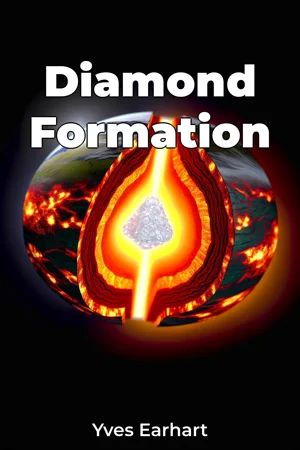
Have you ever wondered how a substance so rare and beautiful as a diamond comes to exist? "Diamond Formation" delves into the fascinating geological processes that give birth to these coveted gems deep within the Earth. This book explores the extreme conditions of heat and pressure required to create one of the hardest known substances, shedding light on the science, geography, and nature intertwined in their creation. This book centers on three critical areas: the mantle's role as a diamond-forming environment, the kimberlite and lamproite eruptions that transport diamonds to the Earth's surface, and the impact of plate tectonics on these processes. These topics are significant because understanding them provides insights into Earth's geological history, the dynamics of the planet's interior, and the formation of other valuable minerals. Readers will gain a deeper appreciation for the complex systems that shape our world. To fully understand diamond formation, we’ll explore the relevant background knowledge in geochemistry, mineralogy, and plate tectonics. We'll begin with a review of Earth's internal structure, focusing on the composition and dynamics of the mantle. Brief discussions of basic chemical bonding and mineral structures will be provided to ensure accessibility for readers without advanced scientific backgrounds. The central argument of "Diamond Formation" is that diamonds are not merely rare gemstones; they are time capsules providing invaluable information about the deep Earth. By studying the inclusions within diamonds, we can learn about the composition and conditions of the mantle at depths that are otherwise inaccessible. This argument is important because it highlights the scientific value of diamonds beyond their economic worth. The book is structured into three parts. First, we introduce the fundamental concepts of diamond structure, carbon sources in the mantle, and the pressure-temperature conditions required for diamond stability. Second, we examine the formation of kimberlites and lamproites – the volcanic rocks that serve as conduits for diamond transport. This section will detail the eruption mechanisms and the geological settings in which these volcanoes occur. Third, we investigate the role of plate tectonics in delivering carbon to the deep mantle, including subduction processes and their influence on diamond genesis. The book culminates by discussing current research and future directions in diamond research, as well as practical implications for diamond exploration and ethical sourcing. The evidence presented in "Diamond Formation" is drawn from a variety of sources, including experimental petrology, geochemical analyses of diamond inclusions, and field studies of kimberlite and lamproite occurrences. We will showcase data from cutting-edge research, including isotopic analyses and high-pressure experiments designed to replicate mantle conditions. The book also incorporates geological maps and cross-sections to illustrate the tectonic settings of diamondiferous regions. The book connects to several other fields, including geochemistry (the study of Earth's chemical composition), mineralogy (the study of minerals), and geophysics (the study of Earth's physical properties). By integrating these disciplines, "Diamond Formation" offers a holistic understanding of diamond genesis within the broader context of Earth science. Furthermore, the book touches on economic geology, exploring the processes that concentrate diamonds into economically viable deposits. The study of diamonds also intersects with environmental science, as responsible mining practices are critical to minimizing the environmental impact of diamond exploration and extraction. A unique aspect of "Diamond Formation" is its focus on the interdisciplinary nature of diamond research. By integrating data from multiple fields, we provide a nuanced understanding of diamond formation that goes beyond the typical geological narrative. The book also emphasizes the importance of ethical sourcing and responsible mining practices, reflecting the growing awareness of the social and environmental impacts of the diamond industry. The tone of the book is professional yet accessible, aiming to engage both scientists and interested laypersons. Complex scientific concepts are explained clearly and concisely, with ample illustrations and diagrams to aid comprehension. The writing style is factual and objective, maintaining a focus on the scientific evidence. The target audience includes students of Earth science, geography, and environmental science, as well as gemologists, geologists working in the mineral exploration industry, and anyone fascinated by the origins of gemstones. The book will be valuable because it provides a comprehensive and up-to-date overview of diamond formation, covering both the scientific principles and the practical applications. As a work of non-fiction, "Diamond Formation" adheres to the genre's conventions of accuracy, objectivity, and evidence-based arguments. The book relies on peer-reviewed research and established scientific principles, avoiding speculative or unsubstantiated claims. The writing style is clear and concise, aiming to inform and educate rather than to entertain. The scope of "Diamond Formation" is comprehensive but focused, covering the key aspects of diamond genesis from the mantle to the surface. The book does not delve into the history of diamond mining or the cultural significance of diamonds, focusing instead on the geological and geochemical processes that govern their formation. The information in this book has real-world applications for geologists involved in diamond exploration, as well as for policymakers seeking to promote responsible mining practices. Understanding the geological and geochemical processes that concentrate diamonds into economic deposits is essential for efficient and sustainable resource management. The book touches on the ongoing debate regarding the origin of carbon in diamonds, specifically the relative contributions of recycled organic carbon versus inorganic carbon from the mantle. This debate has implications for our understanding of Earth's carbon cycle and the role of subduction in delivering carbon to the deep mantle.
Have you ever wondered how a substance so rare and beautiful as a diamond comes to exist? "Diamond Formation" delves into the fascinating geological processes that give birth to these coveted gems deep within the Earth. This book explores the extreme conditions of heat and pressure required to create one of the hardest known substances, shedding light on the science, geography, and nature intertwined in their creation. This book centers on three critical areas: the mantle's role as a diamond-forming environment, the kimberlite and lamproite eruptions that transport diamonds to the Earth's surface, and the impact of plate tectonics on these processes. These topics are significant because understanding them provides insights into Earth's geological history, the dynamics of the planet's interior, and the formation of other valuable minerals. Readers will gain a deeper appreciation for the complex systems that shape our world. To fully understand diamond formation, we’ll explore the relevant background knowledge in geochemistry, mineralogy, and plate tectonics. We'll begin with a review of Earth's internal structure, focusing on the composition and dynamics of the mantle. Brief discussions of basic chemical bonding and mineral structures will be provided to ensure accessibility for readers without advanced scientific backgrounds. The central argument of "Diamond Formation" is that diamonds are not merely rare gemstones; they are time capsules providing invaluable information about the deep Earth. By studying the inclusions within diamonds, we can learn about the composition and conditions of the mantle at depths that are otherwise inaccessible. This argument is important because it highlights the scientific value of diamonds beyond their economic worth. The book is structured into three parts. First, we introduce the fundamental concepts of diamond structure, carbon sources in the mantle, and the pressure-temperature conditions required for diamond stability. Second, we examine the formation of kimberlites and lamproites – the volcanic rocks that serve as conduits for diamond transport. This section will detail the eruption mechanisms and the geological settings in which these volcanoes occur. Third, we investigate the role of plate tectonics in delivering carbon to the deep mantle, including subduction processes and their influence on diamond genesis. The book culminates by discussing current research and future directions in diamond research, as well as practical implications for diamond exploration and ethical sourcing. The evidence presented in "Diamond Formation" is drawn from a variety of sources, including experimental petrology, geochemical analyses of diamond inclusions, and field studies of kimberlite and lamproite occurrences. We will showcase data from cutting-edge research, including isotopic analyses and high-pressure experiments designed to replicate mantle conditions. The book also incorporates geological maps and cross-sections to illustrate the tectonic settings of diamondiferous regions. The book connects to several other fields, including geochemistry (the study of Earth's chemical composition), mineralogy (the study of minerals), and geophysics (the study of Earth's physical properties). By integrating these disciplines, "Diamond Formation" offers a holistic understanding of diamond genesis within the broader context of Earth science. Furthermore, the book touches on economic geology, exploring the processes that concentrate diamonds into economically viable deposits. The study of diamonds also intersects with environmental science, as responsible mining practices are critical to minimizing the environmental impact of diamond exploration and extraction. A unique aspect of "Diamond Formation" is its focus on the interdisciplinary nature of diamond research. By integrating data from multiple fields, we provide a nuanced understanding of diamond formation that goes beyond the typical geological narrative. The book also emphasizes the importance of ethical sourcing and responsible mining practices, reflecting the growing awareness of the social and environmental impacts of the diamond industry. The tone of the book is professional yet accessible, aiming to engage both scientists and interested laypersons. Complex scientific concepts are explained clearly and concisely, with ample illustrations and diagrams to aid comprehension. The writing style is factual and objective, maintaining a focus on the scientific evidence. The target audience includes students of Earth science, geography, and environmental science, as well as gemologists, geologists working in the mineral exploration industry, and anyone fascinated by the origins of gemstones. The book will be valuable because it provides a comprehensive and up-to-date overview of diamond formation, covering both the scientific principles and the practical applications. As a work of non-fiction, "Diamond Formation" adheres to the genre's conventions of accuracy, objectivity, and evidence-based arguments. The book relies on peer-reviewed research and established scientific principles, avoiding speculative or unsubstantiated claims. The writing style is clear and concise, aiming to inform and educate rather than to entertain. The scope of "Diamond Formation" is comprehensive but focused, covering the key aspects of diamond genesis from the mantle to the surface. The book does not delve into the history of diamond mining or the cultural significance of diamonds, focusing instead on the geological and geochemical processes that govern their formation. The information in this book has real-world applications for geologists involved in diamond exploration, as well as for policymakers seeking to promote responsible mining practices. Understanding the geological and geochemical processes that concentrate diamonds into economic deposits is essential for efficient and sustainable resource management. The book touches on the ongoing debate regarding the origin of carbon in diamonds, specifically the relative contributions of recycled organic carbon versus inorganic carbon from the mantle. This debate has implications for our understanding of Earth's carbon cycle and the role of subduction in delivering carbon to the deep mantle.
"Diamond Formation" explores the fascinating journey of diamonds, from their creation in the Earth's mantle to their discovery as coveted gemstones. This book delves into the extreme conditions required for diamond formation, highlighting the interplay of geology, geography, and nature. Discover how these gems, formed under intense heat and pressure, act as time capsules, offering insights into Earth's deep interior. The book uniquely emphasizes the interdisciplinary nature of diamond research. The book examines the mantle's crucial role, the volcanic eruptions of kimberlite and lamproite that bring diamonds to the surface, and the impact of plate tectonics on diamond genesis. Beginning with fundamental concepts of diamond structure and carbon sources, it progresses to detail kimberlite and lamproite formation, and concludes with the influence of subduction. Readers will gain an enriched understanding of Earth science and the processes shaping our planet.
Book Details
ISBN
9788233982447
Publisher
Publifye AS
Your Licenses
You don't own any licenses for this book
Purchase a license below to unlock this book and download the EPUB.
Purchase License
Select a tier to unlock this book
Need bulk licensing?
Contact us for enterprise agreements.