
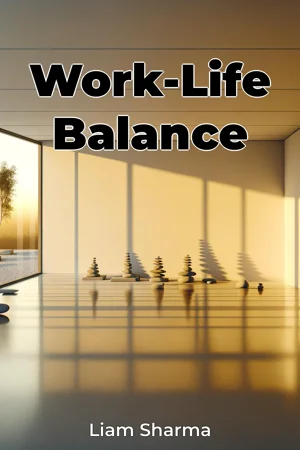
About This Book
In an era where burnout has become a global epidemic, "Work-Life Balance" addresses the critical challenge of maintaining professional success without sacrificing personal fulfillment and mental health. Drawing from extensive research in organizational psychology, neuroscience, and workplace studies, this comprehensive guide presents practical strategies for creating sustainable equilibrium in modern life. The book is structured around three interconnected pillars: career optimization, personal life management, and mental well-being preservation. Through evidence-based approaches, it demonstrates how these elements form a dynamic system that requires constant calibration rather than a fixed solution. Research from the World Health Organization and leading universities supports the book's central argument that sustainable success depends on maintaining harmony among these three domains. The first section examines career management through the lens of energy allocation rather than traditional time management. It introduces the "Energy Audit Framework," a tool that helps readers identify their peak performance periods and align them with crucial professional tasks. This section draws on studies from organizational behavior experts and includes data from Fortune 500 companies that have implemented flexible work policies. The personal life component explores the science of relationship maintenance and leisure activities, supported by longitudinal studies showing how quality personal time contributes to professional performance. The book presents the "Life Integration Model," which helps readers design routines that accommodate both work responsibilities and personal priorities without creating conflict between them. Mental well-being strategies are woven throughout the text, with particular emphasis on practical techniques for stress management and resilience building. The book incorporates findings from cognitive behavioral therapy and mindfulness research, presenting them in actionable steps that can be implemented within busy schedules. What distinguishes this guide is its integration of multiple disciplines, including psychology, sociology, and management science, to create a holistic approach to work-life balance. The content is supported by case studies from diverse professional backgrounds, featuring both successful implementations and cautionary tales of imbalance. The writing maintains an analytical tone while remaining accessible, using clear language to convey complex concepts. Each chapter includes practical exercises, self-assessment tools, and implementation strategies that readers can apply immediately. The book acknowledges that different career stages and personal circumstances require different approaches, offering adaptable solutions rather than one-size-fits-all prescriptions. This guide is particularly relevant for professionals at all levels who seek to advance their careers while maintaining personal relationships and mental health. It addresses specific challenges faced by remote workers, parents, entrepreneurs, and corporate employees, providing targeted strategies for each group. The book concludes with a framework for ongoing balance maintenance, recognizing that work-life equilibrium is not a destination but a continuous process of adjustment. It includes tools for regular self-assessment and course correction, helping readers develop sustainable habits that evolve with their changing circumstances. Throughout the text, readers will find research-backed methods for setting boundaries, managing digital distractions, and creating meaningful connections both professionally and personally. The book aims to help readers not just survive but thrive in their multiple life roles, supported by current research in productivity, well-being, and personal development.
In an era where burnout has become a global epidemic, "Work-Life Balance" addresses the critical challenge of maintaining professional success without sacrificing personal fulfillment and mental health. Drawing from extensive research in organizational psychology, neuroscience, and workplace studies, this comprehensive guide presents practical strategies for creating sustainable equilibrium in modern life. The book is structured around three interconnected pillars: career optimization, personal life management, and mental well-being preservation. Through evidence-based approaches, it demonstrates how these elements form a dynamic system that requires constant calibration rather than a fixed solution. Research from the World Health Organization and leading universities supports the book's central argument that sustainable success depends on maintaining harmony among these three domains. The first section examines career management through the lens of energy allocation rather than traditional time management. It introduces the "Energy Audit Framework," a tool that helps readers identify their peak performance periods and align them with crucial professional tasks. This section draws on studies from organizational behavior experts and includes data from Fortune 500 companies that have implemented flexible work policies. The personal life component explores the science of relationship maintenance and leisure activities, supported by longitudinal studies showing how quality personal time contributes to professional performance. The book presents the "Life Integration Model," which helps readers design routines that accommodate both work responsibilities and personal priorities without creating conflict between them. Mental well-being strategies are woven throughout the text, with particular emphasis on practical techniques for stress management and resilience building. The book incorporates findings from cognitive behavioral therapy and mindfulness research, presenting them in actionable steps that can be implemented within busy schedules. What distinguishes this guide is its integration of multiple disciplines, including psychology, sociology, and management science, to create a holistic approach to work-life balance. The content is supported by case studies from diverse professional backgrounds, featuring both successful implementations and cautionary tales of imbalance. The writing maintains an analytical tone while remaining accessible, using clear language to convey complex concepts. Each chapter includes practical exercises, self-assessment tools, and implementation strategies that readers can apply immediately. The book acknowledges that different career stages and personal circumstances require different approaches, offering adaptable solutions rather than one-size-fits-all prescriptions. This guide is particularly relevant for professionals at all levels who seek to advance their careers while maintaining personal relationships and mental health. It addresses specific challenges faced by remote workers, parents, entrepreneurs, and corporate employees, providing targeted strategies for each group. The book concludes with a framework for ongoing balance maintenance, recognizing that work-life equilibrium is not a destination but a continuous process of adjustment. It includes tools for regular self-assessment and course correction, helping readers develop sustainable habits that evolve with their changing circumstances. Throughout the text, readers will find research-backed methods for setting boundaries, managing digital distractions, and creating meaningful connections both professionally and personally. The book aims to help readers not just survive but thrive in their multiple life roles, supported by current research in productivity, well-being, and personal development.
"Work-Life Balance" offers a groundbreaking approach to achieving sustainable equilibrium between professional success and personal fulfillment in an age where burnout has reached epidemic proportions. This comprehensive guide uniquely integrates organizational psychology, neuroscience, and workplace studies to present a three-pillar framework focusing on career optimization, personal life management, and mental well-being preservation. Rather than proposing rigid solutions, the book emphasizes that balance is a dynamic process requiring continuous adjustment and attention. The book introduces innovative concepts like the "Energy Audit Framework," which helps readers optimize their peak performance periods for crucial tasks, moving beyond traditional time management approaches. Through evidence-based strategies and real-world case studies from Fortune 500 companies, it demonstrates how quality personal time directly contributes to professional success. The "Life Integration Model" provides practical tools for creating routines that seamlessly blend work responsibilities with personal priorities. What sets this guide apart is its holistic approach to workplace wellness and professional development, supported by actionable exercises and self-assessment tools throughout each chapter. The content addresses specific challenges faced by different professional groups, from remote workers to entrepreneurs, while incorporating proven stress management techniques and mindfulness practices. By presenting complex concepts in accessible language and acknowledging that balance needs vary by individual circumstances, the book serves as both an immediate action plan and a long-term reference for maintaining sustainable work-life harmony.
Book Details
ISBN
9788233982287
Publisher
Publifye AS
Your Licenses
You don't own any licenses for this book
Purchase a license below to unlock this book and download the EPUB.
Purchase License
Select a tier to unlock this book
Need bulk licensing?
Contact us for enterprise agreements.