
About This Book
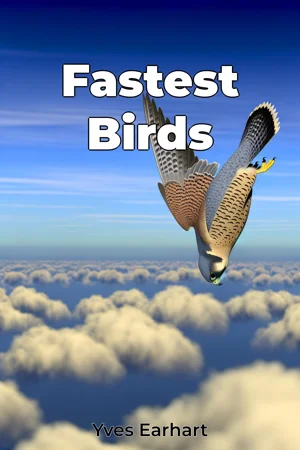
In the realm of aerial supremacy, two birds stand apart from all others: the spine-tailed swift, reaching speeds of up to 171 kilometers per hour in level flight, and the peregrine falcon, diving at velocities exceeding 380 kilometers per hour. "Fastest Birds" presents a detailed scientific analysis of these natural speed specialists, examining the biological adaptations and physical principles that enable their remarkable performances. The book combines extensive field research, wind tunnel studies, and high-speed photography to explore the sophisticated aerodynamics and physiological features that allow these birds to achieve such velocities. Through precise measurements and comparative analysis, readers discover how the spine-tailed swift's streamlined body and uniquely structured wings enable sustained high-speed horizontal flight, while the peregrine falcon's adaptations facilitate its signature hunting dive, the stoop. The text is organized into three main sections. The first addresses the fundamental physics of bird flight, including principles of drag reduction, lift generation, and energy efficiency. The second section delves into the specific adaptations of each species, from their specialized respiratory systems to their enhanced cardiovascular capabilities. The final section examines their hunting and migration behaviors, demonstrating how these speed capabilities influence their survival strategies. Supporting evidence comes from multiple sources, including radar tracking data, anatomical studies, and behavioral observations. The research incorporates contributions from international ornithologists, aerospace engineers, and biomechanics experts, providing a comprehensive understanding of high-speed flight in nature. The book connects biology with aerodynamics, evolution, and climate science, showing how these birds' capabilities have developed over millions of years and how they might be affected by changing environmental conditions. This interdisciplinary approach helps readers understand both the complexity of natural adaptation and its practical applications in fields such as aircraft design and fluid dynamics. Written in a technical yet accessible style, the text balances scientific rigor with clear explanations suitable for both professional researchers and interested general readers. Each chapter includes detailed diagrams, high-speed photography sequences, and data visualizations that illustrate key concepts and findings. The target audience includes ornithologists, aerospace engineers, and biology students, as well as nature enthusiasts seeking in-depth knowledge of avian capabilities. The book addresses ongoing research questions, such as the precise mechanisms of energy conservation during high-speed flight and the potential upper limits of bird flight speeds. While focusing primarily on these two species, the book acknowledges other fast-flying birds and explains why they fall short of these speed records. It also explores how recent technological advances in measurement and observation have enhanced our understanding of bird flight mechanics. The practical applications discussed include insights for aircraft design, particularly in the development of more efficient wing structures and high-speed stability systems. The book also examines the implications for wildlife conservation, especially regarding the protection of migration routes and hunting territories essential for these species' survival. Through meticulous research and analysis, "Fastest Birds" provides a definitive examination of nature's speed champions, offering readers both theoretical understanding and practical insights into the mechanics and importance of high-speed flight in the natural world.
In the realm of aerial supremacy, two birds stand apart from all others: the spine-tailed swift, reaching speeds of up to 171 kilometers per hour in level flight, and the peregrine falcon, diving at velocities exceeding 380 kilometers per hour. "Fastest Birds" presents a detailed scientific analysis of these natural speed specialists, examining the biological adaptations and physical principles that enable their remarkable performances. The book combines extensive field research, wind tunnel studies, and high-speed photography to explore the sophisticated aerodynamics and physiological features that allow these birds to achieve such velocities. Through precise measurements and comparative analysis, readers discover how the spine-tailed swift's streamlined body and uniquely structured wings enable sustained high-speed horizontal flight, while the peregrine falcon's adaptations facilitate its signature hunting dive, the stoop. The text is organized into three main sections. The first addresses the fundamental physics of bird flight, including principles of drag reduction, lift generation, and energy efficiency. The second section delves into the specific adaptations of each species, from their specialized respiratory systems to their enhanced cardiovascular capabilities. The final section examines their hunting and migration behaviors, demonstrating how these speed capabilities influence their survival strategies. Supporting evidence comes from multiple sources, including radar tracking data, anatomical studies, and behavioral observations. The research incorporates contributions from international ornithologists, aerospace engineers, and biomechanics experts, providing a comprehensive understanding of high-speed flight in nature. The book connects biology with aerodynamics, evolution, and climate science, showing how these birds' capabilities have developed over millions of years and how they might be affected by changing environmental conditions. This interdisciplinary approach helps readers understand both the complexity of natural adaptation and its practical applications in fields such as aircraft design and fluid dynamics. Written in a technical yet accessible style, the text balances scientific rigor with clear explanations suitable for both professional researchers and interested general readers. Each chapter includes detailed diagrams, high-speed photography sequences, and data visualizations that illustrate key concepts and findings. The target audience includes ornithologists, aerospace engineers, and biology students, as well as nature enthusiasts seeking in-depth knowledge of avian capabilities. The book addresses ongoing research questions, such as the precise mechanisms of energy conservation during high-speed flight and the potential upper limits of bird flight speeds. While focusing primarily on these two species, the book acknowledges other fast-flying birds and explains why they fall short of these speed records. It also explores how recent technological advances in measurement and observation have enhanced our understanding of bird flight mechanics. The practical applications discussed include insights for aircraft design, particularly in the development of more efficient wing structures and high-speed stability systems. The book also examines the implications for wildlife conservation, especially regarding the protection of migration routes and hunting territories essential for these species' survival. Through meticulous research and analysis, "Fastest Birds" provides a definitive examination of nature's speed champions, offering readers both theoretical understanding and practical insights into the mechanics and importance of high-speed flight in the natural world.
"Fastest Birds" delves into the remarkable world of nature's aerial speed champions, focusing on two extraordinary species: the spine-tailed swift, capable of reaching 171 kilometers per hour in level flight, and the peregrine falcon, achieving diving speeds over 380 kilometers per hour. This comprehensive exploration combines cutting-edge research methods, including wind tunnel studies and high-speed photography, to unravel the sophisticated adaptations that enable these birds' extraordinary capabilities. The book progresses logically from fundamental physics principles to specific biological adaptations, concluding with real-world applications and behavioral insights. Readers discover fascinating details about specialized respiratory systems and streamlined body structures that make such incredible speeds possible. The interdisciplinary approach brings together perspectives from ornithologists, aerospace engineers, and biomechanics experts, creating a rich understanding of high-speed flight in nature. What sets this work apart is its blend of technical precision and accessibility, supported by detailed diagrams and data visualizations that bring complex concepts to life. The research has practical applications beyond biology, influencing aircraft design and contributing to wildlife conservation efforts. Whether you're a professional researcher or an enthusiast of natural science, the book offers valuable insights into how these remarkable birds have evolved to become the fastest creatures in the skies, while raising intriguing questions about the ultimate limits of avian flight capabilities.
Book Details
ISBN
9788233982195
Publisher
Publifye AS
Your Licenses
You don't own any licenses for this book
Purchase a license below to unlock this book and download the EPUB.
Purchase License
Select a tier to unlock this book
Need bulk licensing?
Contact us for enterprise agreements.