
About This Book
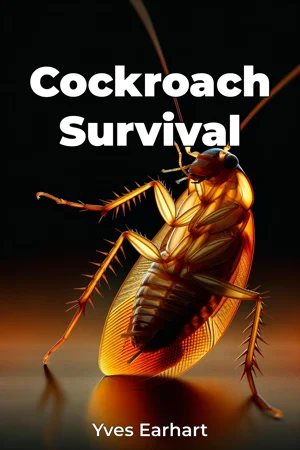
A cockroach can survive for weeks after decapitation, continuing to breathe, respond to stimuli, and even successfully mate—a remarkable demonstration of biological resilience that serves as a gateway to understanding one of nature's most adaptable creatures. "Cockroach Survival" presents a comprehensive examination of the physiological and behavioral adaptations that have enabled cockroaches to persist for over 300 million years. Through detailed research and scientific observations, the book reveals how these insects have developed mechanisms to withstand conditions that would prove fatal to most other species. The text is structured around three core themes: anatomical adaptations, survival mechanisms, and evolutionary success. The first section delves into the decentralized nervous system that allows cockroaches to function without their heads, explaining how their spiracles (breathing holes) and clotting abilities prevent fatal blood loss. The second part explores their ability to withstand radiation, extreme temperatures, and significant pressure. The final section examines how these adaptations have contributed to their evolutionary success across diverse environments. Drawing from entomological studies, evolutionary biology, and biochemistry, the book provides evidence-based explanations for cockroach survival mechanisms. It includes data from laboratory experiments, field observations, and comparative studies with other insect species. Recent research using advanced imaging techniques reveals previously unknown aspects of cockroach physiology, including their unique immune responses and metabolic processes. The work connects multiple scientific disciplines, linking entomology with biomechanics, as researchers study cockroach movement patterns for robotics applications. It also explores connections to medical research, where cockroach antimicrobial compounds show potential for developing new antibiotics. Written in a clear, scientific style that balances technical accuracy with accessibility, the book presents complex biological concepts through practical examples and detailed illustrations. Each chapter builds upon previous information, creating a logical progression from basic survival mechanisms to their broader implications for biological research. The target audience includes biology students, researchers, and scientifically curious readers interested in understanding biological adaptation and survival mechanisms. The book serves as both an academic resource and a comprehensive guide to understanding insect resilience. The content extends beyond simple observation to examine practical applications, including how cockroach survival mechanisms inform disaster-resistant technology development and inspire medical innovations. Research methodologies are clearly outlined, featuring both traditional observation techniques and modern analytical tools. While maintaining scientific objectivity, the book addresses ongoing debates in the field, such as the role of urban environments in cockroach evolution and the development of pesticide resistance. It also discusses the ecological importance of cockroaches, challenging common perceptions of these insects as mere pests. The book's scope encompasses both well-documented capabilities and recent discoveries, providing a balanced view of established knowledge and cutting-edge research. It acknowledges current limitations in understanding certain aspects of cockroach biology while highlighting areas for future investigation. By focusing on verifiable scientific data rather than sensationalized facts, "Cockroach Survival" presents a rigorous examination of one of nature's most resilient species, offering insights into biological adaptation that extend far beyond its immediate subject matter.
A cockroach can survive for weeks after decapitation, continuing to breathe, respond to stimuli, and even successfully mate—a remarkable demonstration of biological resilience that serves as a gateway to understanding one of nature's most adaptable creatures. "Cockroach Survival" presents a comprehensive examination of the physiological and behavioral adaptations that have enabled cockroaches to persist for over 300 million years. Through detailed research and scientific observations, the book reveals how these insects have developed mechanisms to withstand conditions that would prove fatal to most other species. The text is structured around three core themes: anatomical adaptations, survival mechanisms, and evolutionary success. The first section delves into the decentralized nervous system that allows cockroaches to function without their heads, explaining how their spiracles (breathing holes) and clotting abilities prevent fatal blood loss. The second part explores their ability to withstand radiation, extreme temperatures, and significant pressure. The final section examines how these adaptations have contributed to their evolutionary success across diverse environments. Drawing from entomological studies, evolutionary biology, and biochemistry, the book provides evidence-based explanations for cockroach survival mechanisms. It includes data from laboratory experiments, field observations, and comparative studies with other insect species. Recent research using advanced imaging techniques reveals previously unknown aspects of cockroach physiology, including their unique immune responses and metabolic processes. The work connects multiple scientific disciplines, linking entomology with biomechanics, as researchers study cockroach movement patterns for robotics applications. It also explores connections to medical research, where cockroach antimicrobial compounds show potential for developing new antibiotics. Written in a clear, scientific style that balances technical accuracy with accessibility, the book presents complex biological concepts through practical examples and detailed illustrations. Each chapter builds upon previous information, creating a logical progression from basic survival mechanisms to their broader implications for biological research. The target audience includes biology students, researchers, and scientifically curious readers interested in understanding biological adaptation and survival mechanisms. The book serves as both an academic resource and a comprehensive guide to understanding insect resilience. The content extends beyond simple observation to examine practical applications, including how cockroach survival mechanisms inform disaster-resistant technology development and inspire medical innovations. Research methodologies are clearly outlined, featuring both traditional observation techniques and modern analytical tools. While maintaining scientific objectivity, the book addresses ongoing debates in the field, such as the role of urban environments in cockroach evolution and the development of pesticide resistance. It also discusses the ecological importance of cockroaches, challenging common perceptions of these insects as mere pests. The book's scope encompasses both well-documented capabilities and recent discoveries, providing a balanced view of established knowledge and cutting-edge research. It acknowledges current limitations in understanding certain aspects of cockroach biology while highlighting areas for future investigation. By focusing on verifiable scientific data rather than sensationalized facts, "Cockroach Survival" presents a rigorous examination of one of nature's most resilient species, offering insights into biological adaptation that extend far beyond its immediate subject matter.
"Cockroach Survival" delves into the remarkable resilience of one of nature's most enduring creatures, exploring how cockroaches have thrived for over 300 million years through extraordinary biological adaptations. The book's fascinating journey begins with the insects' most notable survival feat: their ability to live for weeks without a head, thanks to a decentralized nervous system and efficient blood-clotting mechanisms. Through a blend of scientific research and detailed observations, readers discover how these remarkable insects withstand conditions that would obliterate most other species, from radiation exposure to extreme temperatures. The book progresses systematically through three main themes: anatomical adaptations, survival mechanisms, and evolutionary success. Drawing from multiple scientific disciplines, including entomology, biomechanics, and evolutionary biology, it presents complex concepts in clear, accessible language while maintaining scientific rigor. Particularly intriguing is the examination of how cockroach biology influences modern innovation, from disaster-resistant technology to potential medical breakthroughs in antibiotic development. By combining laboratory findings with field observations and advanced imaging techniques, the text reveals previously unknown aspects of cockroach physiology and behavior. The book challenges common perceptions by highlighting these insects' ecological importance and their role in scientific advancement, making it an invaluable resource for biology students, researchers, and science enthusiasts interested in understanding the mechanisms behind biological resilience and adaptation.
Book Details
ISBN
9788233982157
Publisher
Publifye AS
Your Licenses
You don't own any licenses for this book
Purchase a license below to unlock this book and download the EPUB.
Purchase License
Select a tier to unlock this book
Need bulk licensing?
Contact us for enterprise agreements.