
About This Book
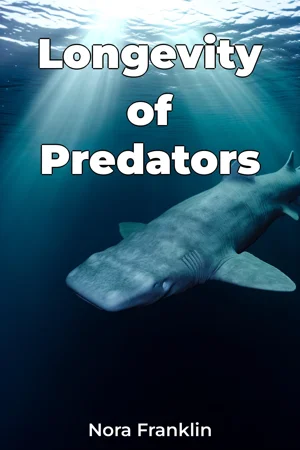
In the depths of our planet's waters and wetlands, some predators achieve remarkable lifespans that rival or exceed those of humans. "Longevity of Predators" delves into the biological mechanisms and environmental factors that enable alligators and sharks to live for a century or more, offering insights into the nature of aging in these ancient species. The book presents a detailed examination of two of Earth's most successful predator lineages, exploring how their evolutionary adaptations contribute to their long lives. Through comprehensive research and field studies, readers will understand the cellular processes, behavioral patterns, and ecological conditions that support these extended lifespans. The first section focuses on alligators, examining their unique physiological characteristics, including their ability to regulate metabolic processes and heal from severe injuries. The book reveals how their semi-aquatic lifestyle, combined with efficient energy utilization during periods of inactivity, contributes to their longevity. Research data from long-term studies in the southeastern United States provides evidence of alligators living beyond 70 years in the wild. The second section transitions to sharks, particularly focusing on Greenland sharks and Great Whites, which demonstrate even more impressive lifespans. The text analyzes their slow growth rates, late sexual maturity, and unique tissue composition that allows some species to live for several centuries. Modern dating techniques and tissue analysis methods provide concrete evidence for these age determinations. Throughout the work, the authors draw connections between these predators' longevity and broader concepts in biology, including cell regeneration, DNA repair mechanisms, and evolutionary adaptation. The research presented incorporates findings from marine biology, genetics, and ecological studies, creating a multifaceted understanding of predator longevity. The book addresses practical applications of this research, discussing how understanding these species' aging processes could contribute to human medicine and conservation efforts. It examines the molecular and cellular mechanisms that prevent cancer and other age-related diseases in these animals, potentially offering insights for human health research. Written in a scientific yet accessible style, the text incorporates detailed diagrams, research data, and field observations. Each chapter builds upon established biological concepts while introducing new findings from recent studies, making it suitable for both biology students and informed general readers. The work acknowledges current debates in the field, including discussions about maximum age determinations and the impact of environmental factors on longevity. It addresses methodological challenges in studying long-lived species and examines how climate change and habitat disruption might affect their lifespans. The book's scope extends beyond simple age documentation to explore the ecological roles these long-lived predators play in their environments. It demonstrates how their longevity influences population dynamics, ecosystem stability, and evolutionary processes in their respective habitats. This comprehensive examination of predator longevity contributes to our understanding of aging across species while highlighting the importance of preserving these animals and their habitats. The work concludes by discussing current conservation efforts and the significance of protecting these species for both ecological and scientific purposes.
In the depths of our planet's waters and wetlands, some predators achieve remarkable lifespans that rival or exceed those of humans. "Longevity of Predators" delves into the biological mechanisms and environmental factors that enable alligators and sharks to live for a century or more, offering insights into the nature of aging in these ancient species. The book presents a detailed examination of two of Earth's most successful predator lineages, exploring how their evolutionary adaptations contribute to their long lives. Through comprehensive research and field studies, readers will understand the cellular processes, behavioral patterns, and ecological conditions that support these extended lifespans. The first section focuses on alligators, examining their unique physiological characteristics, including their ability to regulate metabolic processes and heal from severe injuries. The book reveals how their semi-aquatic lifestyle, combined with efficient energy utilization during periods of inactivity, contributes to their longevity. Research data from long-term studies in the southeastern United States provides evidence of alligators living beyond 70 years in the wild. The second section transitions to sharks, particularly focusing on Greenland sharks and Great Whites, which demonstrate even more impressive lifespans. The text analyzes their slow growth rates, late sexual maturity, and unique tissue composition that allows some species to live for several centuries. Modern dating techniques and tissue analysis methods provide concrete evidence for these age determinations. Throughout the work, the authors draw connections between these predators' longevity and broader concepts in biology, including cell regeneration, DNA repair mechanisms, and evolutionary adaptation. The research presented incorporates findings from marine biology, genetics, and ecological studies, creating a multifaceted understanding of predator longevity. The book addresses practical applications of this research, discussing how understanding these species' aging processes could contribute to human medicine and conservation efforts. It examines the molecular and cellular mechanisms that prevent cancer and other age-related diseases in these animals, potentially offering insights for human health research. Written in a scientific yet accessible style, the text incorporates detailed diagrams, research data, and field observations. Each chapter builds upon established biological concepts while introducing new findings from recent studies, making it suitable for both biology students and informed general readers. The work acknowledges current debates in the field, including discussions about maximum age determinations and the impact of environmental factors on longevity. It addresses methodological challenges in studying long-lived species and examines how climate change and habitat disruption might affect their lifespans. The book's scope extends beyond simple age documentation to explore the ecological roles these long-lived predators play in their environments. It demonstrates how their longevity influences population dynamics, ecosystem stability, and evolutionary processes in their respective habitats. This comprehensive examination of predator longevity contributes to our understanding of aging across species while highlighting the importance of preserving these animals and their habitats. The work concludes by discussing current conservation efforts and the significance of protecting these species for both ecological and scientific purposes.
"Longevity of Predators" explores the fascinating world of long-lived aquatic predators, focusing on alligators and sharks that can survive for decades or even centuries. The book unravels the biological mysteries behind these creatures' extraordinary lifespans, examining their unique adaptations, cellular processes, and environmental interactions that contribute to their longevity. Through a combination of field studies and scientific research, readers discover how these ancient species have evolved remarkable mechanisms for survival, including efficient metabolic regulation and superior healing abilities. The journey begins with alligators, whose 70-plus-year lifespans in the wild demonstrate the remarkable durability of these wetland predators. The narrative then delves into the even more impressive longevity of sharks, particularly the Greenland and Great White species, some of which can live for several centuries. The book examines their slow growth rates, unique tissue composition, and extraordinary ability to resist age-related diseases, offering insights that could potentially benefit human medicine and conservation efforts. What sets this work apart is its comprehensive approach to understanding predator longevity, combining elements of marine biology, genetics, and ecological studies. The authors present complex scientific concepts in an accessible manner, supported by detailed diagrams and research data. The book progresses naturally from individual species analysis to broader implications for ecosystem stability and conservation, making it valuable for both scientific audiences and nature enthusiasts interested in these remarkable creatures' survival strategies.
Book Details
ISBN
9788233982027
Publisher
Publifye AS
Your Licenses
You don't own any licenses for this book
Purchase a license below to unlock this book and download the EPUB.
Purchase License
Select a tier to unlock this book
Need bulk licensing?
Contact us for enterprise agreements.