
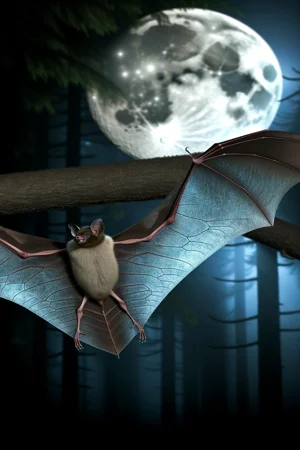
About This Book
In the dark of night, bats navigate with precision that surpasses modern technology, using a biological sonar system that took millions of years to evolve. "Bats Flight Masters" presents a comprehensive examination of these remarkable mammals, which have successfully colonized nearly every corner of the globe through their mastery of powered flight. This research-based exploration delves into three primary areas: the evolution of bat flight mechanics, their sophisticated echolocation abilities, and their diverse anatomical adaptations. The book demonstrates how these elements combine to make bats highly successful predators and essential components of global ecosystems. Beginning with the fossil record, readers discover how bats evolved from small, tree-dwelling mammals into skilled aerial hunters. The text examines the transformation of forelimbs into wings, showing how each bone and joint adapted to support powered flight. Detailed anatomical studies reveal the specialized muscle structures and lightweight bone configurations that enable bats to execute complex aerial maneuvers. The second section focuses on echolocation, explaining how bats emit high-frequency sounds and process the returning echoes to create detailed mental maps of their environment. Through laboratory studies and field observations, the book demonstrates how different bat species have refined this system for specific hunting strategies and habitats. This portion includes recent findings from neurological research that shows how bat brains process this acoustic information. The book's final section examines the diversity of bat species, from the tiny bumblebee bat to the large flying foxes. It explores their varied dietary adaptations, from fruit-eating to nectar-feeding to insect-hunting, and explains how these differences have shaped their physical characteristics and behaviors. Using data from wind tunnel experiments, high-speed photography, and acoustic analysis, the text supports its discussions with concrete scientific evidence. Field studies from multiple continents provide real-world examples of bat behavior and adaptation, while laboratory research offers insights into their physiological capabilities. The work connects biology with aerodynamics, neuroscience, and ecology, showing how bat research has influenced multiple scientific fields. Their flight mechanisms have inspired developments in drone technology, while their echolocation has provided models for sonar systems. Written in a clear, technical style that maintains accessibility for educated general readers, the book serves both as an academic reference and an informative guide for nature enthusiasts. It addresses current research questions, including the impact of human activity on bat populations and their role in ecosystem health. The target audience includes biology students, wildlife researchers, and informed readers interested in natural history. The book provides sufficient technical detail for academic use while remaining engaging for non-specialists. This work fills a crucial gap in bat literature by combining recent research findings with established knowledge, creating a complete picture of bat biology and behavior. It addresses misconceptions about bats while highlighting their significance in both natural systems and human research applications. The book concludes by examining conservation challenges facing bat populations worldwide, including habitat loss and disease. It provides practical information about bat conservation efforts and explains why maintaining healthy bat populations is crucial for ecosystem balance and agricultural systems that benefit from their pest control services.
In the dark of night, bats navigate with precision that surpasses modern technology, using a biological sonar system that took millions of years to evolve. "Bats Flight Masters" presents a comprehensive examination of these remarkable mammals, which have successfully colonized nearly every corner of the globe through their mastery of powered flight. This research-based exploration delves into three primary areas: the evolution of bat flight mechanics, their sophisticated echolocation abilities, and their diverse anatomical adaptations. The book demonstrates how these elements combine to make bats highly successful predators and essential components of global ecosystems. Beginning with the fossil record, readers discover how bats evolved from small, tree-dwelling mammals into skilled aerial hunters. The text examines the transformation of forelimbs into wings, showing how each bone and joint adapted to support powered flight. Detailed anatomical studies reveal the specialized muscle structures and lightweight bone configurations that enable bats to execute complex aerial maneuvers. The second section focuses on echolocation, explaining how bats emit high-frequency sounds and process the returning echoes to create detailed mental maps of their environment. Through laboratory studies and field observations, the book demonstrates how different bat species have refined this system for specific hunting strategies and habitats. This portion includes recent findings from neurological research that shows how bat brains process this acoustic information. The book's final section examines the diversity of bat species, from the tiny bumblebee bat to the large flying foxes. It explores their varied dietary adaptations, from fruit-eating to nectar-feeding to insect-hunting, and explains how these differences have shaped their physical characteristics and behaviors. Using data from wind tunnel experiments, high-speed photography, and acoustic analysis, the text supports its discussions with concrete scientific evidence. Field studies from multiple continents provide real-world examples of bat behavior and adaptation, while laboratory research offers insights into their physiological capabilities. The work connects biology with aerodynamics, neuroscience, and ecology, showing how bat research has influenced multiple scientific fields. Their flight mechanisms have inspired developments in drone technology, while their echolocation has provided models for sonar systems. Written in a clear, technical style that maintains accessibility for educated general readers, the book serves both as an academic reference and an informative guide for nature enthusiasts. It addresses current research questions, including the impact of human activity on bat populations and their role in ecosystem health. The target audience includes biology students, wildlife researchers, and informed readers interested in natural history. The book provides sufficient technical detail for academic use while remaining engaging for non-specialists. This work fills a crucial gap in bat literature by combining recent research findings with established knowledge, creating a complete picture of bat biology and behavior. It addresses misconceptions about bats while highlighting their significance in both natural systems and human research applications. The book concludes by examining conservation challenges facing bat populations worldwide, including habitat loss and disease. It provides practical information about bat conservation efforts and explains why maintaining healthy bat populations is crucial for ecosystem balance and agricultural systems that benefit from their pest control services.
"Bats Flight Masters" offers a fascinating journey into the remarkable world of bats, exploring how these extraordinary mammals have mastered powered flight and developed sophisticated navigation systems that surpass modern technology. Through a meticulous blend of scientific research and accessible explanation, the book reveals how bats evolved from small tree-dwelling creatures into accomplished aerial hunters, equipped with specialized anatomical features and an incredible biological sonar system. The book progresses logically through three main areas: flight mechanics, echolocation abilities, and species diversity. Readers discover how bat wings evolved from forelimbs, with detailed explanations of their unique bone structure and muscle configurations that enable complex aerial maneuvers. The text draws on compelling evidence from wind tunnel experiments and high-speed photography to demonstrate these capabilities, while also exploring how their sophisticated echolocation system creates detailed mental maps of their environment. What sets this work apart is its comprehensive integration of multiple scientific disciplines, from aerodynamics to neuroscience, showing how bat research has influenced technological developments in drone design and sonar systems. The book concludes with a crucial examination of conservation challenges, emphasizing bats' vital role in ecosystem balance and agricultural pest control. Written for both academic audiences and nature enthusiasts, it effectively bridges the gap between technical research and accessible natural history, providing a complete understanding of these remarkable creatures.
Book Details
ISBN
9788233981969
Publisher
Publifye AS
Your Licenses
You don't own any licenses for this book
Purchase a license below to unlock this book and download the EPUB.
Purchase License
Select a tier to unlock this book
Need bulk licensing?
Contact us for enterprise agreements.