
About This Book
Have you ever wondered what guides our decisions when faced with seemingly impossible choices? "Ethical Dilemmas" delves into the complex landscape of moral decision-making, providing a framework for understanding how individuals navigate challenging ethical situations. This book will explore the intricate interplay of personal values, societal norms, and situational factors that shape our moral compass. The core topics are threefold: first, the identification and classification of common ethical dilemmas encountered across various spheres of life, from personal relationships to professional settings; second, the psychological and philosophical underpinnings of moral reasoning, exploring how cognitive biases, emotional responses, and established ethical theories influence decision-making; and third, practical strategies for effectively analyzing and resolving ethical dilemmas while upholding personal integrity and promoting positive outcomes. These topics are crucial because ethical dilemmas are inherent in the human experience, demanding reasoned responses that impact not only individuals but also entire communities. Drawing from historical case studies, landmark psychological experiments (such as the Milgram and Stanford Prison experiments), and philosophical doctrines (like utilitarianism, deontology, and virtue ethics), "Ethical Dilemmas" provides a comprehensive background for understanding the evolution of moral thought and the enduring challenges of ethical decision-making. Readers should have a general understanding of basic ethical concepts (e.g., right and wrong, justice, fairness), but no prior expertise in philosophy or psychology is required. The central argument of this book is that effective ethical decision-making is not simply a matter of adhering to a fixed set of rules, but rather a dynamic process that requires critical thinking, empathy, and a willingness to engage with diverse perspectives. By understanding the underlying psychological and philosophical principles, individuals can develop a more nuanced and adaptable approach to resolving ethical dilemmas. The book begins by introducing core concepts and providing a foundational understanding of ethical theories. Subsequent chapters delve into specific types of ethical dilemmas, such as conflicts of interest, issues of confidentiality, and questions of justice and fairness and the effect of cognitive biases. Real-world case studies are examined and dissected using the ethical frameworks introduced earlier. The final section of the book offers practical guidelines for navigating these situations, emphasizing the importance of self-reflection, open communication, and collaborative problem-solving. The arguments presented are supported by a diverse range of evidence, including psychological research on moral cognition, sociological studies of ethical behavior, and philosophical analyses of moral principles. The book also incorporates qualitative data from interviews with individuals who have faced challenging ethical dilemmas, offering firsthand accounts of their experiences and decision-making processes. "Ethical Dilemmas" connects to several other disciplines, including law, business ethics, and political science. The legal implications of ethical decisions are considered, fostering an understanding of how legal and moral obligations intersect. The application of ethical principles to the business world is also examined. Understanding the role of ethical considerations in political structures and policy decisions will demonstrate the broad relevance of the book’s concepts. This book offers a unique perspective by integrating insights from both psychology and philosophy, providing a holistic approach to understanding ethical decision-making. Rather than presenting a prescriptive set of rules, it encourages readers to develop their own ethical frameworks and critically evaluate their own values and biases. The book is written in a clear and accessible style, avoiding jargon and complex terminology. The tone is thoughtful and engaging, encouraging readers to actively reflect on their own moral beliefs and experiences. The target audience includes students, professionals, and anyone interested in understanding the complexities of ethical decision-making. It is particularly relevant for those in leadership positions, healthcare, law, and other fields where ethical dilemmas are frequently encountered. As a work of non-fiction in the realms of philosophy and psychology, "Ethical Dilemmas" maintains a commitment to accuracy, objectivity, and evidence-based reasoning. It acknowledges the inherent complexity and ambiguity of ethical issues, avoiding simplistic solutions and encouraging critical engagement with diverse perspectives. The scope of the book is intentionally broad, covering a wide range of ethical dilemmas across different contexts. However, it does not delve into highly specialized or technical areas of ethical theory. The insights and strategies presented in "Ethical Dilemmas" can be applied in a variety of real-world settings, from resolving conflicts in personal relationships to making ethically sound decisions in the workplace. The book acknowledges the ongoing debates and controversies surrounding various ethical issues, such as the morality of artificial intelligence, the ethics of genetic engineering, and the challenges of global justice. By presenting diverse perspectives and encouraging critical thinking, it equips readers to engage constructively in these important conversations.
Have you ever wondered what guides our decisions when faced with seemingly impossible choices? "Ethical Dilemmas" delves into the complex landscape of moral decision-making, providing a framework for understanding how individuals navigate challenging ethical situations. This book will explore the intricate interplay of personal values, societal norms, and situational factors that shape our moral compass. The core topics are threefold: first, the identification and classification of common ethical dilemmas encountered across various spheres of life, from personal relationships to professional settings; second, the psychological and philosophical underpinnings of moral reasoning, exploring how cognitive biases, emotional responses, and established ethical theories influence decision-making; and third, practical strategies for effectively analyzing and resolving ethical dilemmas while upholding personal integrity and promoting positive outcomes. These topics are crucial because ethical dilemmas are inherent in the human experience, demanding reasoned responses that impact not only individuals but also entire communities. Drawing from historical case studies, landmark psychological experiments (such as the Milgram and Stanford Prison experiments), and philosophical doctrines (like utilitarianism, deontology, and virtue ethics), "Ethical Dilemmas" provides a comprehensive background for understanding the evolution of moral thought and the enduring challenges of ethical decision-making. Readers should have a general understanding of basic ethical concepts (e.g., right and wrong, justice, fairness), but no prior expertise in philosophy or psychology is required. The central argument of this book is that effective ethical decision-making is not simply a matter of adhering to a fixed set of rules, but rather a dynamic process that requires critical thinking, empathy, and a willingness to engage with diverse perspectives. By understanding the underlying psychological and philosophical principles, individuals can develop a more nuanced and adaptable approach to resolving ethical dilemmas. The book begins by introducing core concepts and providing a foundational understanding of ethical theories. Subsequent chapters delve into specific types of ethical dilemmas, such as conflicts of interest, issues of confidentiality, and questions of justice and fairness and the effect of cognitive biases. Real-world case studies are examined and dissected using the ethical frameworks introduced earlier. The final section of the book offers practical guidelines for navigating these situations, emphasizing the importance of self-reflection, open communication, and collaborative problem-solving. The arguments presented are supported by a diverse range of evidence, including psychological research on moral cognition, sociological studies of ethical behavior, and philosophical analyses of moral principles. The book also incorporates qualitative data from interviews with individuals who have faced challenging ethical dilemmas, offering firsthand accounts of their experiences and decision-making processes. "Ethical Dilemmas" connects to several other disciplines, including law, business ethics, and political science. The legal implications of ethical decisions are considered, fostering an understanding of how legal and moral obligations intersect. The application of ethical principles to the business world is also examined. Understanding the role of ethical considerations in political structures and policy decisions will demonstrate the broad relevance of the book’s concepts. This book offers a unique perspective by integrating insights from both psychology and philosophy, providing a holistic approach to understanding ethical decision-making. Rather than presenting a prescriptive set of rules, it encourages readers to develop their own ethical frameworks and critically evaluate their own values and biases. The book is written in a clear and accessible style, avoiding jargon and complex terminology. The tone is thoughtful and engaging, encouraging readers to actively reflect on their own moral beliefs and experiences. The target audience includes students, professionals, and anyone interested in understanding the complexities of ethical decision-making. It is particularly relevant for those in leadership positions, healthcare, law, and other fields where ethical dilemmas are frequently encountered. As a work of non-fiction in the realms of philosophy and psychology, "Ethical Dilemmas" maintains a commitment to accuracy, objectivity, and evidence-based reasoning. It acknowledges the inherent complexity and ambiguity of ethical issues, avoiding simplistic solutions and encouraging critical engagement with diverse perspectives. The scope of the book is intentionally broad, covering a wide range of ethical dilemmas across different contexts. However, it does not delve into highly specialized or technical areas of ethical theory. The insights and strategies presented in "Ethical Dilemmas" can be applied in a variety of real-world settings, from resolving conflicts in personal relationships to making ethically sound decisions in the workplace. The book acknowledges the ongoing debates and controversies surrounding various ethical issues, such as the morality of artificial intelligence, the ethics of genetic engineering, and the challenges of global justice. By presenting diverse perspectives and encouraging critical thinking, it equips readers to engage constructively in these important conversations.
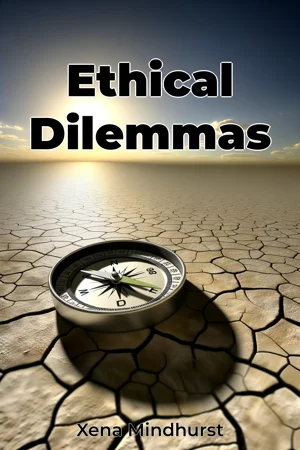
"Ethical Dilemmas" explores the challenging realm of moral decision-making, providing readers with a framework to navigate complex ethical situations. By integrating insights from both psychology and philosophy, the book offers a holistic understanding of how personal values, societal norms, and situational factors influence our choices. Readers will explore common ethical dilemmas, examining the psychological underpinnings of moral reasoning, including how cognitive biases and emotions play a role. The book uniquely blends philosophical doctrines like utilitarianism and deontology with psychological experiments to illustrate these intricate processes. The book progresses from foundational ethical theories to specific dilemmas, such as conflicts of interest and issues of justice. Real-world case studies are dissected using established ethical frameworks, offering practical guidelines for ethical problem-solving. This approach emphasizes critical thinking and empathy, encouraging readers to develop their own ethical frameworks. Ultimately, "Ethical Dilemmas" provides a comprehensive guide for anyone seeking to enhance their moral reasoning and make ethically sound decisions in various aspects of life.
Book Details
ISBN
9788233981822
Publisher
Publifye AS
Your Licenses
You don't own any licenses for this book
Purchase a license below to unlock this book and download the EPUB.
Purchase License
Select a tier to unlock this book
Need bulk licensing?
Contact us for enterprise agreements.