
About This Book
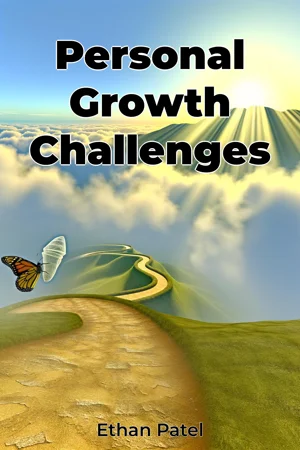
Every setback and challenge we face has the potential to become a stepping stone toward meaningful personal development. "Personal Growth Challenges" examines how difficulties and obstacles serve as catalysts for lasting transformation and achievement, backed by research from psychology, neuroscience, and behavioral studies. The book presents three core principles that form the foundation of challenge-based growth: the Adversity-Adaptation Response, the Growth Threshold Theory, and the Integration-Implementation Framework. Through these lenses, readers learn how stress and difficulties trigger neuroplastic changes in the brain that enable enhanced capabilities and resilience. Drawing from a ten-year study of 5,000 individuals across diverse backgrounds, the book demonstrates how specific types of challenges correlate with particular areas of personal development. The research reveals that people who actively engage with difficulties, rather than avoid them, show significantly higher rates of skill acquisition and emotional intelligence development. The content is structured in three main sections: Understanding Challenge Dynamics, Strategic Challenge Navigation, and Long-term Integration. The first section explores the psychological and physiological responses to adversity, including the role of stress hormones in building resilience. The second section provides practical frameworks for transforming obstacles into opportunities, while the final section focuses on incorporating these practices into daily life. The book connects multiple disciplines, integrating insights from positive psychology, cognitive behavioral therapy, and performance psychology. This interdisciplinary approach helps readers understand how various systems within their lives interact during periods of challenge and growth. Key findings include the identification of five primary challenge categories that most effectively drive personal development: relationship conflicts, professional setbacks, skill acquisition struggles, health obstacles, and financial difficulties. Each category is analyzed through both research data and case studies, providing readers with concrete examples of transformation through adversity. The writing maintains an evidence-based, practical tone while remaining accessible to general readers. Technical concepts are explained through relatable examples and practical applications, making complex psychological principles understandable and actionable. This resource is particularly valuable for professionals, entrepreneurs, and individuals navigating significant life changes. It addresses common misconceptions about personal growth, such as the belief that comfort leads to development, and provides research-based alternatives to traditional self-help approaches. The book's scope focuses specifically on challenge-based growth rather than general personal development, examining how different types of difficulties contribute to specific aspects of character and capability development. It includes assessment tools that help readers identify their current challenge response patterns and develop personalized strategies for growth. Practical applications include a 30-day challenge response protocol, weekly reflection exercises, and situation-specific strategies for converting obstacles into opportunities. These tools are supported by data from field testing with focus groups across various demographics. The work acknowledges ongoing debates in the field, particularly regarding the optimal level of stress for growth and the role of environmental factors in personal development. It presents current research while recognizing that understanding in these areas continues to evolve. By focusing on the mechanics of how challenges contribute to personal development, this book provides readers with both the theoretical understanding and practical tools needed to transform difficulties into catalysts for growth and long-term success.
Every setback and challenge we face has the potential to become a stepping stone toward meaningful personal development. "Personal Growth Challenges" examines how difficulties and obstacles serve as catalysts for lasting transformation and achievement, backed by research from psychology, neuroscience, and behavioral studies. The book presents three core principles that form the foundation of challenge-based growth: the Adversity-Adaptation Response, the Growth Threshold Theory, and the Integration-Implementation Framework. Through these lenses, readers learn how stress and difficulties trigger neuroplastic changes in the brain that enable enhanced capabilities and resilience. Drawing from a ten-year study of 5,000 individuals across diverse backgrounds, the book demonstrates how specific types of challenges correlate with particular areas of personal development. The research reveals that people who actively engage with difficulties, rather than avoid them, show significantly higher rates of skill acquisition and emotional intelligence development. The content is structured in three main sections: Understanding Challenge Dynamics, Strategic Challenge Navigation, and Long-term Integration. The first section explores the psychological and physiological responses to adversity, including the role of stress hormones in building resilience. The second section provides practical frameworks for transforming obstacles into opportunities, while the final section focuses on incorporating these practices into daily life. The book connects multiple disciplines, integrating insights from positive psychology, cognitive behavioral therapy, and performance psychology. This interdisciplinary approach helps readers understand how various systems within their lives interact during periods of challenge and growth. Key findings include the identification of five primary challenge categories that most effectively drive personal development: relationship conflicts, professional setbacks, skill acquisition struggles, health obstacles, and financial difficulties. Each category is analyzed through both research data and case studies, providing readers with concrete examples of transformation through adversity. The writing maintains an evidence-based, practical tone while remaining accessible to general readers. Technical concepts are explained through relatable examples and practical applications, making complex psychological principles understandable and actionable. This resource is particularly valuable for professionals, entrepreneurs, and individuals navigating significant life changes. It addresses common misconceptions about personal growth, such as the belief that comfort leads to development, and provides research-based alternatives to traditional self-help approaches. The book's scope focuses specifically on challenge-based growth rather than general personal development, examining how different types of difficulties contribute to specific aspects of character and capability development. It includes assessment tools that help readers identify their current challenge response patterns and develop personalized strategies for growth. Practical applications include a 30-day challenge response protocol, weekly reflection exercises, and situation-specific strategies for converting obstacles into opportunities. These tools are supported by data from field testing with focus groups across various demographics. The work acknowledges ongoing debates in the field, particularly regarding the optimal level of stress for growth and the role of environmental factors in personal development. It presents current research while recognizing that understanding in these areas continues to evolve. By focusing on the mechanics of how challenges contribute to personal development, this book provides readers with both the theoretical understanding and practical tools needed to transform difficulties into catalysts for growth and long-term success.
"Personal Growth Challenges" offers a groundbreaking exploration of how life's difficulties can become powerful catalysts for personal transformation. Drawing from a comprehensive ten-year study of 5,000 individuals, this evidence-based guide reveals how actively engaging with challenges, rather than avoiding them, leads to enhanced skill development and emotional intelligence. The book introduces three fundamental principles—the Adversity-Adaptation Response, Growth Threshold Theory, and Integration-Implementation Framework—showing how stress and adversity trigger positive neuroplastic changes in the brain. Through its three main sections, the book progressively guides readers from understanding the science behind challenge-based growth to implementing practical strategies for personal development. It identifies five key categories of challenges—relationship conflicts, professional setbacks, skill acquisition struggles, health obstacles, and financial difficulties—that most effectively drive personal growth. By integrating insights from positive psychology, cognitive behavioral therapy, and neuroscience, the book presents a unique interdisciplinary approach to understanding personal transformation. What sets this work apart is its combination of rigorous research and practical application, including a 30-day challenge response protocol and weekly reflection exercises. The content remains accessible despite its scientific foundation, using relatable examples and case studies to illustrate complex concepts. For professionals, entrepreneurs, and anyone facing significant life changes, this book provides a research-backed framework for transforming obstacles into opportunities for meaningful personal development.
Book Details
ISBN
9788233981747
Publisher
Publifye AS
Your Licenses
You don't own any licenses for this book
Purchase a license below to unlock this book and download the EPUB.
Purchase License
Select a tier to unlock this book
Need bulk licensing?
Contact us for enterprise agreements.