
About This Book
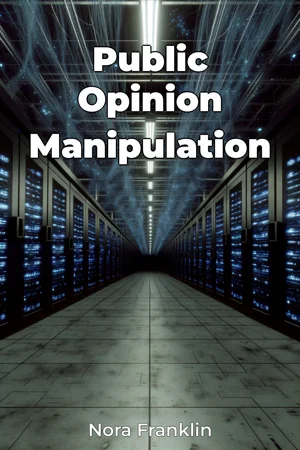
In an age where information flows endlessly through digital channels, the power to shape public opinion has never been more significant or sophisticated. "Public Opinion Manipulation" reveals the intricate mechanisms behind how beliefs, attitudes, and behaviors are systematically influenced in modern society. The book examines three primary spheres of influence: traditional propaganda techniques and their evolution, digital manipulation strategies, and the role of behavioral science in targeted advertising. Through detailed analysis, it demonstrates how these methods intersect with psychology, technology, and social dynamics to create powerful tools for opinion shaping. Drawing from declassified government documents, corporate case studies, and academic research spanning the past century, the work presents a comprehensive examination of how public opinion manipulation has transformed from crude wartime propaganda to today's precision-targeted digital campaigns. The author argues that understanding these manipulation techniques is crucial for maintaining democratic discourse and individual autonomy in an increasingly connected world. The first section explores the historical foundations of mass persuasion, tracing the development of propaganda from World War I through the Cold War to modern political campaigns. It analyzes how traditional methods have been refined and adapted for the digital age, incorporating lessons from psychology, sociology, and mass communication theory. The second part delves into contemporary digital manipulation tactics, examining social media algorithms, micro-targeting, and data-driven persuasion techniques. It reveals how artificial intelligence and big data analytics have revolutionized the ability to influence specific demographic groups with unprecedented precision. The final section focuses on the commercial realm, specifically how advertising has evolved from broad demographic targeting to individualized persuasion. It examines the ethical implications of using behavioral science to influence consumer decisions and public discourse. The book incorporates research from multiple disciplines, including psychology, political science, marketing, and data analytics. It presents findings from recent studies on social media influence, cognitive biases, and decision-making processes, supported by real-world examples from political campaigns, corporate marketing strategies, and social movements. The work maintains an analytical tone, neither condemning nor endorsing these practices, but rather providing readers with tools to recognize and evaluate manipulation attempts. It connects findings from behavioral economics, neuroscience, and social psychology to explain why certain techniques prove effective and how they can be identified. Written for an educated general audience, the book serves professionals in marketing, communications, and public policy, as well as citizens concerned about information integrity and democratic discourse. It provides practical frameworks for identifying manipulation attempts and maintaining independent thought in an environment of constant persuasion efforts. The text addresses current debates about digital privacy, election interference, and corporate responsibility in the age of big data. It examines controversial cases where opinion manipulation has influenced significant public decisions, while discussing the balance between legitimate persuasion and harmful manipulation. By combining historical analysis, contemporary research, and future implications, "Public Opinion Manipulation" offers readers both theoretical understanding and practical tools for navigating an increasingly complex information landscape. The work concludes with recommendations for policy makers, technology companies, and individuals to promote more transparent and ethical communication practices.
In an age where information flows endlessly through digital channels, the power to shape public opinion has never been more significant or sophisticated. "Public Opinion Manipulation" reveals the intricate mechanisms behind how beliefs, attitudes, and behaviors are systematically influenced in modern society. The book examines three primary spheres of influence: traditional propaganda techniques and their evolution, digital manipulation strategies, and the role of behavioral science in targeted advertising. Through detailed analysis, it demonstrates how these methods intersect with psychology, technology, and social dynamics to create powerful tools for opinion shaping. Drawing from declassified government documents, corporate case studies, and academic research spanning the past century, the work presents a comprehensive examination of how public opinion manipulation has transformed from crude wartime propaganda to today's precision-targeted digital campaigns. The author argues that understanding these manipulation techniques is crucial for maintaining democratic discourse and individual autonomy in an increasingly connected world. The first section explores the historical foundations of mass persuasion, tracing the development of propaganda from World War I through the Cold War to modern political campaigns. It analyzes how traditional methods have been refined and adapted for the digital age, incorporating lessons from psychology, sociology, and mass communication theory. The second part delves into contemporary digital manipulation tactics, examining social media algorithms, micro-targeting, and data-driven persuasion techniques. It reveals how artificial intelligence and big data analytics have revolutionized the ability to influence specific demographic groups with unprecedented precision. The final section focuses on the commercial realm, specifically how advertising has evolved from broad demographic targeting to individualized persuasion. It examines the ethical implications of using behavioral science to influence consumer decisions and public discourse. The book incorporates research from multiple disciplines, including psychology, political science, marketing, and data analytics. It presents findings from recent studies on social media influence, cognitive biases, and decision-making processes, supported by real-world examples from political campaigns, corporate marketing strategies, and social movements. The work maintains an analytical tone, neither condemning nor endorsing these practices, but rather providing readers with tools to recognize and evaluate manipulation attempts. It connects findings from behavioral economics, neuroscience, and social psychology to explain why certain techniques prove effective and how they can be identified. Written for an educated general audience, the book serves professionals in marketing, communications, and public policy, as well as citizens concerned about information integrity and democratic discourse. It provides practical frameworks for identifying manipulation attempts and maintaining independent thought in an environment of constant persuasion efforts. The text addresses current debates about digital privacy, election interference, and corporate responsibility in the age of big data. It examines controversial cases where opinion manipulation has influenced significant public decisions, while discussing the balance between legitimate persuasion and harmful manipulation. By combining historical analysis, contemporary research, and future implications, "Public Opinion Manipulation" offers readers both theoretical understanding and practical tools for navigating an increasingly complex information landscape. The work concludes with recommendations for policy makers, technology companies, and individuals to promote more transparent and ethical communication practices.
"Public Opinion Manipulation" offers a comprehensive exploration of how beliefs and behaviors are systematically influenced in our modern digital age, examining the evolution from traditional propaganda to sophisticated digital manipulation techniques. The book uniquely combines historical analysis with cutting-edge research to reveal how persuasion methods have transformed through the intersection of psychology, technology, and social dynamics. The narrative progresses through three distinct spheres, beginning with the historical foundations of mass persuasion from World War I through to modern political campaigns. It then explores contemporary digital manipulation tactics, including the role of social media algorithms and micro-targeting, before concluding with an examination of commercial advertising's evolution toward individualized persuasion. Drawing from declassified government documents and corporate case studies, the book reveals fascinating insights into how artificial intelligence and big data analytics have revolutionized targeted influence campaigns. Taking an analytical rather than judgmental approach, the book serves both professionals and concerned citizens by providing practical frameworks for identifying manipulation attempts in daily life. The author weaves together findings from behavioral economics, neuroscience, and social psychology to explain the effectiveness of various persuasion techniques, while maintaining accessibility for a general audience. This balanced perspective on information warfare and opinion shaping makes the book particularly valuable for anyone seeking to understand and navigate today's complex information landscape.
Book Details
ISBN
9788233981723
Publisher
Publifye AS
Your Licenses
You don't own any licenses for this book
Purchase a license below to unlock this book and download the EPUB.
Purchase License
Select a tier to unlock this book
Need bulk licensing?
Contact us for enterprise agreements.