
About This Book
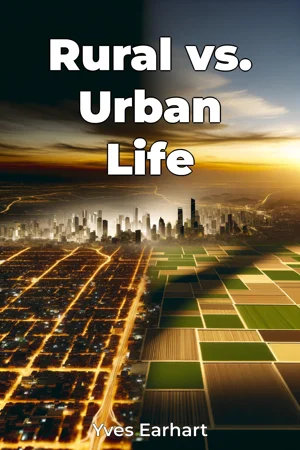
"Rural vs. Urban Life" presents a data-driven analysis of the distinct living patterns, opportunities, and challenges that characterize rural and urban environments in the modern world. Through extensive demographic research and sociological studies, this comprehensive examination reveals how location choices fundamentally shape human experiences, economic opportunities, and social connections. The book methodically explores three core dimensions: spatial organization and its impact on daily life, socioeconomic dynamics unique to each setting, and the evolving relationship between rural and urban areas in an increasingly connected world. Drawing from census data, quality-of-life indices, and longitudinal studies across multiple countries, it provides readers with a nuanced understanding of how geographical settings influence lifestyle outcomes. In examining rural environments, the text delves into the advantages of lower population density, including reduced living costs, stronger community bonds, and closer connections to nature. It addresses challenges such as limited access to specialized healthcare, fewer educational options, and sometimes restricted employment opportunities. The analysis incorporates recent trends in remote work that are reshaping rural possibilities. The urban section presents detailed insights into city living, exploring how density creates both opportunities and obstacles. It examines the concentration of cultural institutions, diverse employment options, and advanced healthcare facilities, while also addressing issues of higher living costs, environmental stressors, and social isolation despite physical proximity to others. A significant portion of the book focuses on comparative analysis, using metrics such as cost of living indices, healthcare accessibility scores, and environmental quality measurements to provide objective comparisons between rural and urban settings. This data-driven approach helps readers understand the practical implications of choosing between these environments. The text incorporates interdisciplinary perspectives from urban planning, environmental science, and public health to present a holistic view of how location choices affect physical and mental well-being. It examines how transportation systems, access to nature, and social infrastructure contribute to quality of life in different settings. The book maintains an analytical tone while remaining accessible to general readers, particularly those contemplating relocation or seeking to understand geographical influences on social phenomena. It serves as a valuable resource for urban planners, policymakers, and students in geography and social sciences. Contemporary issues receive careful attention, including the impact of digital connectivity on rural-urban divisions, the role of suburban areas as intermediate zones, and emerging challenges like climate change adaptation in different geographical settings. The text also addresses how economic shifts and technological advances are transforming traditional rural-urban dynamics. While acknowledging regional variations, the book focuses primarily on patterns observed in developed nations while including relevant case studies from developing countries for contrast and context. It concludes with practical considerations for individuals and policymakers, offering frameworks for evaluating location decisions and understanding their broader implications for society. Through its systematic analysis and evidence-based approach, "Rural vs. Urban Life" provides readers with tools to understand and navigate the complex factors that differentiate rural and urban living experiences in the contemporary world.
"Rural vs. Urban Life" presents a data-driven analysis of the distinct living patterns, opportunities, and challenges that characterize rural and urban environments in the modern world. Through extensive demographic research and sociological studies, this comprehensive examination reveals how location choices fundamentally shape human experiences, economic opportunities, and social connections. The book methodically explores three core dimensions: spatial organization and its impact on daily life, socioeconomic dynamics unique to each setting, and the evolving relationship between rural and urban areas in an increasingly connected world. Drawing from census data, quality-of-life indices, and longitudinal studies across multiple countries, it provides readers with a nuanced understanding of how geographical settings influence lifestyle outcomes. In examining rural environments, the text delves into the advantages of lower population density, including reduced living costs, stronger community bonds, and closer connections to nature. It addresses challenges such as limited access to specialized healthcare, fewer educational options, and sometimes restricted employment opportunities. The analysis incorporates recent trends in remote work that are reshaping rural possibilities. The urban section presents detailed insights into city living, exploring how density creates both opportunities and obstacles. It examines the concentration of cultural institutions, diverse employment options, and advanced healthcare facilities, while also addressing issues of higher living costs, environmental stressors, and social isolation despite physical proximity to others. A significant portion of the book focuses on comparative analysis, using metrics such as cost of living indices, healthcare accessibility scores, and environmental quality measurements to provide objective comparisons between rural and urban settings. This data-driven approach helps readers understand the practical implications of choosing between these environments. The text incorporates interdisciplinary perspectives from urban planning, environmental science, and public health to present a holistic view of how location choices affect physical and mental well-being. It examines how transportation systems, access to nature, and social infrastructure contribute to quality of life in different settings. The book maintains an analytical tone while remaining accessible to general readers, particularly those contemplating relocation or seeking to understand geographical influences on social phenomena. It serves as a valuable resource for urban planners, policymakers, and students in geography and social sciences. Contemporary issues receive careful attention, including the impact of digital connectivity on rural-urban divisions, the role of suburban areas as intermediate zones, and emerging challenges like climate change adaptation in different geographical settings. The text also addresses how economic shifts and technological advances are transforming traditional rural-urban dynamics. While acknowledging regional variations, the book focuses primarily on patterns observed in developed nations while including relevant case studies from developing countries for contrast and context. It concludes with practical considerations for individuals and policymakers, offering frameworks for evaluating location decisions and understanding their broader implications for society. Through its systematic analysis and evidence-based approach, "Rural vs. Urban Life" provides readers with tools to understand and navigate the complex factors that differentiate rural and urban living experiences in the contemporary world.
"Rural vs. Urban Life" presents a comprehensive exploration of how geographical settings fundamentally shape human experiences in the modern world. Through a data-driven approach combining census information, quality-of-life indices, and longitudinal studies, the book examines the distinct patterns and challenges that characterize rural and urban environments. The analysis spans three core dimensions: spatial organization's impact on daily life, unique socioeconomic dynamics, and the evolving relationship between rural and urban areas in our increasingly connected world. The book methodically compares rural environments, with their lower population density, reduced living costs, and stronger community bonds, against urban settings characterized by concentrated cultural institutions, diverse employment opportunities, and advanced healthcare facilities. It tackles contemporary issues such as the impact of remote work on rural possibilities and how digital connectivity is transforming traditional geographical divisions. Particularly fascinating is its examination of how transportation systems, access to nature, and social infrastructure contribute to quality of life in different settings. What sets this work apart is its interdisciplinary approach, incorporating perspectives from urban planning, environmental science, and public health to present an objective, evidence-based analysis. The book progresses from foundational concepts to complex comparative analyses, using practical metrics like cost of living indices and healthcare accessibility scores. While maintaining scholarly rigor, it remains accessible to general readers, making it an invaluable resource for anyone seeking to understand the practical implications of choosing between rural and urban environments.
Book Details
ISBN
9788233981648
Publisher
Publifye AS
Your Licenses
You don't own any licenses for this book
Purchase a license below to unlock this book and download the EPUB.
Purchase License
Select a tier to unlock this book
Need bulk licensing?
Contact us for enterprise agreements.