
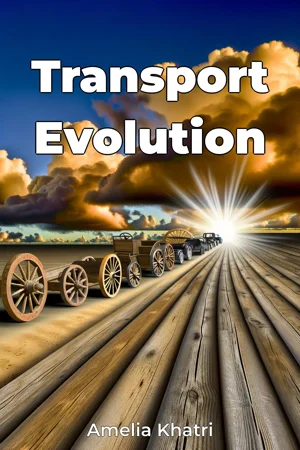
About This Book
"Transport Evolution" examines the remarkable journey of human mobility, tracing how necessity and innovation have shaped our methods of movement from the first wheel to autonomous vehicles. This comprehensive analysis reveals how transportation advances have consistently transformed human civilization, commerce, and social structures across millennia. The book presents three fundamental themes: the technological progression of transport methods, the societal impact of each breakthrough, and the environmental consequences of various transportation systems. These interconnected aspects demonstrate how mobility solutions have both reflected and driven human development throughout history. Beginning with ancient civilizations, the narrative explores how early societies developed river navigation, animal domestication, and wheel-based transport. The text provides detailed insights into Roman road networks, Chinese maritime innovations, and Middle Eastern caravan routes, establishing the foundational developments that influenced modern transportation. The industrial revolution serves as a pivotal point in the book, marking the transition from muscle-powered to machine-driven transport. This section analyzes how steam engines, internal combustion motors, and eventually electric powertrains revolutionized the speed, scale, and accessibility of movement. The book uses primary sources, archaeological evidence, and technical documentation to support its historical and technological assertions. Each chapter builds upon previous innovations, showing how earlier solutions influenced later developments. The work examines key milestones such as the first railways, the advent of automobiles, the rise of commercial aviation, and the emergence of space travel. The narrative integrates economic analysis, engineering principles, and environmental science to provide a multifaceted understanding of transport evolution. The book's latter sections focus on contemporary challenges and future possibilities, including autonomous vehicles, hyperloop concepts, and sustainable transportation systems. It addresses current debates surrounding urban mobility, environmental impact, and the role of artificial intelligence in transportation. Drawing from engineering, environmental science, and urban planning, the text demonstrates how transportation innovations continue to shape city development, global trade, and environmental policies. It presents detailed case studies of successful transport systems worldwide, offering practical insights for urban planners, policymakers, and industry professionals. The writing maintains an analytical approach while remaining accessible to both technical and general audiences. Complex engineering concepts are explained through clear illustrations and real-world examples, making the material engaging for readers from various backgrounds. The work is particularly valuable for transportation professionals, urban planners, technology enthusiasts, and students of engineering or environmental science. It provides essential context for understanding current transportation challenges and evaluating proposed solutions for future mobility needs. The book concludes by examining emerging trends in transportation technology, including electric vehicles, renewable energy integration, and smart city infrastructure. It presents a balanced assessment of potential future developments while acknowledging the technical and social challenges that must be addressed. Through its comprehensive examination of transportation history and future trajectories, "Transport Evolution" offers readers a clear understanding of how mobility solutions have evolved and continue to shape human civilization. It serves as both a historical record and a guidebook for understanding the future of transportation.
"Transport Evolution" examines the remarkable journey of human mobility, tracing how necessity and innovation have shaped our methods of movement from the first wheel to autonomous vehicles. This comprehensive analysis reveals how transportation advances have consistently transformed human civilization, commerce, and social structures across millennia. The book presents three fundamental themes: the technological progression of transport methods, the societal impact of each breakthrough, and the environmental consequences of various transportation systems. These interconnected aspects demonstrate how mobility solutions have both reflected and driven human development throughout history. Beginning with ancient civilizations, the narrative explores how early societies developed river navigation, animal domestication, and wheel-based transport. The text provides detailed insights into Roman road networks, Chinese maritime innovations, and Middle Eastern caravan routes, establishing the foundational developments that influenced modern transportation. The industrial revolution serves as a pivotal point in the book, marking the transition from muscle-powered to machine-driven transport. This section analyzes how steam engines, internal combustion motors, and eventually electric powertrains revolutionized the speed, scale, and accessibility of movement. The book uses primary sources, archaeological evidence, and technical documentation to support its historical and technological assertions. Each chapter builds upon previous innovations, showing how earlier solutions influenced later developments. The work examines key milestones such as the first railways, the advent of automobiles, the rise of commercial aviation, and the emergence of space travel. The narrative integrates economic analysis, engineering principles, and environmental science to provide a multifaceted understanding of transport evolution. The book's latter sections focus on contemporary challenges and future possibilities, including autonomous vehicles, hyperloop concepts, and sustainable transportation systems. It addresses current debates surrounding urban mobility, environmental impact, and the role of artificial intelligence in transportation. Drawing from engineering, environmental science, and urban planning, the text demonstrates how transportation innovations continue to shape city development, global trade, and environmental policies. It presents detailed case studies of successful transport systems worldwide, offering practical insights for urban planners, policymakers, and industry professionals. The writing maintains an analytical approach while remaining accessible to both technical and general audiences. Complex engineering concepts are explained through clear illustrations and real-world examples, making the material engaging for readers from various backgrounds. The work is particularly valuable for transportation professionals, urban planners, technology enthusiasts, and students of engineering or environmental science. It provides essential context for understanding current transportation challenges and evaluating proposed solutions for future mobility needs. The book concludes by examining emerging trends in transportation technology, including electric vehicles, renewable energy integration, and smart city infrastructure. It presents a balanced assessment of potential future developments while acknowledging the technical and social challenges that must be addressed. Through its comprehensive examination of transportation history and future trajectories, "Transport Evolution" offers readers a clear understanding of how mobility solutions have evolved and continue to shape human civilization. It serves as both a historical record and a guidebook for understanding the future of transportation.
"Transport Evolution" presents a fascinating journey through the history of human mobility, from the invention of the wheel to the emergence of autonomous vehicles, exploring how transportation advances have fundamentally shaped civilization. The book weaves together three critical themes: technological progression, societal impact, and environmental consequences, demonstrating how each breakthrough in mobility has triggered cascading changes in human development, commerce, and social structures. Through carefully documented research and compelling narratives, the book chronicles pivotal moments in transportation history, such as the development of Roman road networks and the revolutionary impact of the steam engine during the Industrial Revolution. The text skillfully connects ancient innovations with modern solutions, showing how historical developments continue to influence contemporary transportation systems. Archaeological evidence and technical documentation support the book's extensive analysis, making complex engineering concepts accessible through clear illustrations and real-world examples. The narrative progresses chronologically while maintaining thematic connections across chapters, culminating in an exploration of current challenges and future possibilities in transportation. Drawing from multiple disciplines, including engineering, environmental science, and urban planning, the book offers valuable insights for professionals and enthusiasts alike. Its examination of emerging trends, such as electric vehicles and smart city infrastructure, provides readers with a comprehensive understanding of how past innovations inform future mobility solutions, making it an essential resource for anyone interested in the evolution of transportation technology.
Book Details
ISBN
9788233981518
Publisher
Publifye AS
Your Licenses
You don't own any licenses for this book
Purchase a license below to unlock this book and download the EPUB.
Purchase License
Select a tier to unlock this book
Need bulk licensing?
Contact us for enterprise agreements.