
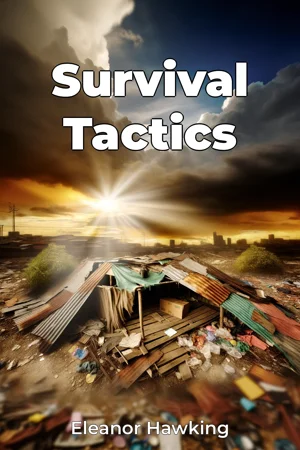
About This Book
In a world where natural disasters and urban emergencies are becoming increasingly frequent, understanding survival tactics isn't just for wilderness enthusiasts—it's a crucial life skill. "Survival Tactics" bridges the gap between traditional wilderness survival knowledge and modern urban emergency preparedness, offering a comprehensive approach to staying alive in challenging situations. This research-based guide draws from documented survival cases, scientific studies, and expertise from military personnel, wilderness guides, and emergency response professionals. The book examines how human physiology and psychology interact under extreme stress, providing readers with both the technical skills and mental frameworks needed for survival. The content is structured around three fundamental pillars: immediate survival priorities, long-term sustainability, and adaptation across environments. The first section focuses on the critical first 72 hours of any survival situation, detailing the hierarchy of needs: shelter, water, fire, and food. Each chapter includes practical techniques tested in real-world scenarios, from building emergency shelters using urban debris to finding and purifying water sources in both wilderness and city settings. The second portion of the book explores sustainable survival strategies, incorporating modern research on foraging, basic medical care, and emergency communication. Readers learn how to identify edible plants common to both urban and wilderness environments, apply improvised medical treatments, and utilize everyday items for unexpected survival applications. This section integrates findings from environmental science, botany, and emergency medicine to provide a well-rounded understanding of survival ecology. The final section addresses adaptation across different environments, from desert and arctic conditions to urban disaster zones. The book presents specific strategies for each setting, backed by case studies and scientific data on human adaptation to extreme conditions. Special attention is given to urban survival scenarios, including navigation during power outages, dealing with contaminated environments, and managing resource scarcity in populated areas. Throughout the text, the interconnection between conservation and survival is emphasized, demonstrating how understanding natural systems enhances survival capabilities. The book incorporates elements of climatology, geology, and ecosystem dynamics to help readers better predict and prepare for environmental challenges. The material is presented in a methodical, accessible format, combining technical information with practical applications. Each chapter includes hands-on exercises, equipment lists, and decision-making frameworks that readers can practice before emergency situations arise. The content is supported by illustrations, photographs, and diagrams that clarify complex techniques. This guide is designed for a diverse audience, from outdoor enthusiasts and emergency preparedness advocates to urban dwellers seeking practical safety knowledge. The book acknowledges the varying levels of experience among readers, providing both basic principles for beginners and advanced techniques for those seeking to expand their expertise. While comprehensive in scope, the book maintains focus on practical, proven methods rather than theoretical scenarios. It addresses current debates in the survival community, such as the role of technology in modern survival situations and the balance between traditional skills and contemporary tools. The work concludes with a section on creating personalized survival plans, helping readers adapt the book's principles to their specific circumstances, local environment, and personal capabilities. This practical approach ensures that the knowledge presented becomes an applicable skill set rather than merely theoretical information.
In a world where natural disasters and urban emergencies are becoming increasingly frequent, understanding survival tactics isn't just for wilderness enthusiasts—it's a crucial life skill. "Survival Tactics" bridges the gap between traditional wilderness survival knowledge and modern urban emergency preparedness, offering a comprehensive approach to staying alive in challenging situations. This research-based guide draws from documented survival cases, scientific studies, and expertise from military personnel, wilderness guides, and emergency response professionals. The book examines how human physiology and psychology interact under extreme stress, providing readers with both the technical skills and mental frameworks needed for survival. The content is structured around three fundamental pillars: immediate survival priorities, long-term sustainability, and adaptation across environments. The first section focuses on the critical first 72 hours of any survival situation, detailing the hierarchy of needs: shelter, water, fire, and food. Each chapter includes practical techniques tested in real-world scenarios, from building emergency shelters using urban debris to finding and purifying water sources in both wilderness and city settings. The second portion of the book explores sustainable survival strategies, incorporating modern research on foraging, basic medical care, and emergency communication. Readers learn how to identify edible plants common to both urban and wilderness environments, apply improvised medical treatments, and utilize everyday items for unexpected survival applications. This section integrates findings from environmental science, botany, and emergency medicine to provide a well-rounded understanding of survival ecology. The final section addresses adaptation across different environments, from desert and arctic conditions to urban disaster zones. The book presents specific strategies for each setting, backed by case studies and scientific data on human adaptation to extreme conditions. Special attention is given to urban survival scenarios, including navigation during power outages, dealing with contaminated environments, and managing resource scarcity in populated areas. Throughout the text, the interconnection between conservation and survival is emphasized, demonstrating how understanding natural systems enhances survival capabilities. The book incorporates elements of climatology, geology, and ecosystem dynamics to help readers better predict and prepare for environmental challenges. The material is presented in a methodical, accessible format, combining technical information with practical applications. Each chapter includes hands-on exercises, equipment lists, and decision-making frameworks that readers can practice before emergency situations arise. The content is supported by illustrations, photographs, and diagrams that clarify complex techniques. This guide is designed for a diverse audience, from outdoor enthusiasts and emergency preparedness advocates to urban dwellers seeking practical safety knowledge. The book acknowledges the varying levels of experience among readers, providing both basic principles for beginners and advanced techniques for those seeking to expand their expertise. While comprehensive in scope, the book maintains focus on practical, proven methods rather than theoretical scenarios. It addresses current debates in the survival community, such as the role of technology in modern survival situations and the balance between traditional skills and contemporary tools. The work concludes with a section on creating personalized survival plans, helping readers adapt the book's principles to their specific circumstances, local environment, and personal capabilities. This practical approach ensures that the knowledge presented becomes an applicable skill set rather than merely theoretical information.
"Survival Tactics" delivers a groundbreaking approach to survival preparedness by seamlessly integrating wilderness expertise with urban emergency response strategies. This comprehensive guide stands out by addressing survival challenges across multiple environments, from remote wilderness to bustling city centers, making it relevant for both outdoor enthusiasts and urban dwellers alike. Drawing from documented cases, scientific research, and expert knowledge, the book presents survival skills through the lens of human physiology and psychology under extreme conditions. The book's unique three-pillar structure progresses logically from immediate survival priorities to long-term sustainability strategies. In the crucial first section, readers learn essential techniques for the critical 72-hour window, including how to construct shelters from urban materials and locate water sources in any environment. The middle portion delves into sustainable practices, combining modern scientific research with practical skills like foraging and emergency medical care, while the final section tackles specific survival scenarios across various environmental conditions. What makes this guide particularly valuable is its emphasis on practical application and its integration of conservation principles with survival skills. Each chapter provides hands-on exercises and decision-making frameworks, supported by clear illustrations and real-world examples. The book's approach bridges the gap between theoretical knowledge and practical implementation, making complex survival concepts accessible to readers of all experience levels while maintaining scientific accuracy and real-world relevance.
Book Details
ISBN
9788233981464
Publisher
Publifye AS
Your Licenses
You don't own any licenses for this book
Purchase a license below to unlock this book and download the EPUB.
Purchase License
Select a tier to unlock this book
Need bulk licensing?
Contact us for enterprise agreements.