
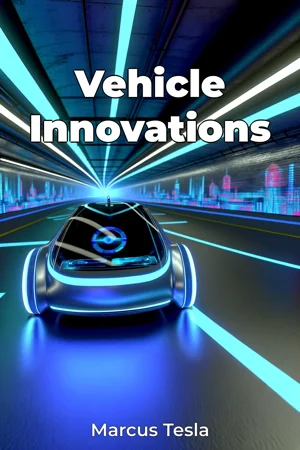
About This Book
From the first steam-powered vehicles to today's autonomous cars, vehicle technology has fundamentally reshaped human civilization. "Vehicle Innovations" examines the technological breakthroughs that have transformed transportation and their far-reaching implications for society, mobility, and the future of urban development. The book presents three core technological waves that have defined vehicular evolution: propulsion systems, safety mechanisms, and intelligent integration. Through detailed analysis of historical developments and current innovations, it demonstrates how each wave has progressively enhanced human mobility while introducing new societal challenges and opportunities. Beginning with a comprehensive overview of traditional combustion engines, the text progresses through the emergence of electric powertrains, hybrid systems, and hydrogen fuel cells. This technical foundation establishes the context for understanding modern vehicular systems and their environmental impact. The author draws from extensive engineering data and industry research to explain complex mechanical concepts in accessible terms, making the material relevant for both technical professionals and general readers interested in transportation technology. Central to the book's argument is the concept of "integrated mobility evolution" – the idea that vehicle innovations do not occur in isolation but develop through the interplay of technological capability, social needs, and environmental considerations. This framework helps readers understand how seemingly distinct innovations, from regenerative braking to vehicle-to-grid systems, form part of a larger technological ecosystem. The work is structured in three main sections: "Propulsion Revolution," "Safety and Automation Systems," and "Connected Vehicle Ecosystems." Each section combines technical specifications with real-world applications, supported by case studies from major automotive manufacturers and technology companies. The author incorporates research from transportation journals, engineering databases, and industry white papers to provide evidence-based analysis of each innovation's impact. The book makes significant connections to urban planning, environmental science, and energy systems, demonstrating how vehicle technology influences city development, climate change mitigation, and power grid management. These interdisciplinary links help readers understand the broader implications of automotive innovations beyond their mechanical aspects. For technical accuracy, the author employs standardized engineering metrics and testing methodologies, while maintaining a narrative style that explains complex systems through practical examples and clear illustrations. This approach makes the content accessible to engineers, policy makers, and informed general readers interested in transportation technology. The text addresses ongoing debates in the field, including the timeline for full vehicle automation, the relative merits of different clean propulsion systems, and the role of connected vehicle infrastructure in future cities. Rather than advocating for specific solutions, it presents evidence-based analyses of various technological approaches and their potential outcomes. While focusing primarily on passenger vehicles and light commercial transport, the book acknowledges the parallel developments in heavy transport, aviation, and marine vehicles where relevant. This scope allows readers to understand how innovations in one sector influence developments in others. The work concludes by examining emerging trends and future possibilities, including solid-state batteries, autonomous vehicle networks, and smart road systems. It provides practical insights for industry professionals, policy makers, and consumers navigating the rapidly evolving landscape of vehicle technology.
From the first steam-powered vehicles to today's autonomous cars, vehicle technology has fundamentally reshaped human civilization. "Vehicle Innovations" examines the technological breakthroughs that have transformed transportation and their far-reaching implications for society, mobility, and the future of urban development. The book presents three core technological waves that have defined vehicular evolution: propulsion systems, safety mechanisms, and intelligent integration. Through detailed analysis of historical developments and current innovations, it demonstrates how each wave has progressively enhanced human mobility while introducing new societal challenges and opportunities. Beginning with a comprehensive overview of traditional combustion engines, the text progresses through the emergence of electric powertrains, hybrid systems, and hydrogen fuel cells. This technical foundation establishes the context for understanding modern vehicular systems and their environmental impact. The author draws from extensive engineering data and industry research to explain complex mechanical concepts in accessible terms, making the material relevant for both technical professionals and general readers interested in transportation technology. Central to the book's argument is the concept of "integrated mobility evolution" – the idea that vehicle innovations do not occur in isolation but develop through the interplay of technological capability, social needs, and environmental considerations. This framework helps readers understand how seemingly distinct innovations, from regenerative braking to vehicle-to-grid systems, form part of a larger technological ecosystem. The work is structured in three main sections: "Propulsion Revolution," "Safety and Automation Systems," and "Connected Vehicle Ecosystems." Each section combines technical specifications with real-world applications, supported by case studies from major automotive manufacturers and technology companies. The author incorporates research from transportation journals, engineering databases, and industry white papers to provide evidence-based analysis of each innovation's impact. The book makes significant connections to urban planning, environmental science, and energy systems, demonstrating how vehicle technology influences city development, climate change mitigation, and power grid management. These interdisciplinary links help readers understand the broader implications of automotive innovations beyond their mechanical aspects. For technical accuracy, the author employs standardized engineering metrics and testing methodologies, while maintaining a narrative style that explains complex systems through practical examples and clear illustrations. This approach makes the content accessible to engineers, policy makers, and informed general readers interested in transportation technology. The text addresses ongoing debates in the field, including the timeline for full vehicle automation, the relative merits of different clean propulsion systems, and the role of connected vehicle infrastructure in future cities. Rather than advocating for specific solutions, it presents evidence-based analyses of various technological approaches and their potential outcomes. While focusing primarily on passenger vehicles and light commercial transport, the book acknowledges the parallel developments in heavy transport, aviation, and marine vehicles where relevant. This scope allows readers to understand how innovations in one sector influence developments in others. The work concludes by examining emerging trends and future possibilities, including solid-state batteries, autonomous vehicle networks, and smart road systems. It provides practical insights for industry professionals, policy makers, and consumers navigating the rapidly evolving landscape of vehicle technology.
"Vehicle Innovations" presents a comprehensive exploration of how transportation technology has evolved from steam-powered engines to today's sophisticated autonomous vehicles, fundamentally reshaping human civilization along the way. The book uniquely organizes this technological journey into three transformative waves: propulsion systems, safety mechanisms, and intelligent integration, demonstrating how each advancement has enhanced mobility while introducing new challenges and opportunities for society. Through accessible language and practical examples, the book guides readers through the evolution of vehicle technology, from traditional combustion engines to cutting-edge electric powertrains and hydrogen fuel cells. The author introduces the concept of "integrated mobility evolution," explaining how various innovations - from regenerative braking to vehicle-to-grid systems - are interconnected within a larger technological ecosystem. This approach helps readers understand the complex relationships between automotive advancement, urban development, and environmental impact. The book progresses logically through three main sections: "Propulsion Revolution," "Safety and Automation Systems," and "Connected Vehicle Ecosystems," combining technical specifications with real-world applications and industry case studies. What sets this work apart is its interdisciplinary approach, connecting vehicle technology to urban planning, environmental science, and energy systems while maintaining accessibility for both technical professionals and general readers interested in transportation's future. The author presents evidence-based analyses of various technological approaches without advocating for specific solutions, allowing readers to form their own informed conclusions about emerging trends in vehicle innovation.
Book Details
ISBN
9788233981341
Publisher
Publifye AS
Your Licenses
You don't own any licenses for this book
Purchase a license below to unlock this book and download the EPUB.
Purchase License
Select a tier to unlock this book
Need bulk licensing?
Contact us for enterprise agreements.