
About This Book
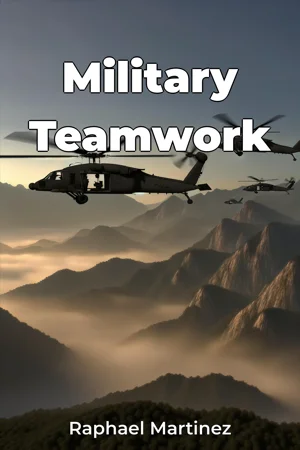
When lives hang in the balance, military units must function as a single, cohesive entity. "Military Teamwork" delves into the intricate dynamics of military unit operations, examining how soldiers transform from individuals into synchronized teams capable of executing complex missions under extreme pressure. Drawing from extensive field research and historical case studies spanning World War II through modern conflicts, this comprehensive analysis reveals the fundamental principles that enable military units to perform effectively in high-stakes environments. The book focuses on three core elements: the psychology of unit cohesion, the mechanics of synchronized operations, and the leadership frameworks that bind these components together. The first section examines the psychological foundations of military teamwork, exploring how shared hardship, structured training, and common purpose create bonds that transcend individual differences. Through interviews with veterans and active-duty personnel, readers gain insight into how units develop the trust and mutual understanding necessary for coordinated action under fire. The second part analyzes the practical mechanisms of unit operations, detailing the systems, protocols, and communication structures that enable seamless coordination. The book presents detailed breakdowns of successful operations, demonstrating how disciplined adherence to established procedures, combined with flexibility in execution, creates resilient and adaptive teams. Leadership emerges as a critical theme throughout the text, with particular attention paid to how effective commanders balance authority with empowerment. The book provides concrete examples of leadership strategies that foster initiative while maintaining necessary discipline, illustrated through both successful operations and instructive failures. The research draws from military archives, after-action reports, and interviews with unit commanders from various nations, providing a rich empirical foundation for its findings. The analysis integrates insights from organizational psychology, communication theory, and leadership studies to illuminate the universal principles underlying effective team performance. The book connects military teamwork principles to other high-reliability organizations, including emergency services, aerospace operations, and crisis management teams. These parallels demonstrate how military team dynamics can inform other contexts where coordinated action under pressure is essential. Written in a clear, analytical style, the text alternates between theoretical frameworks and practical examples, making complex concepts accessible without sacrificing depth. While primarily aimed at military professionals and leadership scholars, the book offers valuable insights for anyone interested in team dynamics and organizational performance under pressure. The scope encompasses both tactical unit operations and strategic organizational principles, though it focuses primarily on company-level and below operations where team dynamics are most directly observable. The book acknowledges ongoing debates about the evolution of military operations in an increasingly technological environment, addressing how fundamental teamwork principles apply even as operational contexts change. Readers will find practical applications for building and maintaining high-performance teams, establishing effective communication protocols, and developing leadership skills that foster both discipline and initiative. The book concludes with a framework for implementing these principles in various organizational contexts, making it relevant beyond its military focus.
When lives hang in the balance, military units must function as a single, cohesive entity. "Military Teamwork" delves into the intricate dynamics of military unit operations, examining how soldiers transform from individuals into synchronized teams capable of executing complex missions under extreme pressure. Drawing from extensive field research and historical case studies spanning World War II through modern conflicts, this comprehensive analysis reveals the fundamental principles that enable military units to perform effectively in high-stakes environments. The book focuses on three core elements: the psychology of unit cohesion, the mechanics of synchronized operations, and the leadership frameworks that bind these components together. The first section examines the psychological foundations of military teamwork, exploring how shared hardship, structured training, and common purpose create bonds that transcend individual differences. Through interviews with veterans and active-duty personnel, readers gain insight into how units develop the trust and mutual understanding necessary for coordinated action under fire. The second part analyzes the practical mechanisms of unit operations, detailing the systems, protocols, and communication structures that enable seamless coordination. The book presents detailed breakdowns of successful operations, demonstrating how disciplined adherence to established procedures, combined with flexibility in execution, creates resilient and adaptive teams. Leadership emerges as a critical theme throughout the text, with particular attention paid to how effective commanders balance authority with empowerment. The book provides concrete examples of leadership strategies that foster initiative while maintaining necessary discipline, illustrated through both successful operations and instructive failures. The research draws from military archives, after-action reports, and interviews with unit commanders from various nations, providing a rich empirical foundation for its findings. The analysis integrates insights from organizational psychology, communication theory, and leadership studies to illuminate the universal principles underlying effective team performance. The book connects military teamwork principles to other high-reliability organizations, including emergency services, aerospace operations, and crisis management teams. These parallels demonstrate how military team dynamics can inform other contexts where coordinated action under pressure is essential. Written in a clear, analytical style, the text alternates between theoretical frameworks and practical examples, making complex concepts accessible without sacrificing depth. While primarily aimed at military professionals and leadership scholars, the book offers valuable insights for anyone interested in team dynamics and organizational performance under pressure. The scope encompasses both tactical unit operations and strategic organizational principles, though it focuses primarily on company-level and below operations where team dynamics are most directly observable. The book acknowledges ongoing debates about the evolution of military operations in an increasingly technological environment, addressing how fundamental teamwork principles apply even as operational contexts change. Readers will find practical applications for building and maintaining high-performance teams, establishing effective communication protocols, and developing leadership skills that foster both discipline and initiative. The book concludes with a framework for implementing these principles in various organizational contexts, making it relevant beyond its military focus.
"Military Teamwork" offers a compelling exploration of how military units transform from individual soldiers into synchronized, high-performing teams capable of executing complex missions under extreme pressure. Drawing from extensive research spanning World War II to modern conflicts, the book reveals the critical elements that enable military units to function effectively in life-or-death situations, focusing on unit cohesion, operational mechanics, and leadership frameworks. The book's unique approach combines theoretical understanding with practical insights, presenting a comprehensive analysis through three main lenses. First, it examines the psychological foundations of military teamwork, using veteran interviews to illustrate how shared hardship and structured training create unbreakable bonds. Second, it breaks down the practical mechanisms of unit operations, demonstrating how disciplined procedures and effective communication enable seamless coordination. Throughout these sections, leadership emerges as a crucial thread, with detailed examples showing how commanders balance authority with empowerment. What sets this work apart is its rich empirical foundation, drawing from military archives, after-action reports, and interviews with unit commanders across various nations. The book bridges military expertise with insights from organizational psychology and communication theory, making it valuable not only for military professionals but also for anyone interested in team dynamics under pressure. By connecting military teamwork principles to other high-reliability organizations, it demonstrates how these fundamentals can be applied in various high-stakes environments.
Book Details
ISBN
9788233981310
Publisher
Publifye AS
Your Licenses
You don't own any licenses for this book
Purchase a license below to unlock this book and download the EPUB.
Purchase License
Select a tier to unlock this book
Need bulk licensing?
Contact us for enterprise agreements.