
About This Book
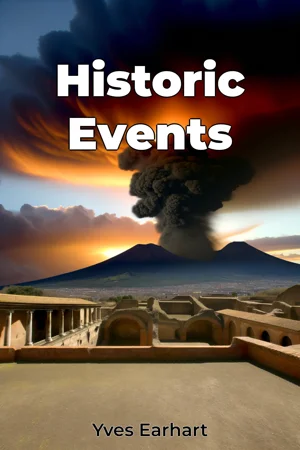
Throughout history, natural disasters have repeatedly reshaped civilizations, altered human migration patterns, and influenced the development of societies. "Historic Events" examines the complex interplay between natural catastrophes and human civilization, analyzing how these events have shaped our understanding of earth sciences and disaster preparedness. The book presents a systematic analysis of major natural disasters across three distinct periods: ancient civilizations (3000 BCE - 500 CE), medieval to early modern era (500-1800), and the modern industrial age (1800-present). Through detailed case studies, it demonstrates how societies have responded to and learned from catastrophic events, while exploring the geological and atmospheric processes that trigger these phenomena. Central to the narrative are three key themes: the scientific mechanisms behind natural disasters, their immediate and long-term societal impacts, and the evolution of human response systems. The text examines how events like the eruption of Mount Vesuvius in 79 CE not only preserved a snapshot of Roman civilization but also contributed to our understanding of volcanic processes. The book analyzes the 1755 Lisbon earthquake, which prompted the first scientific studies of seismology and led to modern urban planning concepts. The research draws from multiple disciplines, incorporating archaeological findings, historical documents, geological data, and modern scientific analysis. Primary sources include contemporary accounts, government records, and scientific studies, providing readers with a comprehensive understanding of how these events were perceived and documented in their time. Each chapter follows a structured approach, beginning with the physical characteristics of different disaster types, followed by specific historical examples and their societal implications. The book explains how the 1815 eruption of Mount Tambora triggered "the year without summer," leading to widespread crop failures and subsequent societal changes across Europe and North America. The text makes significant connections between environmental science, sociology, and technological advancement. It demonstrates how natural disasters have spurred innovations in architecture, engineering, and emergency response systems. The development of seismology following the 1906 San Francisco earthquake serves as a prime example of how catastrophe has driven scientific progress. The book maintains an analytical tone while remaining accessible to general readers interested in history, earth sciences, or disaster management. It provides detailed technical information balanced with compelling historical narratives, making complex scientific concepts understandable to a broad audience. Particular attention is given to the development of disaster prediction and mitigation strategies throughout history. The text examines how different cultures have interpreted and adapted to natural disasters, from ancient religious explanations to modern scientific understanding. It also addresses current debates about the role of climate change in affecting disaster frequency and intensity. The work concludes by examining contemporary disaster management practices and their historical evolution, offering insights into how past experiences inform current preparation and response strategies. This analysis is particularly relevant for policymakers, emergency management professionals, and citizens living in disaster-prone regions. Through this comprehensive examination, "Historic Events" provides readers with a deeper understanding of how natural disasters have shaped human history and continue to influence modern society's approach to environmental challenges.
Throughout history, natural disasters have repeatedly reshaped civilizations, altered human migration patterns, and influenced the development of societies. "Historic Events" examines the complex interplay between natural catastrophes and human civilization, analyzing how these events have shaped our understanding of earth sciences and disaster preparedness. The book presents a systematic analysis of major natural disasters across three distinct periods: ancient civilizations (3000 BCE - 500 CE), medieval to early modern era (500-1800), and the modern industrial age (1800-present). Through detailed case studies, it demonstrates how societies have responded to and learned from catastrophic events, while exploring the geological and atmospheric processes that trigger these phenomena. Central to the narrative are three key themes: the scientific mechanisms behind natural disasters, their immediate and long-term societal impacts, and the evolution of human response systems. The text examines how events like the eruption of Mount Vesuvius in 79 CE not only preserved a snapshot of Roman civilization but also contributed to our understanding of volcanic processes. The book analyzes the 1755 Lisbon earthquake, which prompted the first scientific studies of seismology and led to modern urban planning concepts. The research draws from multiple disciplines, incorporating archaeological findings, historical documents, geological data, and modern scientific analysis. Primary sources include contemporary accounts, government records, and scientific studies, providing readers with a comprehensive understanding of how these events were perceived and documented in their time. Each chapter follows a structured approach, beginning with the physical characteristics of different disaster types, followed by specific historical examples and their societal implications. The book explains how the 1815 eruption of Mount Tambora triggered "the year without summer," leading to widespread crop failures and subsequent societal changes across Europe and North America. The text makes significant connections between environmental science, sociology, and technological advancement. It demonstrates how natural disasters have spurred innovations in architecture, engineering, and emergency response systems. The development of seismology following the 1906 San Francisco earthquake serves as a prime example of how catastrophe has driven scientific progress. The book maintains an analytical tone while remaining accessible to general readers interested in history, earth sciences, or disaster management. It provides detailed technical information balanced with compelling historical narratives, making complex scientific concepts understandable to a broad audience. Particular attention is given to the development of disaster prediction and mitigation strategies throughout history. The text examines how different cultures have interpreted and adapted to natural disasters, from ancient religious explanations to modern scientific understanding. It also addresses current debates about the role of climate change in affecting disaster frequency and intensity. The work concludes by examining contemporary disaster management practices and their historical evolution, offering insights into how past experiences inform current preparation and response strategies. This analysis is particularly relevant for policymakers, emergency management professionals, and citizens living in disaster-prone regions. Through this comprehensive examination, "Historic Events" provides readers with a deeper understanding of how natural disasters have shaped human history and continue to influence modern society's approach to environmental challenges.
"Historic Events" presents a fascinating exploration of how natural disasters have shaped human civilization across millennia, weaving together scientific understanding with historical consequences. The book uniquely structures its analysis through three distinct time periods, from ancient civilizations to the modern industrial age, examining how catastrophic events have influenced everything from human migration patterns to technological advancement. Through compelling case studies, the book illuminates the profound impact of historic catastrophes like the 79 CE Mount Vesuvius eruption and the 1815 Mount Tambora explosion, which triggered "the year without summer." These events serve as powerful examples of how natural disasters have not only devastated communities but also driven scientific progress and innovation. The text skillfully balances technical information about geological and atmospheric processes with engaging historical narratives, making complex scientific concepts accessible to general readers. The book progresses methodically through each era, examining the scientific mechanisms behind different types of disasters, their societal impacts, and the evolution of human response systems. Drawing from archaeological findings, historical documents, and modern scientific analysis, it demonstrates how societies have advanced from religious interpretations of disasters to sophisticated prediction and mitigation strategies. This comprehensive approach makes the book particularly valuable for readers interested in the intersection of environmental science, world history, and disaster management, while offering crucial insights into contemporary challenges like climate change.
Book Details
ISBN
9788233981099
Publisher
Publifye AS
Your Licenses
You don't own any licenses for this book
Purchase a license below to unlock this book and download the EPUB.
Purchase License
Select a tier to unlock this book
Need bulk licensing?
Contact us for enterprise agreements.