
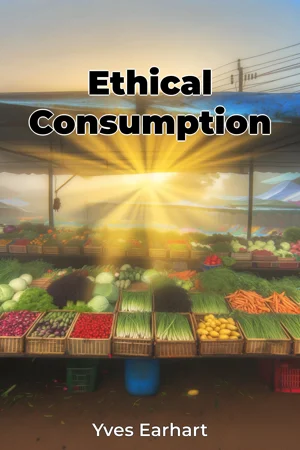
About This Book
In an era where consumer choices shape global markets and environmental outcomes, "Ethical Consumption" examines how individual purchasing decisions ripple through complex economic and ecological systems. This comprehensive guide bridges the gap between personal choice and planetary impact, offering readers a detailed framework for understanding sustainable consumption. The book establishes three fundamental pillars: the environmental impact of consumer choices, the economic mechanisms that drive production systems, and the social implications of consumption patterns. Through these lenses, readers gain insight into how their daily decisions connect to larger global challenges, from climate change to labor conditions in developing nations. Drawing from extensive research across environmental science, behavioral economics, and supply chain management, the text presents evidence-based approaches to ethical consumption. The first section explores the hidden costs of conventional consumption patterns, utilizing data from environmental impact assessments and economic analyses to reveal the true price of common goods and services. The middle chapters detail practical frameworks for making informed choices, including: - A systematic method for evaluating product sustainability - Tools for understanding supply chain transparency - Strategies for balancing personal budget constraints with ethical considerations - Techniques for identifying greenwashing and misleading marketing claims The book's research foundation incorporates studies from leading sustainability institutes, consumer behavior research, and environmental impact assessments. It presents case studies of successful ethical consumption initiatives and examines their scalability across different economic contexts. Interdisciplinary connections feature prominently, linking consumer psychology with environmental science, and economic theory with social justice. These connections help readers understand how individual choices influence broader systems and how various factors interact in complex market dynamics. The text maintains an academic approach while remaining accessible to general readers, using clear explanations and practical examples to illustrate complex concepts. It addresses both individual consumers seeking to make better choices and professionals working in sustainability-related fields. Particular attention is given to debunking common myths about ethical consumption, such as the assumption that sustainable products must be more expensive or that individual choices can't make a meaningful difference. The book presents evidence-based counterarguments to these misconceptions while acknowledging the real challenges of ethical consumption. The final section provides actionable strategies for different budget levels and lifestyle contexts, recognizing that ethical consumption must be adaptable to various socioeconomic situations. It includes specific guidelines for: - Evaluating product certifications and eco-labels - Making informed trade-offs when perfect solutions aren't available - Building sustainable consumption habits over time - Engaging with companies and policymakers for systemic change Throughout the text, readers encounter practical tools for decision-making, including assessment frameworks, comparison charts, and decision trees. These resources help translate theoretical knowledge into practical action, making the book valuable for both immediate reference and long-term learning. The book acknowledges ongoing debates within the field, such as the effectiveness of individual action versus systemic change, and the role of government regulation in promoting sustainable consumption. It presents various perspectives on these issues while maintaining a focus on evidence-based solutions. This work is particularly relevant for environmentally conscious consumers, business professionals, policymakers, and students of sustainability, offering both theoretical understanding and practical guidance for promoting positive change through informed consumption choices.
In an era where consumer choices shape global markets and environmental outcomes, "Ethical Consumption" examines how individual purchasing decisions ripple through complex economic and ecological systems. This comprehensive guide bridges the gap between personal choice and planetary impact, offering readers a detailed framework for understanding sustainable consumption. The book establishes three fundamental pillars: the environmental impact of consumer choices, the economic mechanisms that drive production systems, and the social implications of consumption patterns. Through these lenses, readers gain insight into how their daily decisions connect to larger global challenges, from climate change to labor conditions in developing nations. Drawing from extensive research across environmental science, behavioral economics, and supply chain management, the text presents evidence-based approaches to ethical consumption. The first section explores the hidden costs of conventional consumption patterns, utilizing data from environmental impact assessments and economic analyses to reveal the true price of common goods and services. The middle chapters detail practical frameworks for making informed choices, including: - A systematic method for evaluating product sustainability - Tools for understanding supply chain transparency - Strategies for balancing personal budget constraints with ethical considerations - Techniques for identifying greenwashing and misleading marketing claims The book's research foundation incorporates studies from leading sustainability institutes, consumer behavior research, and environmental impact assessments. It presents case studies of successful ethical consumption initiatives and examines their scalability across different economic contexts. Interdisciplinary connections feature prominently, linking consumer psychology with environmental science, and economic theory with social justice. These connections help readers understand how individual choices influence broader systems and how various factors interact in complex market dynamics. The text maintains an academic approach while remaining accessible to general readers, using clear explanations and practical examples to illustrate complex concepts. It addresses both individual consumers seeking to make better choices and professionals working in sustainability-related fields. Particular attention is given to debunking common myths about ethical consumption, such as the assumption that sustainable products must be more expensive or that individual choices can't make a meaningful difference. The book presents evidence-based counterarguments to these misconceptions while acknowledging the real challenges of ethical consumption. The final section provides actionable strategies for different budget levels and lifestyle contexts, recognizing that ethical consumption must be adaptable to various socioeconomic situations. It includes specific guidelines for: - Evaluating product certifications and eco-labels - Making informed trade-offs when perfect solutions aren't available - Building sustainable consumption habits over time - Engaging with companies and policymakers for systemic change Throughout the text, readers encounter practical tools for decision-making, including assessment frameworks, comparison charts, and decision trees. These resources help translate theoretical knowledge into practical action, making the book valuable for both immediate reference and long-term learning. The book acknowledges ongoing debates within the field, such as the effectiveness of individual action versus systemic change, and the role of government regulation in promoting sustainable consumption. It presents various perspectives on these issues while maintaining a focus on evidence-based solutions. This work is particularly relevant for environmentally conscious consumers, business professionals, policymakers, and students of sustainability, offering both theoretical understanding and practical guidance for promoting positive change through informed consumption choices.
"Ethical Consumption" offers a comprehensive exploration of how individual purchasing decisions impact global environmental and economic systems. The book uniquely bridges the gap between personal choices and planetary consequences by examining three fundamental pillars: environmental impact, economic mechanisms, and social implications of consumption patterns. Through this integrated approach, readers gain a deeper understanding of how their daily decisions connect to broader challenges like climate change and labor conditions. The book progresses methodically from establishing the hidden costs of conventional consumption to providing practical frameworks for ethical decision-making. It tackles common misconceptions about sustainable products while presenting evidence-based solutions through case studies and research from leading sustainability institutes. What sets this work apart is its balanced presentation of both theoretical knowledge and actionable strategies, including systematic methods for evaluating product sustainability and identifying greenwashing practices. The final sections provide adaptable solutions for different socioeconomic situations, acknowledging that ethical consumption must be accessible across various lifestyle contexts. By incorporating practical tools such as assessment frameworks and decision trees, the book transforms complex sustainability concepts into manageable actions. Throughout its chapters, the text maintains academic rigor while remaining accessible, making it valuable for both conscious consumers and sustainability professionals seeking to understand the intricate relationship between consumer choices and global impact.
Book Details
ISBN
9788233980955
Publisher
Publifye AS
Your Licenses
You don't own any licenses for this book
Purchase a license below to unlock this book and download the EPUB.
Purchase License
Select a tier to unlock this book
Need bulk licensing?
Contact us for enterprise agreements.