
About This Book
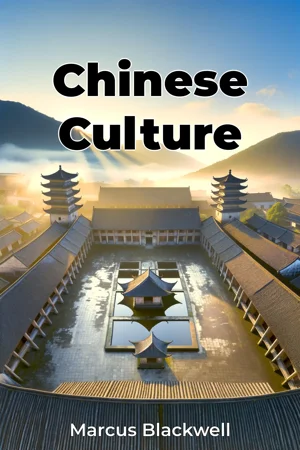
Chinese culture represents one of humanity's oldest continuous civilizations, spanning over five millennia of documented history. This comprehensive examination of Chinese cultural heritage explores how traditional values, philosophical systems, and social practices have shaped modern China while continuing to influence global developments. The book presents three central themes: the evolution of Chinese thought systems (including Confucianism, Taoism, and Buddhism), the role of artistic expression in Chinese society, and the endurance of cultural practices through historical transitions. These interconnected elements form the foundation for understanding China's cultural contributions to world civilization and their contemporary relevance. Through detailed analysis of archaeological findings, historical documents, and scholarly research, the work traces how Chinese culture developed from the Yellow River civilizations to today's global influence. The text examines key periods of cultural flourishing, including the Han Dynasty's establishment of imperial examination systems, the Tang Dynasty's artistic achievements, and the Song Dynasty's technological innovations. The book's core argument posits that Chinese culture's longevity stems from its adaptive capacity while maintaining core principles. This is demonstrated through examples of how traditional concepts like harmony (he), filial piety (xiao), and the mandate of heaven (tianming) have evolved to remain relevant in contemporary contexts. Structured in chronological and thematic sections, the work begins with foundational concepts in Chinese philosophy and social organization. It then explores artistic expressions through calligraphy, painting, and literature, demonstrating how these forms embody cultural values. The final sections examine how Chinese cultural elements have influenced other societies and their current global impact. The research draws from multiple disciplines, including archaeology, anthropology, art history, and social sciences. Primary sources include classical texts, archaeological artifacts, and contemporary scholarship from both Chinese and international researchers. This interdisciplinary approach connects Chinese cultural studies with economics, international relations, and urban development. The book maintains an academic tone while remaining accessible to general readers interested in world history and cultural studies. It provides context for understanding modern China's behavior in international relations and business practices, making it valuable for professionals engaging with Chinese partners and students of global affairs. What distinguishes this work is its systematic analysis of how traditional elements maintain relevance in modern settings. Rather than presenting Chinese culture as static, it demonstrates its dynamic nature through historical adaptations and contemporary applications. Special attention is given to how cultural practices influence business negotiations, diplomatic relations, and social interactions in today's global context. The scope encompasses both tangible and intangible cultural heritage, from architectural achievements to philosophical concepts. While focused primarily on Han Chinese culture, the book acknowledges regional variations and influences from China's 56 ethnic groups. It addresses ongoing debates about cultural preservation versus modernization and the balance between tradition and innovation in contemporary China. For readers seeking to understand China's current global influence, the book provides essential insights into the cultural foundations that shape Chinese decision-making and social behavior. It offers practical applications for cross-cultural communication and relationship building in professional contexts while maintaining scholarly rigor in its analysis of historical and contemporary cultural phenomena.
Chinese culture represents one of humanity's oldest continuous civilizations, spanning over five millennia of documented history. This comprehensive examination of Chinese cultural heritage explores how traditional values, philosophical systems, and social practices have shaped modern China while continuing to influence global developments. The book presents three central themes: the evolution of Chinese thought systems (including Confucianism, Taoism, and Buddhism), the role of artistic expression in Chinese society, and the endurance of cultural practices through historical transitions. These interconnected elements form the foundation for understanding China's cultural contributions to world civilization and their contemporary relevance. Through detailed analysis of archaeological findings, historical documents, and scholarly research, the work traces how Chinese culture developed from the Yellow River civilizations to today's global influence. The text examines key periods of cultural flourishing, including the Han Dynasty's establishment of imperial examination systems, the Tang Dynasty's artistic achievements, and the Song Dynasty's technological innovations. The book's core argument posits that Chinese culture's longevity stems from its adaptive capacity while maintaining core principles. This is demonstrated through examples of how traditional concepts like harmony (he), filial piety (xiao), and the mandate of heaven (tianming) have evolved to remain relevant in contemporary contexts. Structured in chronological and thematic sections, the work begins with foundational concepts in Chinese philosophy and social organization. It then explores artistic expressions through calligraphy, painting, and literature, demonstrating how these forms embody cultural values. The final sections examine how Chinese cultural elements have influenced other societies and their current global impact. The research draws from multiple disciplines, including archaeology, anthropology, art history, and social sciences. Primary sources include classical texts, archaeological artifacts, and contemporary scholarship from both Chinese and international researchers. This interdisciplinary approach connects Chinese cultural studies with economics, international relations, and urban development. The book maintains an academic tone while remaining accessible to general readers interested in world history and cultural studies. It provides context for understanding modern China's behavior in international relations and business practices, making it valuable for professionals engaging with Chinese partners and students of global affairs. What distinguishes this work is its systematic analysis of how traditional elements maintain relevance in modern settings. Rather than presenting Chinese culture as static, it demonstrates its dynamic nature through historical adaptations and contemporary applications. Special attention is given to how cultural practices influence business negotiations, diplomatic relations, and social interactions in today's global context. The scope encompasses both tangible and intangible cultural heritage, from architectural achievements to philosophical concepts. While focused primarily on Han Chinese culture, the book acknowledges regional variations and influences from China's 56 ethnic groups. It addresses ongoing debates about cultural preservation versus modernization and the balance between tradition and innovation in contemporary China. For readers seeking to understand China's current global influence, the book provides essential insights into the cultural foundations that shape Chinese decision-making and social behavior. It offers practical applications for cross-cultural communication and relationship building in professional contexts while maintaining scholarly rigor in its analysis of historical and contemporary cultural phenomena.
"Chinese Culture" offers a sweeping exploration of one of humanity's most enduring civilizations, masterfully weaving together five millennia of philosophical thought, artistic achievement, and social evolution. The book illuminates how traditional Chinese values and practices have not only shaped modern China but continue to influence global developments, with particular emphasis on the interplay between Confucianism, Taoism, and Buddhism. Through a systematic examination of archaeological findings and historical documents, the text chronicles China's cultural journey from the ancient Yellow River civilizations to its contemporary global presence. Notable highlights include the Han Dynasty's revolutionary imperial examination system and the Tang Dynasty's artistic golden age. The book's unique strength lies in its demonstration of how core Chinese concepts like harmony (he) and filial piety (xiao) have adapted while maintaining their fundamental significance in modern contexts. The work progresses from foundational philosophical principles to detailed analyses of artistic expressions and cultural practices, ultimately examining China's current global influence. What sets this book apart is its practical application of historical insights to contemporary scenarios, making it invaluable for both academic study and professional engagement with Chinese culture. By connecting ancient traditions with modern international relations and business practices, it provides readers with essential tools for understanding China's cultural impact on today's interconnected world.
Book Details
ISBN
9788233980832
Publisher
Publifye AS
Your Licenses
You don't own any licenses for this book
Purchase a license below to unlock this book and download the EPUB.
Purchase License
Select a tier to unlock this book
Need bulk licensing?
Contact us for enterprise agreements.