
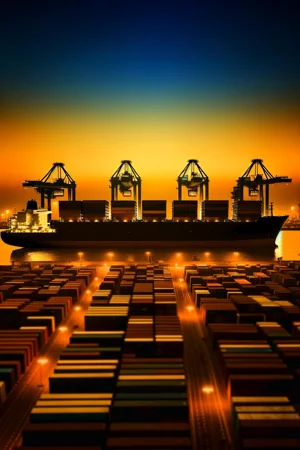
About This Book
In an era where resource consumption shapes international relations and economic policies, "Global Trade Resources" examines the intricate web of natural resource trading that drives the modern world economy. From rare earth metals powering technology to fossil fuels sustaining industrial growth, this book analyzes how resource flows influence global power dynamics and environmental sustainability. The work presents three core themes: the economic mechanisms governing international resource markets, the environmental consequences of resource extraction and trade, and the geopolitical implications of resource distribution. Through detailed analysis of trade data spanning five decades, the book demonstrates how resource availability increasingly determines international relationships and domestic policy decisions. Drawing from economic theory, environmental science, and international relations, the text explores how traditional supply-demand models interact with modern environmental concerns and regional politics. The first section examines the evolution of resource trading patterns since the 1970s, highlighting how technological advances and changing consumption patterns have reshaped global market dynamics. The book's central argument posits that current resource trading systems require fundamental restructuring to address both environmental degradation and economic inequality. Supporting this thesis, the author presents extensive research from international trade organizations, environmental monitoring agencies, and economic institutions, incorporating case studies from resource-rich regions across Africa, South America, and Asia. Through systematic analysis, the work reveals how resource extraction impacts local ecosystems while generating complex economic dependencies between nations. The second section focuses on emerging challenges, including water scarcity, rare mineral depletion, and the transition toward renewable resources. The final portion presents innovative policy frameworks designed to balance economic growth with environmental protection. The research methodology combines quantitative trade data analysis with qualitative assessment of environmental impacts, featuring contributions from economists, environmental scientists, and policy experts. The book incorporates satellite monitoring data, international trade statistics, and environmental impact assessments to build a comprehensive picture of global resource flows. Written in an analytical style accessible to both academics and policy professionals, the text maintains academic rigor while ensuring clarity for readers with basic economics knowledge. It serves as a valuable resource for policy makers, environmental professionals, economists, and students of international trade and environmental studies. The work addresses several ongoing debates, including the role of technology in resource efficiency, the effectiveness of international resource governance, and the balance between development rights and environmental protection. It examines controversial topics such as carbon pricing, resource nationalism, and the environmental costs of mining. Practical applications include frameworks for assessing resource trade sustainability, models for calculating environmental costs in international trade, and strategies for implementing responsible resource management policies. The book concludes with recommendations for creating more equitable and sustainable resource trading systems, emphasizing the need for international cooperation and innovative policy solutions. The scope encompasses major traded resources while acknowledging limitations in data availability from certain regions and markets. By connecting economic, environmental, and political perspectives, the work provides a holistic view of global resource trading dynamics and their implications for future generations.
In an era where resource consumption shapes international relations and economic policies, "Global Trade Resources" examines the intricate web of natural resource trading that drives the modern world economy. From rare earth metals powering technology to fossil fuels sustaining industrial growth, this book analyzes how resource flows influence global power dynamics and environmental sustainability. The work presents three core themes: the economic mechanisms governing international resource markets, the environmental consequences of resource extraction and trade, and the geopolitical implications of resource distribution. Through detailed analysis of trade data spanning five decades, the book demonstrates how resource availability increasingly determines international relationships and domestic policy decisions. Drawing from economic theory, environmental science, and international relations, the text explores how traditional supply-demand models interact with modern environmental concerns and regional politics. The first section examines the evolution of resource trading patterns since the 1970s, highlighting how technological advances and changing consumption patterns have reshaped global market dynamics. The book's central argument posits that current resource trading systems require fundamental restructuring to address both environmental degradation and economic inequality. Supporting this thesis, the author presents extensive research from international trade organizations, environmental monitoring agencies, and economic institutions, incorporating case studies from resource-rich regions across Africa, South America, and Asia. Through systematic analysis, the work reveals how resource extraction impacts local ecosystems while generating complex economic dependencies between nations. The second section focuses on emerging challenges, including water scarcity, rare mineral depletion, and the transition toward renewable resources. The final portion presents innovative policy frameworks designed to balance economic growth with environmental protection. The research methodology combines quantitative trade data analysis with qualitative assessment of environmental impacts, featuring contributions from economists, environmental scientists, and policy experts. The book incorporates satellite monitoring data, international trade statistics, and environmental impact assessments to build a comprehensive picture of global resource flows. Written in an analytical style accessible to both academics and policy professionals, the text maintains academic rigor while ensuring clarity for readers with basic economics knowledge. It serves as a valuable resource for policy makers, environmental professionals, economists, and students of international trade and environmental studies. The work addresses several ongoing debates, including the role of technology in resource efficiency, the effectiveness of international resource governance, and the balance between development rights and environmental protection. It examines controversial topics such as carbon pricing, resource nationalism, and the environmental costs of mining. Practical applications include frameworks for assessing resource trade sustainability, models for calculating environmental costs in international trade, and strategies for implementing responsible resource management policies. The book concludes with recommendations for creating more equitable and sustainable resource trading systems, emphasizing the need for international cooperation and innovative policy solutions. The scope encompasses major traded resources while acknowledging limitations in data availability from certain regions and markets. By connecting economic, environmental, and political perspectives, the work provides a holistic view of global resource trading dynamics and their implications for future generations.
"Global Trade Resources" provides a comprehensive examination of how natural resource trading shapes our world economy, environmental health, and international relations. Through a unique combination of economic theory, environmental science, and geopolitical analysis, the book reveals the complex interdependencies between nations driven by resource flows, from rare earth metals to fossil fuels. The author masterfully weaves together five decades of trade data with environmental impact assessments to demonstrate how resource availability increasingly influences both international relationships and domestic policies. The book progresses logically through three main sections, beginning with an analysis of how resource trading patterns have evolved since the 1970s. It then delves into pressing contemporary challenges, including water scarcity and mineral depletion, before concluding with innovative policy frameworks. What sets this work apart is its holistic approach to understanding resource trading dynamics, incorporating satellite monitoring data and international trade statistics to build a comprehensive picture of global resource flows and their environmental consequences. Drawing from a rich collection of case studies across Africa, South America, and Asia, the book presents compelling evidence for its central argument: that current resource trading systems need fundamental restructuring to address both environmental degradation and economic inequality. Written in an accessible yet analytical style, it offers practical frameworks for assessing trade sustainability and implementing responsible resource management policies, making it an invaluable resource for policy makers, environmental professionals, and students of international trade.
Book Details
ISBN
9788233980726
Publisher
Publifye AS
Your Licenses
You don't own any licenses for this book
Purchase a license below to unlock this book and download the EPUB.
Purchase License
Select a tier to unlock this book
Need bulk licensing?
Contact us for enterprise agreements.