
About This Book
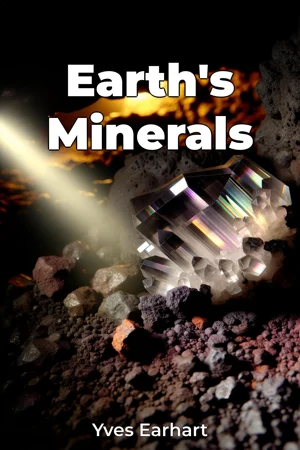
Beneath our feet lies a hidden world of minerals that shapes not only Earth's geology but also human civilization's progress. "Earth's Minerals" takes readers on a comprehensive journey through the fundamental building blocks of our planet, examining how these crystalline structures form, transform, and influence every aspect of our lives. The book systematically explores three core themes: mineral formation processes, classification systems, and industrial applications. Beginning with the basic principles of mineralogy, readers learn how temperature, pressure, and chemical conditions drive the creation of over 5,000 known mineral species. The text delves into the complex mechanisms of crystal growth, from simple ionic bonds to sophisticated lattice structures that give minerals their unique properties. A significant portion focuses on mineral identification and classification, providing readers with practical tools to understand these geological treasures. The book presents detailed analyses of major mineral groups, including silicates, carbonates, and precious metals, explaining their physical and chemical properties through clear, scientific prose. Readers will gain insights into how geologists and mineralogists use characteristics such as hardness, luster, and crystal structure to identify and categorize minerals. The industrial applications section bridges pure science with practical usage, demonstrating how minerals are essential to modern technology and manufacturing. From construction materials to electronic components, the book traces the path of minerals from extraction to end-use, highlighting sustainable practices and environmental considerations in mining and processing. Supporting these discussions is extensive research from geological surveys, laboratory studies, and field observations. The text incorporates recent findings from X-ray crystallography, electron microscopy, and other advanced analytical techniques that have revolutionized our understanding of mineral structures and properties. The book makes important connections to related fields, including chemistry, materials science, and environmental studies. These interdisciplinary links help readers understand how mineralogy influences everything from soil fertility to climate change. The economic aspects of mineral resources are explored through the lens of global supply chains and emerging technologies. Written in an academic yet accessible style, the text serves both students and professionals. Technical concepts are carefully explained with supporting diagrams and real-world examples, making complex mineralogical principles comprehensible to readers with basic scientific knowledge. The scope encompasses both macro and microscopic perspectives, from vast mineral deposits that shape mining industries to atomic-level structures that determine material properties. While focusing primarily on naturally occurring minerals, the book also addresses synthetic minerals and their growing importance in technology. Particular attention is given to current challenges in mineral resources, including supply sustainability, environmental impact of extraction, and the search for alternative materials. The book examines ongoing debates about mineral rights, conservation, and the role of new technologies in mineral exploration and processing. "Earth's Minerals" serves as both a comprehensive reference and practical guide for geology students, industry professionals, and anyone interested in understanding the mineral foundations of our planet and modern society. By connecting fundamental science with industrial applications, the book provides readers with the knowledge needed to appreciate and utilize Earth's mineral resources responsibly.
Beneath our feet lies a hidden world of minerals that shapes not only Earth's geology but also human civilization's progress. "Earth's Minerals" takes readers on a comprehensive journey through the fundamental building blocks of our planet, examining how these crystalline structures form, transform, and influence every aspect of our lives. The book systematically explores three core themes: mineral formation processes, classification systems, and industrial applications. Beginning with the basic principles of mineralogy, readers learn how temperature, pressure, and chemical conditions drive the creation of over 5,000 known mineral species. The text delves into the complex mechanisms of crystal growth, from simple ionic bonds to sophisticated lattice structures that give minerals their unique properties. A significant portion focuses on mineral identification and classification, providing readers with practical tools to understand these geological treasures. The book presents detailed analyses of major mineral groups, including silicates, carbonates, and precious metals, explaining their physical and chemical properties through clear, scientific prose. Readers will gain insights into how geologists and mineralogists use characteristics such as hardness, luster, and crystal structure to identify and categorize minerals. The industrial applications section bridges pure science with practical usage, demonstrating how minerals are essential to modern technology and manufacturing. From construction materials to electronic components, the book traces the path of minerals from extraction to end-use, highlighting sustainable practices and environmental considerations in mining and processing. Supporting these discussions is extensive research from geological surveys, laboratory studies, and field observations. The text incorporates recent findings from X-ray crystallography, electron microscopy, and other advanced analytical techniques that have revolutionized our understanding of mineral structures and properties. The book makes important connections to related fields, including chemistry, materials science, and environmental studies. These interdisciplinary links help readers understand how mineralogy influences everything from soil fertility to climate change. The economic aspects of mineral resources are explored through the lens of global supply chains and emerging technologies. Written in an academic yet accessible style, the text serves both students and professionals. Technical concepts are carefully explained with supporting diagrams and real-world examples, making complex mineralogical principles comprehensible to readers with basic scientific knowledge. The scope encompasses both macro and microscopic perspectives, from vast mineral deposits that shape mining industries to atomic-level structures that determine material properties. While focusing primarily on naturally occurring minerals, the book also addresses synthetic minerals and their growing importance in technology. Particular attention is given to current challenges in mineral resources, including supply sustainability, environmental impact of extraction, and the search for alternative materials. The book examines ongoing debates about mineral rights, conservation, and the role of new technologies in mineral exploration and processing. "Earth's Minerals" serves as both a comprehensive reference and practical guide for geology students, industry professionals, and anyone interested in understanding the mineral foundations of our planet and modern society. By connecting fundamental science with industrial applications, the book provides readers with the knowledge needed to appreciate and utilize Earth's mineral resources responsibly.
"Earth's Minerals" presents a fascinating exploration of our planet's fundamental building blocks, offering readers a comprehensive understanding of how minerals shape both geological processes and human civilization. The book masterfully weaves together three essential themes: the intricate processes of mineral formation, systematic classification methods, and crucial industrial applications. Through clear scientific prose, it reveals how temperature, pressure, and chemical conditions combine to create over 5,000 distinct mineral species, each with unique crystalline structures and properties. The text progresses logically from basic mineralogical principles to complex real-world applications, making it accessible to both students and professionals. Readers learn practical identification techniques based on characteristics like hardness and luster, while gaining insights into how modern analytical methods, such as X-ray crystallography and electron microscopy, have revolutionized our understanding of mineral structures. The book pays particular attention to major mineral groups, including silicates, carbonates, and precious metals, explaining their significance in both natural systems and industrial processes. What sets this book apart is its interdisciplinary approach, connecting pure mineralogy with urgent contemporary issues like sustainability, environmental impact, and global supply chains. By examining minerals from both microscopic and macroscopic perspectives, the text provides a complete picture of these essential earth materials. The inclusion of recent research findings and emerging technologies makes it especially valuable for those seeking to understand the crucial role minerals play in modern technology and environmental challenges.
Book Details
ISBN
9788233980641
Publisher
Publifye AS
Your Licenses
You don't own any licenses for this book
Purchase a license below to unlock this book and download the EPUB.
Purchase License
Select a tier to unlock this book
Need bulk licensing?
Contact us for enterprise agreements.