
About This Book
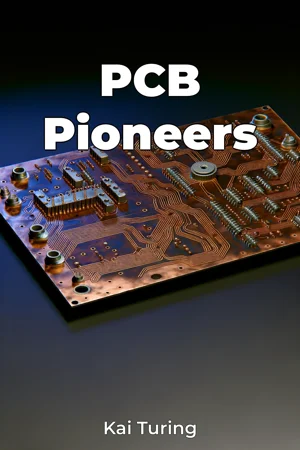
In 1943, a radio operator's urgent need to repair a malfunctioning device on a bomber aircraft highlighted the vulnerability of traditional hand-wired electronics. This critical moment serves as one of many catalysts that would drive the revolution in electronic circuit design and manufacturing. "PCB Pioneers" traces the transformation of electronics from unreliable, space-consuming tangles of hand-soldered wires to the precise, compact printed circuit boards that power modern devices. The book examines three pivotal decades, from the 1940s to the 1960s, when innovative engineers and technicians developed the fundamental principles and processes of PCB manufacturing that remain relevant today. The narrative follows the parallel development of two crucial innovations: the techniques for reliably printing conductive pathways on insulating materials, and the standardization of component mounting and connection methods. Through detailed technical documentation and first-hand accounts from early practitioners, the book reveals how these advances solved the pressing challenges of reliability, space efficiency, and mass production that limited early electronic devices. Readers learn how the military's demand for reliable radar and communication systems during World War II accelerated PCB development. The book details the progression from early experimental techniques, including silver paint circuits and metal foil adhesion, to the photochemical processes that enabled precise circuit reproduction. It examines how pioneers like Paul Eisler and the U.S. Army Signal Corps refined these methods into practical manufacturing processes. The text provides comprehensive coverage of key technical developments, including: - The evolution of base materials from Bakelite to modern FR-4 - The development of through-hole plating and multi-layer board construction - The introduction of automated assembly techniques Industrial case studies demonstrate how companies like Bell Labs and IBM adapted and improved PCB technology for commercial applications. The book analyzes how these developments enabled the miniaturization of electronics, from early television sets to the first portable radios and calculators. The authors draw on extensive research, including technical documents, patents, and interviews with surviving pioneers. This evidence-based approach grounds the narrative in verifiable facts while illuminating the human ingenuity behind each advancement. The book connects PCB development to broader technological trends, showing its influence on computer design, aerospace systems, and consumer electronics. It examines how PCB manufacturing techniques influenced other fields, including medical device production and automotive electronics. Written in a technical yet accessible style, the book serves both as a historical record and a practical resource. Engineering students and professionals will find detailed technical information, while general readers can understand the fundamental concepts that shaped modern electronics. The concluding chapters explore how early PCB innovations continue to influence current electronic design, from flexible circuits to advanced semiconductor packaging. The book addresses ongoing challenges in high-frequency design and environmental sustainability, showing how historical solutions inform modern approaches. This comprehensive examination of PCB development provides readers with both theoretical understanding and practical insights into one of electronics' most fundamental technologies. It stands as a detailed record of how systematic engineering approaches solved complex technical challenges, creating the foundation for today's electronic devices.
In 1943, a radio operator's urgent need to repair a malfunctioning device on a bomber aircraft highlighted the vulnerability of traditional hand-wired electronics. This critical moment serves as one of many catalysts that would drive the revolution in electronic circuit design and manufacturing. "PCB Pioneers" traces the transformation of electronics from unreliable, space-consuming tangles of hand-soldered wires to the precise, compact printed circuit boards that power modern devices. The book examines three pivotal decades, from the 1940s to the 1960s, when innovative engineers and technicians developed the fundamental principles and processes of PCB manufacturing that remain relevant today. The narrative follows the parallel development of two crucial innovations: the techniques for reliably printing conductive pathways on insulating materials, and the standardization of component mounting and connection methods. Through detailed technical documentation and first-hand accounts from early practitioners, the book reveals how these advances solved the pressing challenges of reliability, space efficiency, and mass production that limited early electronic devices. Readers learn how the military's demand for reliable radar and communication systems during World War II accelerated PCB development. The book details the progression from early experimental techniques, including silver paint circuits and metal foil adhesion, to the photochemical processes that enabled precise circuit reproduction. It examines how pioneers like Paul Eisler and the U.S. Army Signal Corps refined these methods into practical manufacturing processes. The text provides comprehensive coverage of key technical developments, including: - The evolution of base materials from Bakelite to modern FR-4 - The development of through-hole plating and multi-layer board construction - The introduction of automated assembly techniques Industrial case studies demonstrate how companies like Bell Labs and IBM adapted and improved PCB technology for commercial applications. The book analyzes how these developments enabled the miniaturization of electronics, from early television sets to the first portable radios and calculators. The authors draw on extensive research, including technical documents, patents, and interviews with surviving pioneers. This evidence-based approach grounds the narrative in verifiable facts while illuminating the human ingenuity behind each advancement. The book connects PCB development to broader technological trends, showing its influence on computer design, aerospace systems, and consumer electronics. It examines how PCB manufacturing techniques influenced other fields, including medical device production and automotive electronics. Written in a technical yet accessible style, the book serves both as a historical record and a practical resource. Engineering students and professionals will find detailed technical information, while general readers can understand the fundamental concepts that shaped modern electronics. The concluding chapters explore how early PCB innovations continue to influence current electronic design, from flexible circuits to advanced semiconductor packaging. The book addresses ongoing challenges in high-frequency design and environmental sustainability, showing how historical solutions inform modern approaches. This comprehensive examination of PCB development provides readers with both theoretical understanding and practical insights into one of electronics' most fundamental technologies. It stands as a detailed record of how systematic engineering approaches solved complex technical challenges, creating the foundation for today's electronic devices.
"PCB Pioneers" chronicles the revolutionary transformation of electronic circuits from unreliable hand-wired assemblies to the precise, compact printed circuit boards that power today's devices. The book focuses on the critical period from the 1940s to 1960s, when fundamental PCB manufacturing principles were established, sparked by a pivotal incident in 1943 when a radio operator's struggle with faulty equipment on a bomber aircraft highlighted the need for more reliable electronics. Through meticulous research and firsthand accounts, the book explores two parallel innovations that shaped modern electronics: the development of reliable conductive pathway printing techniques and the standardization of component mounting methods. Readers discover how military demands during World War II accelerated PCB development, with pioneers like Paul Eisler and the U.S. Army Signal Corps refining early experimental techniques into practical manufacturing processes. The evolution from primitive silver paint circuits to sophisticated photochemical processes demonstrates the rapid advancement of this technology. The narrative expertly weaves together technical developments, including the progression of base materials, through-hole plating innovations, and the emergence of multi-layer board construction, while examining how industry leaders like Bell Labs and IBM adapted these technologies for commercial use. Written in an accessible style that balances technical detail with historical context, the book illuminates how these early innovations continue to influence modern electronic design, from flexible circuits to advanced semiconductor packaging, making it valuable for both engineering professionals and technology enthusiasts.
Book Details
ISBN
9788233980450
Publisher
Publifye AS
Your Licenses
You don't own any licenses for this book
Purchase a license below to unlock this book and download the EPUB.
Purchase License
Select a tier to unlock this book
Need bulk licensing?
Contact us for enterprise agreements.