
About This Book
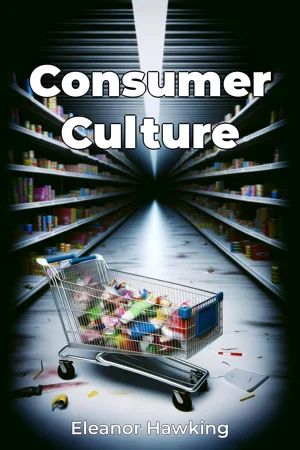
In an era where the average American encounters over 5,000 marketing messages daily, "Consumer Culture" examines how modern consumption patterns have fundamentally altered human society and our planet's ecological systems. This comprehensive analysis traces the evolution of consumerism from post-World War II prosperity to today's digital marketplace, revealing the complex web of social, economic, and environmental consequences of our consumption-driven world. The book presents three interconnected themes: the psychological mechanisms driving consumer behavior, the socioeconomic structures that perpetuate consumption-based economies, and the environmental impact of mass consumption. Through detailed research spanning economics, psychology, and environmental science, it demonstrates how consumer culture has become deeply embedded in contemporary social identity and economic systems. Drawing from extensive data collected across multiple continents, including consumer behavior studies, economic indicators, and environmental impact assessments, the book builds a compelling case for how consumerism has transformed from a means of meeting basic needs into a central feature of human identity and social status. The analysis incorporates findings from behavioral economics, showing how marketing strategies exploit cognitive biases to drive purchasing decisions, while sociological research reveals how consumer choices shape and reflect social hierarchies. The work is structured in three major sections. The first examines the historical development of consumer culture, tracking its acceleration through technological advances and globalization. The second section delves into the societal implications, exploring how consumerism affects mental health, social relationships, and community structures. The final section addresses the environmental consequences, presenting research on resource depletion, waste generation, and climate impact associated with consumer lifestyles. The book makes significant interdisciplinary connections, linking economic theory with environmental science and social psychology. It demonstrates how consumer behavior influences everything from urban development to global supply chains, while examining the psychological mechanisms that make sustainable consumption choices challenging for individuals. Written in an analytical style that balances academic rigor with accessibility, the book supports its arguments with current research from leading institutions and original case studies from various global markets. It offers practical frameworks for both policymakers and individuals to address the challenges of conscious consumption in a market-driven world. The target audience includes economics and social science students, policy professionals, and informed general readers interested in understanding the broader implications of consumer culture. The book is particularly relevant for those seeking to comprehend the tensions between economic growth, social well-being, and environmental sustainability. While maintaining objectivity, the text addresses ongoing debates about economic growth models, questioning whether continuous consumption-driven expansion is compatible with environmental limits and social welfare. It examines alternative economic frameworks and their potential to address current challenges without prescribing simple solutions to complex problems. The book concludes by exploring emerging trends in conscious consumption, sharing economy initiatives, and circular economic models, providing readers with practical insights for navigating consumer choices in an increasingly complex marketplace. It offers a balanced perspective on how societies might maintain economic stability while addressing the environmental and social challenges posed by current consumption patterns.
In an era where the average American encounters over 5,000 marketing messages daily, "Consumer Culture" examines how modern consumption patterns have fundamentally altered human society and our planet's ecological systems. This comprehensive analysis traces the evolution of consumerism from post-World War II prosperity to today's digital marketplace, revealing the complex web of social, economic, and environmental consequences of our consumption-driven world. The book presents three interconnected themes: the psychological mechanisms driving consumer behavior, the socioeconomic structures that perpetuate consumption-based economies, and the environmental impact of mass consumption. Through detailed research spanning economics, psychology, and environmental science, it demonstrates how consumer culture has become deeply embedded in contemporary social identity and economic systems. Drawing from extensive data collected across multiple continents, including consumer behavior studies, economic indicators, and environmental impact assessments, the book builds a compelling case for how consumerism has transformed from a means of meeting basic needs into a central feature of human identity and social status. The analysis incorporates findings from behavioral economics, showing how marketing strategies exploit cognitive biases to drive purchasing decisions, while sociological research reveals how consumer choices shape and reflect social hierarchies. The work is structured in three major sections. The first examines the historical development of consumer culture, tracking its acceleration through technological advances and globalization. The second section delves into the societal implications, exploring how consumerism affects mental health, social relationships, and community structures. The final section addresses the environmental consequences, presenting research on resource depletion, waste generation, and climate impact associated with consumer lifestyles. The book makes significant interdisciplinary connections, linking economic theory with environmental science and social psychology. It demonstrates how consumer behavior influences everything from urban development to global supply chains, while examining the psychological mechanisms that make sustainable consumption choices challenging for individuals. Written in an analytical style that balances academic rigor with accessibility, the book supports its arguments with current research from leading institutions and original case studies from various global markets. It offers practical frameworks for both policymakers and individuals to address the challenges of conscious consumption in a market-driven world. The target audience includes economics and social science students, policy professionals, and informed general readers interested in understanding the broader implications of consumer culture. The book is particularly relevant for those seeking to comprehend the tensions between economic growth, social well-being, and environmental sustainability. While maintaining objectivity, the text addresses ongoing debates about economic growth models, questioning whether continuous consumption-driven expansion is compatible with environmental limits and social welfare. It examines alternative economic frameworks and their potential to address current challenges without prescribing simple solutions to complex problems. The book concludes by exploring emerging trends in conscious consumption, sharing economy initiatives, and circular economic models, providing readers with practical insights for navigating consumer choices in an increasingly complex marketplace. It offers a balanced perspective on how societies might maintain economic stability while addressing the environmental and social challenges posed by current consumption patterns.
"Consumer Culture" offers a compelling exploration of how modern consumption patterns have transformed society and our environment, examining the journey from post-World War II consumerism to today's digital marketplace. Through a unique interdisciplinary lens, the book weaves together insights from economics, psychology, and environmental science to reveal how consumer behavior has evolved from meeting basic needs to becoming a cornerstone of personal identity and social status. The analysis is particularly eye-opening in its revelation that the average American faces over 5,000 marketing messages daily, highlighting the pervasive nature of consumer culture in modern life. The book progresses systematically through three major sections, beginning with the historical evolution of consumer culture, then examining its societal implications, and concluding with environmental consequences. It draws from extensive global research, including consumer behavior studies and environmental impact assessments, to demonstrate how marketing strategies exploit cognitive biases and how consumer choices reflect and reinforce social hierarchies. The work stands out for its comprehensive approach to linking economic theory with environmental science and social psychology, making complex concepts accessible to both academic and general audiences. What makes this analysis particularly valuable is its balanced examination of alternative economic frameworks and emerging trends in conscious consumption. Rather than simply criticizing current consumption patterns, it provides practical frameworks for understanding and addressing the challenges of sustainable consumption in a market-driven world. The book effectively bridges the gap between theoretical understanding and practical application, making it an essential resource for anyone interested in understanding the complex relationship between consumer behavior, economic systems, and environmental sustainability.
Book Details
ISBN
9788233980351
Publisher
Publifye AS
Your Licenses
You don't own any licenses for this book
Purchase a license below to unlock this book and download the EPUB.
Purchase License
Select a tier to unlock this book
Need bulk licensing?
Contact us for enterprise agreements.