
About This Book
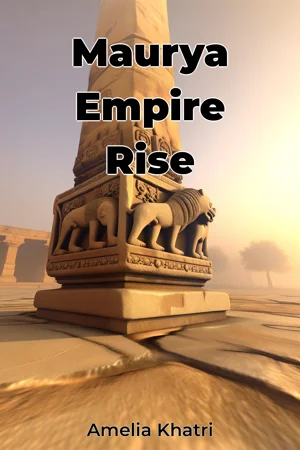
In 322 BCE, a young ruler named Chandragupta Maurya initiated one of history's most remarkable imperial expansions, transforming a small kingdom into South Asia's first major empire. "Maurya Empire Rise" traces this pivotal transformation that shaped the Indian subcontinent's political, cultural, and economic landscape for centuries to come. The book presents a detailed analysis of the Mauryan dynasty's ascent through three distinct phases: initial conquest and consolidation under Chandragupta, territorial expansion under Bindusara, and the empire's peak under Ashoka. Drawing from archaeological evidence, ancient texts, and inscriptions, it examines how the Mauryans created sophisticated administrative systems that unified diverse regions under centralized control. Central to the narrative is the evolution of Mauryan governance, particularly the implementation of the arthashastra principles—a comprehensive guide to statecraft, economics, and military strategy. The book details how these principles were applied to create an efficient bureaucracy, standardized currency system, and extensive trade networks stretching from Greece to Southeast Asia. The text dedicates substantial attention to the empire's cultural and technological contributions. Readers will discover how the Mauryans revolutionized agriculture through innovative irrigation systems, established standardized weights and measures, and developed advanced metallurgy techniques. Their architectural achievements, exemplified by the grand palace at Pataliputra and the numerous stone-carved edicts, reflect their technical sophistication and cultural influence. A significant portion explores the empire's religious and philosophical dimensions, particularly under Ashoka's reign. Following the devastating Kalinga War, his embrace of Buddhism and promotion of dharma (moral law) marked a shift in governance philosophy, leading to state-sponsored social welfare programs and religious tolerance policies that influenced future Indian rulers. The book incorporates recent archaeological findings and scholarly interpretations, providing fresh perspectives on Mauryan diplomatic relations, economic policies, and military strategies. It examines the empire's complex relationship with neighboring Greek kingdoms, its role in facilitating cross-cultural exchange, and its influence on Southeast Asian state formation. Interdisciplinary connections are drawn between Mauryan administrative practices and modern governance principles, while their architectural and artistic achievements are analyzed through both historical and aesthetic lenses. The text also explores the empire's environmental policies, including early conservation efforts and urban planning. Written in an analytical style that balances academic rigor with accessibility, this book serves scholars, students, and general readers interested in ancient civilizations, political systems, and cultural history. It addresses ongoing debates about the extent of Mauryan control in certain regions and the nature of Ashoka's religious policies. The book's scope encompasses the period from 322 BCE to 185 BCE, focusing primarily on the reigns of the three major emperors while acknowledging the complex factors that led to the empire's eventual decline. Special attention is given to the lasting impact of Mauryan innovations in administration, art, and architecture on subsequent Indian dynasties and broader Asian civilization. Contemporary readers will find relevant parallels between Mauryan strategies for managing diverse populations and modern challenges of governance in multicultural societies. The book concludes by examining how Mauryan administrative and cultural practices continue to influence contemporary Indian institutions and cultural identity.
In 322 BCE, a young ruler named Chandragupta Maurya initiated one of history's most remarkable imperial expansions, transforming a small kingdom into South Asia's first major empire. "Maurya Empire Rise" traces this pivotal transformation that shaped the Indian subcontinent's political, cultural, and economic landscape for centuries to come. The book presents a detailed analysis of the Mauryan dynasty's ascent through three distinct phases: initial conquest and consolidation under Chandragupta, territorial expansion under Bindusara, and the empire's peak under Ashoka. Drawing from archaeological evidence, ancient texts, and inscriptions, it examines how the Mauryans created sophisticated administrative systems that unified diverse regions under centralized control. Central to the narrative is the evolution of Mauryan governance, particularly the implementation of the arthashastra principles—a comprehensive guide to statecraft, economics, and military strategy. The book details how these principles were applied to create an efficient bureaucracy, standardized currency system, and extensive trade networks stretching from Greece to Southeast Asia. The text dedicates substantial attention to the empire's cultural and technological contributions. Readers will discover how the Mauryans revolutionized agriculture through innovative irrigation systems, established standardized weights and measures, and developed advanced metallurgy techniques. Their architectural achievements, exemplified by the grand palace at Pataliputra and the numerous stone-carved edicts, reflect their technical sophistication and cultural influence. A significant portion explores the empire's religious and philosophical dimensions, particularly under Ashoka's reign. Following the devastating Kalinga War, his embrace of Buddhism and promotion of dharma (moral law) marked a shift in governance philosophy, leading to state-sponsored social welfare programs and religious tolerance policies that influenced future Indian rulers. The book incorporates recent archaeological findings and scholarly interpretations, providing fresh perspectives on Mauryan diplomatic relations, economic policies, and military strategies. It examines the empire's complex relationship with neighboring Greek kingdoms, its role in facilitating cross-cultural exchange, and its influence on Southeast Asian state formation. Interdisciplinary connections are drawn between Mauryan administrative practices and modern governance principles, while their architectural and artistic achievements are analyzed through both historical and aesthetic lenses. The text also explores the empire's environmental policies, including early conservation efforts and urban planning. Written in an analytical style that balances academic rigor with accessibility, this book serves scholars, students, and general readers interested in ancient civilizations, political systems, and cultural history. It addresses ongoing debates about the extent of Mauryan control in certain regions and the nature of Ashoka's religious policies. The book's scope encompasses the period from 322 BCE to 185 BCE, focusing primarily on the reigns of the three major emperors while acknowledging the complex factors that led to the empire's eventual decline. Special attention is given to the lasting impact of Mauryan innovations in administration, art, and architecture on subsequent Indian dynasties and broader Asian civilization. Contemporary readers will find relevant parallels between Mauryan strategies for managing diverse populations and modern challenges of governance in multicultural societies. The book concludes by examining how Mauryan administrative and cultural practices continue to influence contemporary Indian institutions and cultural identity.
"Maurya Empire Rise" chronicles the extraordinary transformation of ancient India through the establishment and expansion of South Asia's first major empire, beginning in 322 BCE under Chandragupta Maurya. This comprehensive narrative explores how three remarkable rulers - Chandragupta, Bindusara, and Ashoka - built a sophisticated empire that revolutionized governance, culture, and technology across the Indian subcontinent. The book illuminates the innovative administrative systems that defined the Mauryan era, including the implementation of the arthashastra principles, which provided a blueprint for statecraft and economics. Under their rule, the empire developed standardized currency, extensive trade networks reaching from Greece to Southeast Asia, and groundbreaking agricultural innovations. Perhaps most fascinating was the dramatic shift in governance philosophy under Emperor Ashoka, who, following the bloody Kalinga War, embraced Buddhism and established unprecedented policies of religious tolerance and social welfare. Through careful analysis of archaeological evidence, ancient texts, and inscriptions, the narrative reveals how the Mauryans' sophisticated approach to empire-building created lasting influences that shaped Asian civilization for centuries. From the grand palace at Pataliputra to their advanced metallurgy techniques and extensive network of stone-carved edicts, the Mauryan Empire's achievements demonstrate a level of technical and administrative sophistication that continues to influence modern Indian institutions and cultural identity.
Book Details
ISBN
9788233980276
Publisher
Publifye AS
Your Licenses
You don't own any licenses for this book
Purchase a license below to unlock this book and download the EPUB.
Purchase License
Select a tier to unlock this book
Need bulk licensing?
Contact us for enterprise agreements.