
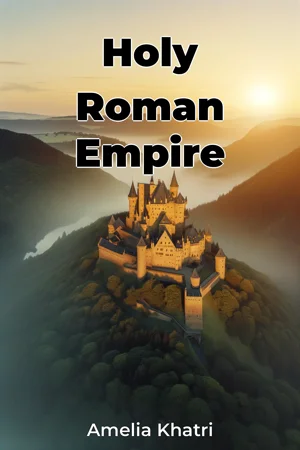
About This Book
In 962 CE, Otto I's coronation as Emperor marked the birth of an entity that would shape European history for nearly a millennium. This detailed examination of the Holy Roman Empire traces its complex evolution from a medieval powerhouse to its dissolution in 1806, revealing how this unique political structure influenced modern concepts of federalism and European governance. The book presents three central themes that defined the Empire's character: the delicate balance between imperial authority and territorial autonomy, the interplay between secular and religious power, and the evolution of electoral politics that made the Empire distinctively different from other European monarchies. Through careful analysis of primary sources, including imperial decrees, diplomatic correspondence, and ecclesiastical documents, readers gain insight into how this political entity managed to sustain itself despite constant internal tensions and external pressures. The narrative begins with the Empire's Carolingian foundations, examining how Otto I transformed the remnants of Charlemagne's realm into a new political structure. It explores the crucial Golden Bull of 1356, which formalized the election process of Holy Roman Emperors and established the seven prince-electors as the Empire's highest-ranking nobles. The book devotes significant attention to the Empire's unique administrative system, where power was distributed among hundreds of semi-autonomous territories, from mighty kingdoms to tiny knight's estates. Particular focus is given to watershed moments that reshaped the Empire: the Investiture Controversy, which defined church-state relations; the Thirty Years' War, which fundamentally altered the Empire's religious and political landscape; and the reforms of Maximilian I, which modernized imperial institutions. The author draws from recent archaeological findings and previously untranslated medieval documents to present fresh perspectives on these pivotal events. The work connects historical developments to multiple disciplines, including legal history, showing how imperial law influenced modern European legal systems, and economic history, examining how the Empire's trade networks and city-states drove European commercial development. The analysis extends to cultural history, exploring how imperial institutions shaped art, architecture, and literature across Central Europe. Written in a scholarly yet accessible style, the book combines chronological narrative with thematic analysis, making it valuable for both academic researchers and educated general readers interested in European history. It addresses long-standing historiographical debates, including the Empire's effectiveness as a governing structure and its role in both promoting and hindering German unification. The scope encompasses the Empire's entire lifespan, with particular emphasis on institutional development and territorial politics. While maintaining focus on political and administrative history, the book acknowledges social and cultural dimensions that influenced imperial governance. It examines how the Empire's federal structure created a unique political culture that continues to influence modern European politics. The work concludes by analyzing the Empire's legacy in modern Europe, particularly its influence on concepts of sovereignty, federalism, and international law. It demonstrates how understanding the Holy Roman Empire's complex history provides valuable insights into current debates about European integration and regional autonomy. This comprehensive study fills a crucial gap in English-language scholarship on the Holy Roman Empire, offering readers a nuanced understanding of this fascinating political entity that defied simple categorization and continued to influence European politics long after its dissolution.
In 962 CE, Otto I's coronation as Emperor marked the birth of an entity that would shape European history for nearly a millennium. This detailed examination of the Holy Roman Empire traces its complex evolution from a medieval powerhouse to its dissolution in 1806, revealing how this unique political structure influenced modern concepts of federalism and European governance. The book presents three central themes that defined the Empire's character: the delicate balance between imperial authority and territorial autonomy, the interplay between secular and religious power, and the evolution of electoral politics that made the Empire distinctively different from other European monarchies. Through careful analysis of primary sources, including imperial decrees, diplomatic correspondence, and ecclesiastical documents, readers gain insight into how this political entity managed to sustain itself despite constant internal tensions and external pressures. The narrative begins with the Empire's Carolingian foundations, examining how Otto I transformed the remnants of Charlemagne's realm into a new political structure. It explores the crucial Golden Bull of 1356, which formalized the election process of Holy Roman Emperors and established the seven prince-electors as the Empire's highest-ranking nobles. The book devotes significant attention to the Empire's unique administrative system, where power was distributed among hundreds of semi-autonomous territories, from mighty kingdoms to tiny knight's estates. Particular focus is given to watershed moments that reshaped the Empire: the Investiture Controversy, which defined church-state relations; the Thirty Years' War, which fundamentally altered the Empire's religious and political landscape; and the reforms of Maximilian I, which modernized imperial institutions. The author draws from recent archaeological findings and previously untranslated medieval documents to present fresh perspectives on these pivotal events. The work connects historical developments to multiple disciplines, including legal history, showing how imperial law influenced modern European legal systems, and economic history, examining how the Empire's trade networks and city-states drove European commercial development. The analysis extends to cultural history, exploring how imperial institutions shaped art, architecture, and literature across Central Europe. Written in a scholarly yet accessible style, the book combines chronological narrative with thematic analysis, making it valuable for both academic researchers and educated general readers interested in European history. It addresses long-standing historiographical debates, including the Empire's effectiveness as a governing structure and its role in both promoting and hindering German unification. The scope encompasses the Empire's entire lifespan, with particular emphasis on institutional development and territorial politics. While maintaining focus on political and administrative history, the book acknowledges social and cultural dimensions that influenced imperial governance. It examines how the Empire's federal structure created a unique political culture that continues to influence modern European politics. The work concludes by analyzing the Empire's legacy in modern Europe, particularly its influence on concepts of sovereignty, federalism, and international law. It demonstrates how understanding the Holy Roman Empire's complex history provides valuable insights into current debates about European integration and regional autonomy. This comprehensive study fills a crucial gap in English-language scholarship on the Holy Roman Empire, offering readers a nuanced understanding of this fascinating political entity that defied simple categorization and continued to influence European politics long after its dissolution.
"Holy Roman Empire" presents a fascinating exploration of one of history's most enduring and complex political entities, tracing its evolution from Otto I's coronation in 962 CE to its dissolution in 1806. This comprehensive study reveals how this unique medieval powerhouse shaped European history through its distinctive blend of imperial authority, religious influence, and territorial autonomy. The book skillfully navigates through the Empire's intricate political structure, where power was distributed among hundreds of semi-autonomous territories, making it fundamentally different from other European monarchies of its time. Through careful analysis of primary sources, including imperial decrees and ecclesiastical documents, the narrative examines crucial turning points such as the Golden Bull of 1356, which formalized the election process of Holy Roman Emperors, and the transformative Thirty Years' War. The author draws from recent archaeological findings and previously untranslated medieval documents to offer fresh perspectives on how this political entity maintained its influence despite constant internal tensions and external pressures. The book progresses chronologically while weaving in thematic analyses of legal, economic, and cultural developments, demonstrating how the Empire's federal structure created a lasting impact on modern European politics and law. From Charlemagne's influence to Maximilian I's reforms, the study illuminates how this remarkable political experiment managed to sustain itself for nearly a millennium, leaving an indelible mark on concepts of sovereignty, federalism, and international relations that continue to resonate in contemporary European governance.
Book Details
ISBN
9788233980245
Publisher
Publifye AS
Your Licenses
You don't own any licenses for this book
Purchase a license below to unlock this book and download the EPUB.
Purchase License
Select a tier to unlock this book
Need bulk licensing?
Contact us for enterprise agreements.