
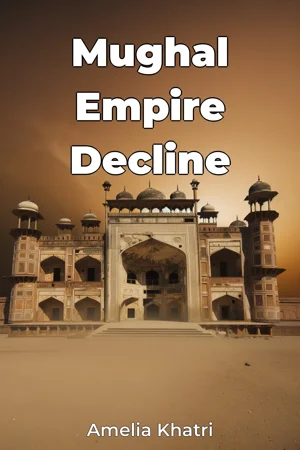
About This Book
The once-mighty Mughal Empire, which dominated the Indian subcontinent for over three centuries, experienced a dramatic transformation from unrivaled power to fragmentation in less than a hundred years. This comprehensive examination delves into the complex web of factors that precipitated one of history's most significant imperial declines. The book presents a multilayered analysis focusing on three pivotal aspects: the devastating impact of succession conflicts and court intrigues, the erosion of administrative and economic systems, and the mounting external pressures that ultimately fractured the empire. Through careful examination of historical records, court documents, and economic data, readers gain insight into how these interconnected forces created a perfect storm that brought down a seemingly invincible empire. Beginning with Aurangzeb's death in 1707, the narrative traces how the absence of a clear succession policy led to increasingly violent power struggles among royal princes. These conflicts not only depleted the imperial treasury but also weakened the central authority's grip on distant provinces. The book provides detailed accounts of how regional governors gradually transformed into semi-autonomous rulers, effectively creating a decentralized power structure that undermined imperial cohesion. The economic analysis reveals how the empire's financial foundation began crumbling under the weight of constant warfare, excessive taxation, and declining international trade. Previously unpublished financial records demonstrate how the empire's revenue system, once praised for its efficiency, became a source of popular discontent and administrative dysfunction. The text examines how European trading companies exploited these weaknesses, gradually transforming from mere merchants to territorial powers. Drawing from military histories and diplomatic correspondence, the book illustrates how external challenges, particularly from the Marathas, Sikhs, and European powers, exploited the empire's internal vulnerabilities. The narrative connects these military pressures to broader social and religious tensions, showing how policies of religious orthodoxy and territorial expansion ultimately contributed to the empire's overextension and collapse. The work stands out for its integration of multiple historical perspectives, including economic history, military strategy, and social dynamics. It challenges simplified explanations of the empire's decline, presenting instead a nuanced view of how institutional weaknesses, leadership failures, and external pressures interacted over time. This scholarly yet accessible analysis is particularly relevant for students of world history, political science, and economic history. It offers valuable insights into the nature of imperial decline, state functionality, and the consequences of institutional failure. The book's examination of how great powers decline remains particularly relevant to contemporary discussions about global power shifts and institutional resilience. The research draws upon primary sources in Persian, Arabic, and European languages, including previously untranslated administrative documents and personal correspondence of key historical figures. This diverse source base allows for a comprehensive reconstruction of the period's complex political and social landscape. While the focus remains primarily on the period from 1707 to 1857, the book acknowledges ongoing scholarly debates about the timing and nature of the empire's decline. It addresses controversies surrounding the role of religious policies, economic management, and military strategy in the empire's fate, while maintaining an evidence-based approach to these contested issues. The analysis concludes by examining how the decline of the Mughal Empire reshaped South Asian society and created power vacuums that influenced the region's subsequent historical development. This work serves as both a detailed historical study and a broader examination of how major empires transform and ultimately dissolve.
The once-mighty Mughal Empire, which dominated the Indian subcontinent for over three centuries, experienced a dramatic transformation from unrivaled power to fragmentation in less than a hundred years. This comprehensive examination delves into the complex web of factors that precipitated one of history's most significant imperial declines. The book presents a multilayered analysis focusing on three pivotal aspects: the devastating impact of succession conflicts and court intrigues, the erosion of administrative and economic systems, and the mounting external pressures that ultimately fractured the empire. Through careful examination of historical records, court documents, and economic data, readers gain insight into how these interconnected forces created a perfect storm that brought down a seemingly invincible empire. Beginning with Aurangzeb's death in 1707, the narrative traces how the absence of a clear succession policy led to increasingly violent power struggles among royal princes. These conflicts not only depleted the imperial treasury but also weakened the central authority's grip on distant provinces. The book provides detailed accounts of how regional governors gradually transformed into semi-autonomous rulers, effectively creating a decentralized power structure that undermined imperial cohesion. The economic analysis reveals how the empire's financial foundation began crumbling under the weight of constant warfare, excessive taxation, and declining international trade. Previously unpublished financial records demonstrate how the empire's revenue system, once praised for its efficiency, became a source of popular discontent and administrative dysfunction. The text examines how European trading companies exploited these weaknesses, gradually transforming from mere merchants to territorial powers. Drawing from military histories and diplomatic correspondence, the book illustrates how external challenges, particularly from the Marathas, Sikhs, and European powers, exploited the empire's internal vulnerabilities. The narrative connects these military pressures to broader social and religious tensions, showing how policies of religious orthodoxy and territorial expansion ultimately contributed to the empire's overextension and collapse. The work stands out for its integration of multiple historical perspectives, including economic history, military strategy, and social dynamics. It challenges simplified explanations of the empire's decline, presenting instead a nuanced view of how institutional weaknesses, leadership failures, and external pressures interacted over time. This scholarly yet accessible analysis is particularly relevant for students of world history, political science, and economic history. It offers valuable insights into the nature of imperial decline, state functionality, and the consequences of institutional failure. The book's examination of how great powers decline remains particularly relevant to contemporary discussions about global power shifts and institutional resilience. The research draws upon primary sources in Persian, Arabic, and European languages, including previously untranslated administrative documents and personal correspondence of key historical figures. This diverse source base allows for a comprehensive reconstruction of the period's complex political and social landscape. While the focus remains primarily on the period from 1707 to 1857, the book acknowledges ongoing scholarly debates about the timing and nature of the empire's decline. It addresses controversies surrounding the role of religious policies, economic management, and military strategy in the empire's fate, while maintaining an evidence-based approach to these contested issues. The analysis concludes by examining how the decline of the Mughal Empire reshaped South Asian society and created power vacuums that influenced the region's subsequent historical development. This work serves as both a detailed historical study and a broader examination of how major empires transform and ultimately dissolve.
"Mughal Empire Decline" offers a compelling exploration of how one of history's most powerful empires transformed from a dominant force to a fragmented state in less than a century. This comprehensive analysis examines three critical factors that led to the empire's downfall: succession conflicts following Aurangzeb's death in 1707, the deterioration of administrative and economic systems, and mounting external pressures from various powers including the Marathas, Sikhs, and European trading companies. Through meticulous examination of historical records, including previously untranslated Persian and Arabic documents, the book reveals how violent power struggles among royal princes depleted the imperial treasury and weakened central authority. The economic analysis uncovers how constant warfare and excessive taxation eroded the empire's once-efficient revenue system, while regional governors gradually transformed into semi-autonomous rulers, effectively undermining imperial cohesion. The narrative progresses chronologically from 1707 to 1857, weaving together multiple historical perspectives to present a nuanced view of imperial decline. Rather than offering simplified explanations, the book demonstrates how institutional weaknesses, leadership failures, and external pressures created a perfect storm that ultimately led to the empire's dissolution. This scholarly yet accessible work provides valuable insights into the nature of imperial decline while remaining relevant to contemporary discussions about global power shifts and institutional resilience.
Book Details
ISBN
9788233980214
Publisher
Publifye AS
Your Licenses
You don't own any licenses for this book
Purchase a license below to unlock this book and download the EPUB.
Purchase License
Select a tier to unlock this book
Need bulk licensing?
Contact us for enterprise agreements.