
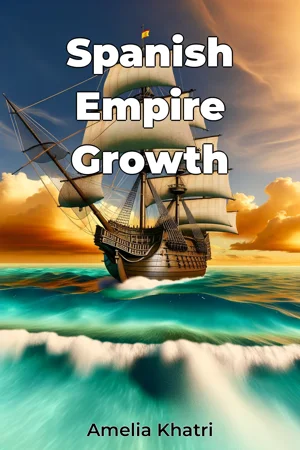
About This Book
"Spanish Empire Growth" examines how a modest European kingdom transformed into the world's first truly global empire, spanning from the Americas to the Philippines, fundamentally reshaping world history from 1492 to 1800. This comprehensive analysis traces three interconnected pillars of Spanish imperial expansion: maritime exploration, colonial administration, and economic systems. The book demonstrates how Spanish exploration began as a quest for alternative trade routes but evolved into a complex network of colonial territories that would influence global commerce, culture, and governance for centuries to come. The narrative begins with the critical period of initial expansion, detailing how the Spanish Crown systematically approached exploration through a combination of royal patronage and private enterprise. Readers discover how the establishment of the Casa de Contratación in 1503 centralized and regulated colonial activities, creating an administrative framework that would become a model for future European empires. The book's central sections examine the development of colonial infrastructure, including the encomienda system, mercury mining operations, and the Manila Galleon trade route. Through primary sources and archaeological evidence, the text reveals how Spain created a sophisticated network of trade and resource extraction that connected Europe, the Americas, and Asia for the first time in history. Particular attention is given to the economic impact of Spanish colonization, analyzing the influx of New World silver and its effects on both European and Asian economies. The book presents detailed data from colonial treasury records and trade documents to illustrate how Spanish imperial policies influenced global monetary systems and international trade patterns. The work connects multiple disciplines, incorporating economic history, maritime archaeology, and cultural anthropology to provide a nuanced understanding of Spanish imperial expansion. This interdisciplinary approach helps explain how Spanish colonial practices influenced modern international law, global commerce, and cultural exchange. The research draws from recently digitized colonial archives in Seville and Mexico City, offering fresh insights into administrative decisions and economic policies. Archaeological findings from shipwrecks and colonial sites provide tangible evidence of trade patterns and material culture, while demographic studies reveal the impact of Spanish colonization on indigenous populations. Written in an academic yet accessible style, the book specifically addresses historians, economists, and students of colonial studies. It maintains an objective tone while examining controversial aspects of Spanish colonization, including the treatment of indigenous peoples and the long-term environmental impact of colonial mining operations. The text concludes by analyzing the legacy of Spanish imperial expansion, examining how colonial institutions and economic patterns continue to influence modern Latin America and the Philippines. It addresses ongoing scholarly debates about the nature of Spanish colonialism and its role in shaping the modern global economy. The book's scope spans three centuries of colonial activity across four continents, though it focuses primarily on the peak period of Spanish imperial power from the mid-16th to the late 17th centuries. By examining this crucial period in world history, readers gain insight into the development of modern global trade networks and international relations. This work serves as both a comprehensive reference for scholars and an informative resource for students studying colonial history, international economics, or global trade patterns. It provides essential context for understanding current global economic relationships and the historical roots of modern international commerce.
"Spanish Empire Growth" examines how a modest European kingdom transformed into the world's first truly global empire, spanning from the Americas to the Philippines, fundamentally reshaping world history from 1492 to 1800. This comprehensive analysis traces three interconnected pillars of Spanish imperial expansion: maritime exploration, colonial administration, and economic systems. The book demonstrates how Spanish exploration began as a quest for alternative trade routes but evolved into a complex network of colonial territories that would influence global commerce, culture, and governance for centuries to come. The narrative begins with the critical period of initial expansion, detailing how the Spanish Crown systematically approached exploration through a combination of royal patronage and private enterprise. Readers discover how the establishment of the Casa de Contratación in 1503 centralized and regulated colonial activities, creating an administrative framework that would become a model for future European empires. The book's central sections examine the development of colonial infrastructure, including the encomienda system, mercury mining operations, and the Manila Galleon trade route. Through primary sources and archaeological evidence, the text reveals how Spain created a sophisticated network of trade and resource extraction that connected Europe, the Americas, and Asia for the first time in history. Particular attention is given to the economic impact of Spanish colonization, analyzing the influx of New World silver and its effects on both European and Asian economies. The book presents detailed data from colonial treasury records and trade documents to illustrate how Spanish imperial policies influenced global monetary systems and international trade patterns. The work connects multiple disciplines, incorporating economic history, maritime archaeology, and cultural anthropology to provide a nuanced understanding of Spanish imperial expansion. This interdisciplinary approach helps explain how Spanish colonial practices influenced modern international law, global commerce, and cultural exchange. The research draws from recently digitized colonial archives in Seville and Mexico City, offering fresh insights into administrative decisions and economic policies. Archaeological findings from shipwrecks and colonial sites provide tangible evidence of trade patterns and material culture, while demographic studies reveal the impact of Spanish colonization on indigenous populations. Written in an academic yet accessible style, the book specifically addresses historians, economists, and students of colonial studies. It maintains an objective tone while examining controversial aspects of Spanish colonization, including the treatment of indigenous peoples and the long-term environmental impact of colonial mining operations. The text concludes by analyzing the legacy of Spanish imperial expansion, examining how colonial institutions and economic patterns continue to influence modern Latin America and the Philippines. It addresses ongoing scholarly debates about the nature of Spanish colonialism and its role in shaping the modern global economy. The book's scope spans three centuries of colonial activity across four continents, though it focuses primarily on the peak period of Spanish imperial power from the mid-16th to the late 17th centuries. By examining this crucial period in world history, readers gain insight into the development of modern global trade networks and international relations. This work serves as both a comprehensive reference for scholars and an informative resource for students studying colonial history, international economics, or global trade patterns. It provides essential context for understanding current global economic relationships and the historical roots of modern international commerce.
"Spanish Empire Growth" masterfully chronicles the remarkable transformation of Spain from a modest European kingdom into history's first truly global empire, spanning from 1492 to 1800. This comprehensive analysis reveals how Spanish exploration, initially driven by the search for new trade routes, evolved into a vast colonial network that revolutionized global commerce and cultural exchange. Through meticulous research drawing from recently digitized colonial archives and archaeological findings, the book illuminates the sophisticated systems that allowed Spain to connect Europe, the Americas, and Asia in unprecedented ways. The narrative expertly weaves together three crucial elements of Spanish imperial expansion: maritime exploration, colonial administration, and economic systems. Central to this story is the establishment of the Casa de Contratación in 1503, which became the blueprint for future European colonial administration. The book provides fascinating insights into how Spain's colonial infrastructure, including the Manila Galleon trade route and the transformative impact of New World silver, reshaped global monetary systems and international trade patterns. Through an interdisciplinary approach combining economic history, maritime archaeology, and cultural anthropology, the book offers readers a nuanced understanding of how Spanish colonialism influenced modern international law and global commerce. The work particularly excels in its examination of colonial treasury records and trade documents, providing concrete evidence of how Spanish imperial policies created lasting impacts that continue to influence Latin America and the Philippines today. This thorough examination serves both as an academic reference and an accessible resource for anyone interested in understanding the historical roots of modern global trade networks.
Book Details
ISBN
9788233980184
Publisher
Publifye AS
Your Licenses
You don't own any licenses for this book
Purchase a license below to unlock this book and download the EPUB.
Purchase License
Select a tier to unlock this book
Need bulk licensing?
Contact us for enterprise agreements.