
About This Book
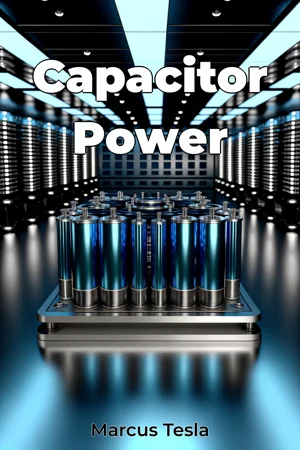
In 1925, when radio engineer Philip James first observed how a simple capacitor could transform an unstable radio signal into clear, crisp sound, he unknowingly set the stage for a technological revolution that would span nearly a century. "Capacitor Power" traces the evolution of these fundamental electronic components from basic radio equipment to their critical role in modern renewable energy systems. The book presents a detailed examination of capacitor technology through three major technological eras: the rise of radio communications, the dawn of computer systems, and the current renewable energy transformation. Through careful technical analysis, it demonstrates how the ability to store and release electrical charge rapidly became a cornerstone of electronic innovation. Starting with fundamental principles, the text explains how capacitors store energy in electric fields, making them distinct from batteries and other storage devices. This foundation sets up readers to understand increasingly complex applications, from the filtering circuits in early radio receivers to the power-smoothing systems in today's solar installations. The narrative progresses chronologically, first exploring how capacitors solved critical challenges in radio development, including signal filtering and frequency tuning. The book then shifts to the computer age, where capacitors became essential for memory storage and processor timing. The final section examines their role in renewable energy, particularly in grid stabilization and energy harvesting systems. Supporting these discussions is extensive technical data drawn from industry archives, patent documents, and engineering research papers. The book includes detailed circuit diagrams, performance graphs, and case studies from major technological developments where capacitors played a crucial role. The work connects electrical engineering principles with practical applications in computing, telecommunications, and sustainable energy. It demonstrates how advances in capacitor materials science enabled new applications, while improvements in manufacturing techniques made widespread adoption possible. Written in a technical yet accessible style, the book provides both theoretical understanding and practical insights. Each chapter includes relevant equations and technical specifications, balanced with real-world examples and applications. The author maintains a focus on engineering principles while explaining complex concepts through clear analogies and practical examples. The primary audience includes electrical engineers, electronics technicians, and engineering students, but the material is also valuable for technology historians and renewable energy professionals. The book assumes basic knowledge of electrical principles but builds systematically toward more complex applications. Particular attention is given to recent developments in supercapacitor technology and their potential to bridge the gap between traditional capacitors and batteries. The text examines current research in graphene-based capacitors and their implications for energy storage systems. The book addresses ongoing debates in the field, such as the role of capacitors versus batteries in grid storage, and the trade-offs between power density and energy density in different storage technologies. It presents multiple viewpoints while maintaining focus on verified technical data and proven applications. Through its comprehensive examination of capacitor technology, "Capacitor Power" reveals how these components have enabled countless innovations and continue to play a vital role in addressing modern energy challenges. The work serves as both a technical reference and a historical record of how a seemingly simple component became indispensable to technological progress.
In 1925, when radio engineer Philip James first observed how a simple capacitor could transform an unstable radio signal into clear, crisp sound, he unknowingly set the stage for a technological revolution that would span nearly a century. "Capacitor Power" traces the evolution of these fundamental electronic components from basic radio equipment to their critical role in modern renewable energy systems. The book presents a detailed examination of capacitor technology through three major technological eras: the rise of radio communications, the dawn of computer systems, and the current renewable energy transformation. Through careful technical analysis, it demonstrates how the ability to store and release electrical charge rapidly became a cornerstone of electronic innovation. Starting with fundamental principles, the text explains how capacitors store energy in electric fields, making them distinct from batteries and other storage devices. This foundation sets up readers to understand increasingly complex applications, from the filtering circuits in early radio receivers to the power-smoothing systems in today's solar installations. The narrative progresses chronologically, first exploring how capacitors solved critical challenges in radio development, including signal filtering and frequency tuning. The book then shifts to the computer age, where capacitors became essential for memory storage and processor timing. The final section examines their role in renewable energy, particularly in grid stabilization and energy harvesting systems. Supporting these discussions is extensive technical data drawn from industry archives, patent documents, and engineering research papers. The book includes detailed circuit diagrams, performance graphs, and case studies from major technological developments where capacitors played a crucial role. The work connects electrical engineering principles with practical applications in computing, telecommunications, and sustainable energy. It demonstrates how advances in capacitor materials science enabled new applications, while improvements in manufacturing techniques made widespread adoption possible. Written in a technical yet accessible style, the book provides both theoretical understanding and practical insights. Each chapter includes relevant equations and technical specifications, balanced with real-world examples and applications. The author maintains a focus on engineering principles while explaining complex concepts through clear analogies and practical examples. The primary audience includes electrical engineers, electronics technicians, and engineering students, but the material is also valuable for technology historians and renewable energy professionals. The book assumes basic knowledge of electrical principles but builds systematically toward more complex applications. Particular attention is given to recent developments in supercapacitor technology and their potential to bridge the gap between traditional capacitors and batteries. The text examines current research in graphene-based capacitors and their implications for energy storage systems. The book addresses ongoing debates in the field, such as the role of capacitors versus batteries in grid storage, and the trade-offs between power density and energy density in different storage technologies. It presents multiple viewpoints while maintaining focus on verified technical data and proven applications. Through its comprehensive examination of capacitor technology, "Capacitor Power" reveals how these components have enabled countless innovations and continue to play a vital role in addressing modern energy challenges. The work serves as both a technical reference and a historical record of how a seemingly simple component became indispensable to technological progress.
"Capacitor Power" offers a compelling journey through the evolution of one of electronics' most fundamental components, tracing how capacitors transformed from simple radio signal stabilizers to crucial elements in modern renewable energy systems. The book uniquely weaves together technical expertise with historical context, examining these devices across three pivotal eras: radio communications, computer systems, and renewable energy applications. Through accessible explanations and real-world examples, readers discover how capacitors' ability to rapidly store and release electrical charge has shaped nearly a century of technological advancement. The narrative progressively builds understanding, beginning with basic principles of electric field storage before delving into increasingly sophisticated applications. From their early role in radio signal filtering to their current use in solar power installations and grid stabilization, the book illuminates how capacitor technology has adapted to meet new challenges. Particularly fascinating is the exploration of modern supercapacitor developments and their potential to bridge the gap between traditional capacitors and batteries, supported by extensive technical data and industry research. Throughout its chapters, the work maintains a careful balance between theoretical knowledge and practical application, making complex concepts accessible through clear analogies while never sacrificing technical accuracy. Engineers, electronics technicians, and students will especially appreciate the detailed circuit diagrams, performance graphs, and real-world case studies that demonstrate how capacitors continue to enable innovations in computing, telecommunications, and sustainable energy systems.
Book Details
ISBN
9788233980146
Publisher
Publifye AS
Your Licenses
You don't own any licenses for this book
Purchase a license below to unlock this book and download the EPUB.
Purchase License
Select a tier to unlock this book
Need bulk licensing?
Contact us for enterprise agreements.