
About This Book
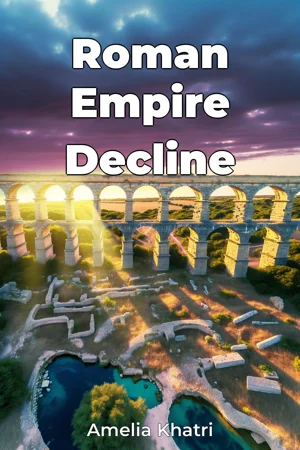
The Roman Empire's collapse in 476 CE marked the end of an era that had shaped Western civilization for nearly five centuries. "Roman Empire Decline" presents a methodical analysis of the intricate web of factors that transformed history's most powerful empire into a cautionary tale of institutional decay. The book systematically examines three primary forces that precipitated Rome's fall: political instability, economic deterioration, and external pressures. Through careful examination of archaeological evidence, contemporary accounts, and modern historical analysis, it reveals how these elements worked in concert to undermine the empire's foundations. The first section focuses on political instability, detailing the period from 235-284 CE, known as the Crisis of the Third Century, when 26 different emperors claimed the throne. The text analyzes how this rapid turnover in leadership weakened central authority, corrupted institutional memory, and fractured the empire's administrative coherence. Primary sources, including accounts from Roman historians Tacitus and Ammianus Marcellinus, provide contemporary perspectives on this turbulent period. Economic factors receive thorough treatment in the second section, which examines the empire's financial system through numismatic evidence and trade records. The debasement of currency, beginning under Nero and accelerating through the third century, receives particular attention. The book demonstrates how inflation, decreased trade volume, and the collapse of the complex Roman monetary system contributed to widespread poverty and social unrest. The final section addresses external pressures, particularly the role of Germanic tribes and Persian armies. Rather than portraying these groups as simple barbarian invaders, the text provides nuanced analysis of complex diplomatic relationships, military engagements, and cultural exchanges. Archaeological evidence from frontier regions reveals patterns of both conflict and cooperation between Romans and neighboring peoples. The book connects these historical events to broader patterns in state governance, economic systems, and social structures. It draws parallels with other historical empires and modern nation-states, offering insights into how complex societies manage challenges to their stability. The analysis incorporates recent archaeological findings from Roman sites across Europe and the Mediterranean, providing fresh perspectives on long-debated topics. Written in an academic yet accessible style, the book targets readers interested in classical history, political science, and economic history. It challenges simplified narratives of Rome's fall, presenting instead a multifaceted analysis that demonstrates how internal weaknesses and external pressures created a perfect storm of destabilizing forces. The text addresses ongoing scholarly debates, including the relative importance of internal versus external factors and the question of whether "fall" or "transformation" better describes the empire's end. It examines competing theories while maintaining a balanced perspective supported by evidence. The book's scope spans from the Severan dynasty through the deposition of Romulus Augustulus, focusing primarily on the third through fifth centuries CE. While maintaining historical rigor, it draws connections to contemporary issues of governance, economic stability, and social cohesion, making the material relevant to modern readers interested in political and economic sustainability. This comprehensive analysis provides valuable insights for historians, policy makers, and anyone interested in understanding how complex societies function and why they sometimes fail. Through careful examination of primary sources and archaeological evidence, it presents a thorough and nuanced picture of one of history's most significant political transitions.
The Roman Empire's collapse in 476 CE marked the end of an era that had shaped Western civilization for nearly five centuries. "Roman Empire Decline" presents a methodical analysis of the intricate web of factors that transformed history's most powerful empire into a cautionary tale of institutional decay. The book systematically examines three primary forces that precipitated Rome's fall: political instability, economic deterioration, and external pressures. Through careful examination of archaeological evidence, contemporary accounts, and modern historical analysis, it reveals how these elements worked in concert to undermine the empire's foundations. The first section focuses on political instability, detailing the period from 235-284 CE, known as the Crisis of the Third Century, when 26 different emperors claimed the throne. The text analyzes how this rapid turnover in leadership weakened central authority, corrupted institutional memory, and fractured the empire's administrative coherence. Primary sources, including accounts from Roman historians Tacitus and Ammianus Marcellinus, provide contemporary perspectives on this turbulent period. Economic factors receive thorough treatment in the second section, which examines the empire's financial system through numismatic evidence and trade records. The debasement of currency, beginning under Nero and accelerating through the third century, receives particular attention. The book demonstrates how inflation, decreased trade volume, and the collapse of the complex Roman monetary system contributed to widespread poverty and social unrest. The final section addresses external pressures, particularly the role of Germanic tribes and Persian armies. Rather than portraying these groups as simple barbarian invaders, the text provides nuanced analysis of complex diplomatic relationships, military engagements, and cultural exchanges. Archaeological evidence from frontier regions reveals patterns of both conflict and cooperation between Romans and neighboring peoples. The book connects these historical events to broader patterns in state governance, economic systems, and social structures. It draws parallels with other historical empires and modern nation-states, offering insights into how complex societies manage challenges to their stability. The analysis incorporates recent archaeological findings from Roman sites across Europe and the Mediterranean, providing fresh perspectives on long-debated topics. Written in an academic yet accessible style, the book targets readers interested in classical history, political science, and economic history. It challenges simplified narratives of Rome's fall, presenting instead a multifaceted analysis that demonstrates how internal weaknesses and external pressures created a perfect storm of destabilizing forces. The text addresses ongoing scholarly debates, including the relative importance of internal versus external factors and the question of whether "fall" or "transformation" better describes the empire's end. It examines competing theories while maintaining a balanced perspective supported by evidence. The book's scope spans from the Severan dynasty through the deposition of Romulus Augustulus, focusing primarily on the third through fifth centuries CE. While maintaining historical rigor, it draws connections to contemporary issues of governance, economic stability, and social cohesion, making the material relevant to modern readers interested in political and economic sustainability. This comprehensive analysis provides valuable insights for historians, policy makers, and anyone interested in understanding how complex societies function and why they sometimes fail. Through careful examination of primary sources and archaeological evidence, it presents a thorough and nuanced picture of one of history's most significant political transitions.
"Roman Empire Decline" offers a compelling examination of history's most powerful empire's dissolution, methodically analyzing the complex factors that led to Rome's fall in 476 CE. The book uniquely weaves together three critical elements: political instability during the Crisis of the Third Century, severe economic deterioration, and mounting external pressures from Germanic tribes and Persian forces. Through a careful examination of archaeological evidence and contemporary accounts, including writings from historians Tacitus and Ammianus Marcellinus, the text reveals how these forces worked in concert to undermine the empire's foundations. The narrative progresses chronologically from the Severan dynasty through the deposition of Romulus Augustulus, with particular focus on the tumultuous third through fifth centuries CE. During this period, the empire witnessed unprecedented challenges, including the reign of 26 different emperors in just 49 years, widespread currency debasement, and evolving relationships with neighboring peoples. Rather than presenting a simplified fall-from-grace narrative, the book offers a nuanced analysis of how complex diplomatic relationships, military engagements, and cultural exchanges shaped the empire's trajectory. Drawing parallels between ancient Rome and modern nation-states, the book presents fresh perspectives on long-debated topics while maintaining scholarly rigor and accessibility. It challenges readers to consider broader patterns in state governance and economic systems, making the material relevant to contemporary discussions of political and economic sustainability. The analysis incorporates recent archaeological findings from across Europe and the Mediterranean, providing new insights into this pivotal period of world history.
Book Details
ISBN
9788233980108
Publisher
Publifye AS
Your Licenses
You don't own any licenses for this book
Purchase a license below to unlock this book and download the EPUB.
Purchase License
Select a tier to unlock this book
Need bulk licensing?
Contact us for enterprise agreements.