
About This Book
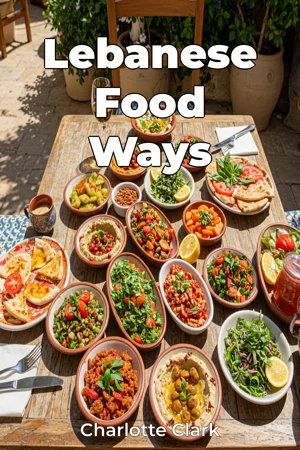
What is it about Lebanese cuisine that makes sharing a meal feel like coming home, even if you've never been there? 'Lebanese Food Ways' explores the rich tapestry of Lebanese culinary traditions, delving into the sharing customs and deep-rooted hospitality practices that define the culture. This book examines not only *what* Lebanese people eat, but also *how* and *why* they eat the way they do, revealing the profound social and cultural significance embedded within each dish and shared table. Three key topics form the foundation of this exploration: the historical influences shaping Lebanese cuisine, the communal dining experience centered around *mezze*, and the cultural role of hospitality as an expression of generosity and social cohesion. Understanding these elements is crucial because they provide insight into the Lebanese identity and the ways in which food acts as a powerful medium for connection and cultural preservation. Lebanese cuisine is a crossroads of history, bearing the imprint of Phoenician, Roman, Ottoman, and French influences. This book provides historical context, tracing the evolution of ingredients, cooking techniques, and meal structures over centuries. No prior knowledge of Lebanese history is required; the book provides essential background information to appreciate the development of Lebanese food culture. The central argument of 'Lebanese Food Ways' is that Lebanese cuisine is more than just a collection of recipes; it is a living embodiment of cultural values, social relationships, and historical narratives. By understanding the intricate connections between food, customs, and hospitality, we gain a deeper appreciation for the Lebanese people and their enduring cultural identity. The book begins by introducing the key concepts of Lebanese culinary tradition, outlining the historical, geographical, and social factors that have shaped it. It then develops these ideas through focused explorations: first, the intricate art of *mezze*, examining its diverse dishes and the etiquette of communal dining, and second, the profound significance of hospitality, exploring the ways in which Lebanese people use food to welcome guests, build relationships, and express generosity. The book culminates by demonstrating how these traditions are being preserved and adapted in the modern world, both within Lebanon and among the Lebanese diaspora. The evidence presented in 'Lebanese Food Ways' draws upon a variety of sources, including historical cookbooks, anthropological studies, interviews with Lebanese chefs and home cooks, and personal observations of dining experiences. The book also incorporates analysis of Lebanese literature and folklore, where food often plays a symbolic role. 'Lebanese Food Ways' connects to several other fields of study, including anthropology (exploring food as a cultural artifact), sociology (examining the social dynamics of communal dining), and history (tracing the evolution of culinary traditions). These interdisciplinary connections enrich the discussion and provide a more holistic understanding of Lebanese food culture. What sets this book apart is its holistic approach, moving beyond mere recipes to delve into the cultural and social significance of Lebanese food ways. Rather than simply showcasing dishes, the book examines the values, beliefs, and social structures that underpin the culinary experience. Written in an accessible and engaging style, 'Lebanese Food Ways' aims to be both informative and enjoyable for a broad audience. The book is targeted towards food enthusiasts, culinary students, cultural explorers, and anyone interested in learning more about Lebanese culture. It will appeal to those who appreciate the power of food to connect people and preserve traditions. As a piece of food writing, 'Lebanese Food Ways' embraces the conventions of the genre by incorporating vivid descriptions of food, personal anecdotes, and historical insights. However, it goes beyond the typical cookbook or travelogue by providing a deeper analysis of the cultural context. The scope of 'Lebanese Food Ways' is intentionally broad, encompassing the major regions and diverse communities within Lebanon. While the book touches upon regional variations, it does not delve into highly specific culinary traditions of individual villages or families, focusing instead on the overarching themes and practices that are shared across the country. The principles outlined in 'Lebanese Food Ways' have real-world applications for anyone seeking to understand and appreciate Lebanese culture. By adopting the values of generosity, hospitality, and communal dining, readers can enhance their own relationships and create more meaningful connections with others. While Lebanese cuisine is widely celebrated, there are ongoing debates about its authenticity and adaptation in the diaspora. The book addresses these debates, acknowledging the evolving nature of culinary traditions and the challenges of preserving cultural heritage in a globalized world.
What is it about Lebanese cuisine that makes sharing a meal feel like coming home, even if you've never been there? 'Lebanese Food Ways' explores the rich tapestry of Lebanese culinary traditions, delving into the sharing customs and deep-rooted hospitality practices that define the culture. This book examines not only *what* Lebanese people eat, but also *how* and *why* they eat the way they do, revealing the profound social and cultural significance embedded within each dish and shared table. Three key topics form the foundation of this exploration: the historical influences shaping Lebanese cuisine, the communal dining experience centered around *mezze*, and the cultural role of hospitality as an expression of generosity and social cohesion. Understanding these elements is crucial because they provide insight into the Lebanese identity and the ways in which food acts as a powerful medium for connection and cultural preservation. Lebanese cuisine is a crossroads of history, bearing the imprint of Phoenician, Roman, Ottoman, and French influences. This book provides historical context, tracing the evolution of ingredients, cooking techniques, and meal structures over centuries. No prior knowledge of Lebanese history is required; the book provides essential background information to appreciate the development of Lebanese food culture. The central argument of 'Lebanese Food Ways' is that Lebanese cuisine is more than just a collection of recipes; it is a living embodiment of cultural values, social relationships, and historical narratives. By understanding the intricate connections between food, customs, and hospitality, we gain a deeper appreciation for the Lebanese people and their enduring cultural identity. The book begins by introducing the key concepts of Lebanese culinary tradition, outlining the historical, geographical, and social factors that have shaped it. It then develops these ideas through focused explorations: first, the intricate art of *mezze*, examining its diverse dishes and the etiquette of communal dining, and second, the profound significance of hospitality, exploring the ways in which Lebanese people use food to welcome guests, build relationships, and express generosity. The book culminates by demonstrating how these traditions are being preserved and adapted in the modern world, both within Lebanon and among the Lebanese diaspora. The evidence presented in 'Lebanese Food Ways' draws upon a variety of sources, including historical cookbooks, anthropological studies, interviews with Lebanese chefs and home cooks, and personal observations of dining experiences. The book also incorporates analysis of Lebanese literature and folklore, where food often plays a symbolic role. 'Lebanese Food Ways' connects to several other fields of study, including anthropology (exploring food as a cultural artifact), sociology (examining the social dynamics of communal dining), and history (tracing the evolution of culinary traditions). These interdisciplinary connections enrich the discussion and provide a more holistic understanding of Lebanese food culture. What sets this book apart is its holistic approach, moving beyond mere recipes to delve into the cultural and social significance of Lebanese food ways. Rather than simply showcasing dishes, the book examines the values, beliefs, and social structures that underpin the culinary experience. Written in an accessible and engaging style, 'Lebanese Food Ways' aims to be both informative and enjoyable for a broad audience. The book is targeted towards food enthusiasts, culinary students, cultural explorers, and anyone interested in learning more about Lebanese culture. It will appeal to those who appreciate the power of food to connect people and preserve traditions. As a piece of food writing, 'Lebanese Food Ways' embraces the conventions of the genre by incorporating vivid descriptions of food, personal anecdotes, and historical insights. However, it goes beyond the typical cookbook or travelogue by providing a deeper analysis of the cultural context. The scope of 'Lebanese Food Ways' is intentionally broad, encompassing the major regions and diverse communities within Lebanon. While the book touches upon regional variations, it does not delve into highly specific culinary traditions of individual villages or families, focusing instead on the overarching themes and practices that are shared across the country. The principles outlined in 'Lebanese Food Ways' have real-world applications for anyone seeking to understand and appreciate Lebanese culture. By adopting the values of generosity, hospitality, and communal dining, readers can enhance their own relationships and create more meaningful connections with others. While Lebanese cuisine is widely celebrated, there are ongoing debates about its authenticity and adaptation in the diaspora. The book addresses these debates, acknowledging the evolving nature of culinary traditions and the challenges of preserving cultural heritage in a globalized world.
"Lebanese Food Ways" explores the captivating world of Lebanese cuisine, revealing how it embodies cultural values and traditions. It emphasizes that Lebanese food goes beyond just ingredients and recipes, highlighting the importance of sharing and hospitality. The book argues that understanding Lebanese culinary traditions offers a deeper appreciation for the Lebanese people and their identity. One intriguing aspect is how Lebanese cuisine reflects a blend of historical influences, from Phoenician times to French colonialism. The central role of *mezze*, a selection of small dishes, in communal dining underscores the social aspect of Lebanese food culture. The book examines the historical context, the communal dining experience, and the cultural significance of hospitality to reveal Lebanese identity and connection. "Lebanese Food Ways" progresses by first introducing key concepts and then developing them through focused explorations of *mezze* and hospitality. It concludes by showing how these traditions are preserved and adapted in the modern world, both in Lebanon and within the Lebanese diaspora.
Book Details
ISBN
9788233979935
Publisher
Publifye AS
Your Licenses
You don't own any licenses for this book
Purchase a license below to unlock this book and download the EPUB.
Purchase License
Select a tier to unlock this book
Need bulk licensing?
Contact us for enterprise agreements.